RASMUSSEN COLLEGE MDC 1 LATEST VERSION UPDATED
AND REVISED IN 2024-2025
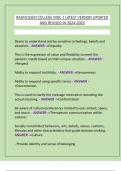
Desire to understand and be sensitive to feelings, beliefs and
situation. - ANSWER ->Empathy
This is the expression of value and flexibility to meet the
patients' needs based on their unique situation. - ANSWER -
>Respect
Ability to respond truthfully. - ANSWER ->Genuineness
Ability to respond using specific terms - ANSWER -
>Concreteness
This is used to clarify the message received or decoding the
actual meaning. - ANSWER ->Confrontation
Be aware of cultural preferences related to eye contact, space,
and touch. - ANSWER ->Therapeutic communication within
cultures
Socially transmitted behaviors, arts, beliefs, values, customs,
lifeways and other characteristics that guide decision making. -
ANSWER ->Culture
- Provide identity and sense of belonging
, - Consist of common beliefs & practices
- Material (clothing, art) and non-material (language, beliefs).
- Dynamic & adaptive
- Complex
- Diverse
- Influences thinking and activities - ANSWER ->Culture
Characteristics
Member share a common social & cultural heritage (race,
physical chrematistics) - ANSWER ->Ethnicity
Learning how to become a member of a society or a group. -
ANSWER ->Socialization
An individual assumes the characteristics of a culture they just
immigrated to. - ANSWER ->Acculturation
A new member learn and take essential values, beliefs and
behaviors of the dominant culture gradually. - ANSWER -
>Assimilation
Considering everyone are the same under their racial or ethnic
group. - ANSWER ->Stereotype
Something recurrent that assumes that everyone has under the
same racial or ethical group. - ANSWER ->Archetype
Initiative to provide care to everyone with the goal to eliminate
any disparities in care. - ANSWER ->Culture competent care
AND REVISED IN 2024-2025
Desire to understand and be sensitive to feelings, beliefs and
situation. - ANSWER ->Empathy
This is the expression of value and flexibility to meet the
patients' needs based on their unique situation. - ANSWER -
>Respect
Ability to respond truthfully. - ANSWER ->Genuineness
Ability to respond using specific terms - ANSWER -
>Concreteness
This is used to clarify the message received or decoding the
actual meaning. - ANSWER ->Confrontation
Be aware of cultural preferences related to eye contact, space,
and touch. - ANSWER ->Therapeutic communication within
cultures
Socially transmitted behaviors, arts, beliefs, values, customs,
lifeways and other characteristics that guide decision making. -
ANSWER ->Culture
- Provide identity and sense of belonging
, - Consist of common beliefs & practices
- Material (clothing, art) and non-material (language, beliefs).
- Dynamic & adaptive
- Complex
- Diverse
- Influences thinking and activities - ANSWER ->Culture
Characteristics
Member share a common social & cultural heritage (race,
physical chrematistics) - ANSWER ->Ethnicity
Learning how to become a member of a society or a group. -
ANSWER ->Socialization
An individual assumes the characteristics of a culture they just
immigrated to. - ANSWER ->Acculturation
A new member learn and take essential values, beliefs and
behaviors of the dominant culture gradually. - ANSWER -
>Assimilation
Considering everyone are the same under their racial or ethnic
group. - ANSWER ->Stereotype
Something recurrent that assumes that everyone has under the
same racial or ethical group. - ANSWER ->Archetype
Initiative to provide care to everyone with the goal to eliminate
any disparities in care. - ANSWER ->Culture competent care