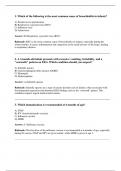
1. Which of the following is the most common cause of bronchiolitis in infants?
A) Streptococcus pneumoniae
B) Respiratory syncytial virus (RSV)
C) Influenza virus
D) Adenovirus
Answer: B) Respiratory syncytial virus (RSV)
Rationale: RSV is the most common cause of bronchiolitis in infants, especially during the
winter months. It causes inflammation and congestion in the small airways of the lungs, leading
to respiratory distress.
2. A 3-month-old infant presents with excessive vomiting, irritability, and a
"sawtooth" pattern on EEG. Which condition should you suspect?
A) Infantile spasms
B) Gastroesophageal reflux disease (GERD)
C) Meningitis
D) Hydrocephalus
Answer: A) Infantile spasms
Rationale: Infantile spasms are a type of seizure disorder seen in infants, often associated with
developmental regression and abnormal EEG findings such as the "sawtooth" pattern. This
condition requires urgent medical intervention.
3. Which immunization is recommended at 6 months of age?
A) DTaP
B) IPV (inactivated polio vaccine)
C) Influenza vaccine
D) MMR
Answer: C) Influenza vaccine
Rationale: The first dose of the influenza vaccine is recommended at 6 months of age, especially
during flu season. DTaP and IPV are given earlier, while MMR is given at age 1.
,4. What is the most common complication of untreated streptococcal pharyngitis
in children?
A) Otitis media
B) Acute glomerulonephritis
C) Rheumatic fever
D) Pneumonia
Answer: C) Rheumatic fever
Rationale: If streptococcal pharyngitis is not treated, it can lead to rheumatic fever, a serious
complication that can cause damage to the heart, joints, and nervous system.
5. A 5-year-old child with a history of eczema presents with an itchy, vesicular
rash on the face. What is the most likely diagnosis?
A) Chickenpox
B) Hand, foot, and mouth disease
C) Impetigo
D) Herpes simplex virus infection
Answer: A) Chickenpox
Rationale: Chickenpox (varicella) presents with a characteristic itchy, vesicular rash, often
starting on the face and spreading. Children with eczema are more prone to complications from
chickenpox.
6. At what age should a child be able to walk independently?
A) 6-9 months
B) 9-12 months
C) 12-15 months
D) 15-18 months
Answer: C) 12-15 months
Rationale: Most children start walking independently between 12 and 15 months. Early walking
(before 12 months) is less common and may indicate early motor development.
, 7. Which of the following is a characteristic finding in a child with cystic fibrosis?
A) Scurvy
B) Steatorrhea
C) Hypercalcemia
D) Bradycardia
Answer: B) Steatorrhea
Rationale: Cystic fibrosis often leads to malabsorption and steatorrhea due to pancreatic
insufficiency, where the body cannot properly absorb fat from food.
8. What is the first-line treatment for a child diagnosed with ADHD?
A) Methylphenidate
B) Cognitive-behavioral therapy
C) Atomoxetine
D) Behavioral modification therapy
Answer: A) Methylphenidate
Rationale: Methylphenidate, a stimulant medication, is the first-line pharmacological treatment
for Attention-Deficit/Hyperactivity Disorder (ADHD) in children.
9. Which of the following is the most common cause of fever in infants under 3
months?
A) Urinary tract infection
B) Respiratory syncytial virus
C) Meningitis
D) Rotavirus infection
Answer: A) Urinary tract infection
Rationale: In infants under 3 months, urinary tract infections (UTIs) are a common cause of
fever and can present with non-specific symptoms.
10. A 2-year-old child presents with a "seal-like" cough, hoarseness, and stridor.
Which condition is most likely?
A) Streptococcus pneumoniae
B) Respiratory syncytial virus (RSV)
C) Influenza virus
D) Adenovirus
Answer: B) Respiratory syncytial virus (RSV)
Rationale: RSV is the most common cause of bronchiolitis in infants, especially during the
winter months. It causes inflammation and congestion in the small airways of the lungs, leading
to respiratory distress.
2. A 3-month-old infant presents with excessive vomiting, irritability, and a
"sawtooth" pattern on EEG. Which condition should you suspect?
A) Infantile spasms
B) Gastroesophageal reflux disease (GERD)
C) Meningitis
D) Hydrocephalus
Answer: A) Infantile spasms
Rationale: Infantile spasms are a type of seizure disorder seen in infants, often associated with
developmental regression and abnormal EEG findings such as the "sawtooth" pattern. This
condition requires urgent medical intervention.
3. Which immunization is recommended at 6 months of age?
A) DTaP
B) IPV (inactivated polio vaccine)
C) Influenza vaccine
D) MMR
Answer: C) Influenza vaccine
Rationale: The first dose of the influenza vaccine is recommended at 6 months of age, especially
during flu season. DTaP and IPV are given earlier, while MMR is given at age 1.
,4. What is the most common complication of untreated streptococcal pharyngitis
in children?
A) Otitis media
B) Acute glomerulonephritis
C) Rheumatic fever
D) Pneumonia
Answer: C) Rheumatic fever
Rationale: If streptococcal pharyngitis is not treated, it can lead to rheumatic fever, a serious
complication that can cause damage to the heart, joints, and nervous system.
5. A 5-year-old child with a history of eczema presents with an itchy, vesicular
rash on the face. What is the most likely diagnosis?
A) Chickenpox
B) Hand, foot, and mouth disease
C) Impetigo
D) Herpes simplex virus infection
Answer: A) Chickenpox
Rationale: Chickenpox (varicella) presents with a characteristic itchy, vesicular rash, often
starting on the face and spreading. Children with eczema are more prone to complications from
chickenpox.
6. At what age should a child be able to walk independently?
A) 6-9 months
B) 9-12 months
C) 12-15 months
D) 15-18 months
Answer: C) 12-15 months
Rationale: Most children start walking independently between 12 and 15 months. Early walking
(before 12 months) is less common and may indicate early motor development.
, 7. Which of the following is a characteristic finding in a child with cystic fibrosis?
A) Scurvy
B) Steatorrhea
C) Hypercalcemia
D) Bradycardia
Answer: B) Steatorrhea
Rationale: Cystic fibrosis often leads to malabsorption and steatorrhea due to pancreatic
insufficiency, where the body cannot properly absorb fat from food.
8. What is the first-line treatment for a child diagnosed with ADHD?
A) Methylphenidate
B) Cognitive-behavioral therapy
C) Atomoxetine
D) Behavioral modification therapy
Answer: A) Methylphenidate
Rationale: Methylphenidate, a stimulant medication, is the first-line pharmacological treatment
for Attention-Deficit/Hyperactivity Disorder (ADHD) in children.
9. Which of the following is the most common cause of fever in infants under 3
months?
A) Urinary tract infection
B) Respiratory syncytial virus
C) Meningitis
D) Rotavirus infection
Answer: A) Urinary tract infection
Rationale: In infants under 3 months, urinary tract infections (UTIs) are a common cause of
fever and can present with non-specific symptoms.
10. A 2-year-old child presents with a "seal-like" cough, hoarseness, and stridor.
Which condition is most likely?