Test Bank
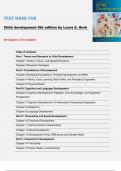
Child Development
9th Edition by Laura E. Berk
All Chapters 1-15
,TableQofQContents
PartQI:QTheoryQandQResearchQinQChildQDevelopment
ChapterQ1QHistory,QTheory,QandQAppliedQDirections
ChapterQ2QResearchQStrategies
PartQII:QFoundationsQofQDevelopment
ChapterQ3QBiologicalQFoundations,QPrenatalQDevelopment,QandQBirth
ChapterQ4QInfancy:QEarlyQLearning,QMotorQSkills,QandQPerceptualQCapacities
ChapterQ5QPhysicalQGrowth
PartQIII:QCognitiveQandQLanguageQDevelopment
ChapterQ6QCognitiveQDevelopment:QPiagetian,QCoreQKnowledge,QandQVygotskian
Perspectives
ChapterQ7QCognitiveQDevelopment:QAnQInformation-ProcessingQPerspective
ChapterQ8QIntelligence
ChapterQ9QLanguageQDevelopment
PartQIV:QPersonalityQandQSocialQDevelopment
ChapterQ10QEmotionalQDevelopment
ChapterQ11QSelfQandQSocialQUnderstanding
ChapterQ12QMoralQDevelopment
ChapterQ13QDevelopmentQofQSexQDifferencesQandQGenderQRoles
PartQV:QContextsQforQDevelopment
ChapterQ14QTheQFamily
ChapterQ15QPeers,QMedia,QandQSchooling
,CHAPTERQ1
HISTORY,QTHEORY,QANDQAPPLIEDQDIRECTIONSQ
MULTIPLEQCHOICE
1) TheQfieldQofQchildQdevelopment
A) isQdevotedQtoQunderstandingQhumanQconstancyQandQchangeQthroughoutQtheQlifespan.
B) isQpartQofQaQlarger,QinterdisciplinaryQfieldQknownQasQdevelopmentalQscience.
C) focusesQprimarilyQonQchildren’sQphysicalQandQemotionalQdevelopment.
D) focusesQprimarilyQonQinfants’QandQchildren’sQsocialQandQcognitiveQdevel
opment.QANSWER:QB
PageQRef:Q4
2) TheQcommonQgoalQofQinvestigatorsQwhoQstudyQchildQdevelopmentQisQto
A) understandQhowQphysicalQgrowthQandQnutritionQcontributeQtoQhealthQandQwell-
beingQthroughoutQtheQlifespan.
B) understandQmoreQaboutQpersonalityQandQsocialQdevelopment.
C) analyzeQchild-rearingQpracticesQandQexperiencesQthatQpromoteQchildren’sQwell-being.
D) describeQandQidentifyQthoseQfactorsQthatQinfluenceQtheQconsistenciesQandQchangesQinQyoungQpeo
pleQduringQtheQfirstQtwoQdecadesQofQlife.
ANSWER:Q
DQ
PageQRef:Q
4
3) WhichQofQtheQfollowingQfactorsQcontributedQtoQtheQstudyQofQchildQdevelopmentQinQtheQtwentiethQ
century?
A) TheQbeginningQofQpublicQeducationQledQtoQaQdemandQforQknowledgeQaboutQwhatQandQhowQtoQteac
hQchildrenQofQdifferentQages.
B) ParentsQwereQhavingQmoreQchildrenQandQresearchersQbecameQinterestedQinQtheQeffectsQofQf
amilyQsizeQonQchildren’sQwell-being.
C) PediatriciansQwereQpressuredQbyQinsuranceQcompaniesQtoQimproveQchildren’sQhealth,QwhichQinspire
dQnutritionalQresearch.
D) HighQratesQofQchildhoodQdepressionQinspiredQnewQareasQofQresearchQintoQchildren’sQanxietiesQa
ndQbehaviorQproblems.
, ANSWER:Q
AQ
PageQRef:Q
4
4) WhichQofQtheQfollowingQstatementsQisQtrueQaboutQtheQfieldQofQchildQdevelopment?
A) ScientificQcuriosityQisQtheQprevailingQfactorQthatQledQtoQtheQstudyQofQchildren,QandQcurrentQresearch
ersQprimarilyQanswerQquestionsQofQscientificQinterest.
B) TheQfieldQofQchildQdevelopmentQisQconsideredQinterdisciplinaryQbecauseQitQhasQgrownQthroughQth
eQcombinedQeffortsQofQpeopleQfromQmanyQfields.
C) ChildQdevelopmentQisQtheQareaQofQstudyQdevotedQtoQunderstandingQconstancyQandQchangeQth
roughoutQtheQlifespan.
D) MostQofQwhatQweQknowQaboutQchildQdevelopmentQcomesQfromQpsychologistsQandQmedicalQpr
ofessionals.QANSWER:QB
PageQRef:Q4
5) DevelopmentQisQoftenQdividedQintoQwhichQofQtheQfollowingQthreeQbroadQdomains?
A) infancy,Qchildhood,QandQadolescence
B) social,Qcultural,QandQhistorical
C) physical,Qcognitive,QandQemotionalQandQsocial
D) biological,Qsocial,QandQintellec
tualQANSWER:QC
PageQRef:Q4
Child Development
9th Edition by Laura E. Berk
All Chapters 1-15
,TableQofQContents
PartQI:QTheoryQandQResearchQinQChildQDevelopment
ChapterQ1QHistory,QTheory,QandQAppliedQDirections
ChapterQ2QResearchQStrategies
PartQII:QFoundationsQofQDevelopment
ChapterQ3QBiologicalQFoundations,QPrenatalQDevelopment,QandQBirth
ChapterQ4QInfancy:QEarlyQLearning,QMotorQSkills,QandQPerceptualQCapacities
ChapterQ5QPhysicalQGrowth
PartQIII:QCognitiveQandQLanguageQDevelopment
ChapterQ6QCognitiveQDevelopment:QPiagetian,QCoreQKnowledge,QandQVygotskian
Perspectives
ChapterQ7QCognitiveQDevelopment:QAnQInformation-ProcessingQPerspective
ChapterQ8QIntelligence
ChapterQ9QLanguageQDevelopment
PartQIV:QPersonalityQandQSocialQDevelopment
ChapterQ10QEmotionalQDevelopment
ChapterQ11QSelfQandQSocialQUnderstanding
ChapterQ12QMoralQDevelopment
ChapterQ13QDevelopmentQofQSexQDifferencesQandQGenderQRoles
PartQV:QContextsQforQDevelopment
ChapterQ14QTheQFamily
ChapterQ15QPeers,QMedia,QandQSchooling
,CHAPTERQ1
HISTORY,QTHEORY,QANDQAPPLIEDQDIRECTIONSQ
MULTIPLEQCHOICE
1) TheQfieldQofQchildQdevelopment
A) isQdevotedQtoQunderstandingQhumanQconstancyQandQchangeQthroughoutQtheQlifespan.
B) isQpartQofQaQlarger,QinterdisciplinaryQfieldQknownQasQdevelopmentalQscience.
C) focusesQprimarilyQonQchildren’sQphysicalQandQemotionalQdevelopment.
D) focusesQprimarilyQonQinfants’QandQchildren’sQsocialQandQcognitiveQdevel
opment.QANSWER:QB
PageQRef:Q4
2) TheQcommonQgoalQofQinvestigatorsQwhoQstudyQchildQdevelopmentQisQto
A) understandQhowQphysicalQgrowthQandQnutritionQcontributeQtoQhealthQandQwell-
beingQthroughoutQtheQlifespan.
B) understandQmoreQaboutQpersonalityQandQsocialQdevelopment.
C) analyzeQchild-rearingQpracticesQandQexperiencesQthatQpromoteQchildren’sQwell-being.
D) describeQandQidentifyQthoseQfactorsQthatQinfluenceQtheQconsistenciesQandQchangesQinQyoungQpeo
pleQduringQtheQfirstQtwoQdecadesQofQlife.
ANSWER:Q
DQ
PageQRef:Q
4
3) WhichQofQtheQfollowingQfactorsQcontributedQtoQtheQstudyQofQchildQdevelopmentQinQtheQtwentiethQ
century?
A) TheQbeginningQofQpublicQeducationQledQtoQaQdemandQforQknowledgeQaboutQwhatQandQhowQtoQteac
hQchildrenQofQdifferentQages.
B) ParentsQwereQhavingQmoreQchildrenQandQresearchersQbecameQinterestedQinQtheQeffectsQofQf
amilyQsizeQonQchildren’sQwell-being.
C) PediatriciansQwereQpressuredQbyQinsuranceQcompaniesQtoQimproveQchildren’sQhealth,QwhichQinspire
dQnutritionalQresearch.
D) HighQratesQofQchildhoodQdepressionQinspiredQnewQareasQofQresearchQintoQchildren’sQanxietiesQa
ndQbehaviorQproblems.
, ANSWER:Q
AQ
PageQRef:Q
4
4) WhichQofQtheQfollowingQstatementsQisQtrueQaboutQtheQfieldQofQchildQdevelopment?
A) ScientificQcuriosityQisQtheQprevailingQfactorQthatQledQtoQtheQstudyQofQchildren,QandQcurrentQresearch
ersQprimarilyQanswerQquestionsQofQscientificQinterest.
B) TheQfieldQofQchildQdevelopmentQisQconsideredQinterdisciplinaryQbecauseQitQhasQgrownQthroughQth
eQcombinedQeffortsQofQpeopleQfromQmanyQfields.
C) ChildQdevelopmentQisQtheQareaQofQstudyQdevotedQtoQunderstandingQconstancyQandQchangeQth
roughoutQtheQlifespan.
D) MostQofQwhatQweQknowQaboutQchildQdevelopmentQcomesQfromQpsychologistsQandQmedicalQpr
ofessionals.QANSWER:QB
PageQRef:Q4
5) DevelopmentQisQoftenQdividedQintoQwhichQofQtheQfollowingQthreeQbroadQdomains?
A) infancy,Qchildhood,QandQadolescence
B) social,Qcultural,QandQhistorical
C) physical,Qcognitive,QandQemotionalQandQsocial
D) biological,Qsocial,QandQintellec
tualQANSWER:QC
PageQRef:Q4