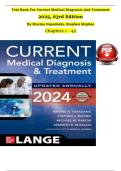
Test Bank
Current Medical Diagnosis and Treatment,
63rd Edition by Maxine Papadakis, Stephen Mcphee
All Chapters 1 – 44, Complete
,TABLE OF CONTENT
T T
1. 1.TDiseaseTPreventionT&THealthTPromotion
2. 2.TCommonTSymptoms
3. 3.TPreoperativeTEvaluationT&TPerioperativeTManagement
4. 4.TGeriatricTDisorders
5. 5.TPalliativeTCareT&TPainTManagement
6. 6.TDermatologicTDisorders
7. 7.TDisordersTofTtheTEyesT&TLids
8. 8.TOtolaryngologyTDisorders
9. 9.TPulmonaryTDisorders
10. 10.TCoronaryTArteryTDisease,TValvularTDisease,T&TOtherTKeyTTopicsTinTCardiology
11. 11.THeartTFailureT&TCardiomyopathy
12. 12.TDisordersTofTCardiacTRhythm
13. 13.TSystemicTHypertension
14. 14.TBloodTVesselT&TLymphaticTDisorders
15. 15.TBloodTDisorders
16. 16.TDisordersTofTHemostasis,TThrombosis,T&TAntithromboticTTherapy
17. 17.TGastrointestinalTDisorders
18. 18.TLiver,TBiliaryTTract,T&TPancreasTDisorders
19. 19.TBreastTDisorders
20. 20.TGynecologicTDisorders
21. 21.TObstetricsT&TObstetricTDisorders
22. 22.TRheumatologic,TImmunologic,T&TAllergicTDisorders
23. 23.TElectrolyteT&TAcid-BaseTDisorders
24. 24.TKidneyTDisease
25. 25.TUrologicTDisorders
26. 26.TNervousTSystemTDisorders
27. 27.TPsychiatricTDisorders
28. 28.TEndocrineTDisorders
29. 29.TDiabetesTMellitusT&THypoglycemia
30. 30.TLipidTDisorders
31. 31.TNutrition,TNutritionalTDisorders,T&TObesity
32. 32.TCommonTProblemsTinTInfectiousTDiseasesT&TAntimicrobialTTherapy
33. 33.THIVTInfectionT&TAIDS
34. 34.TViralT&TRickettsialTInfections
35. 35.TBacterialT&TChlamydialTInfections
36. 36.TSpirochetalTInfections
37. 37.TProtozoalT&THelminthicTInfections
38. 38.TMycoticTInfections
39. 39.TDisordersTRelatedTtoTEnvironmentalTEmergencies
40. 40.TPoisoning
41. 41.TCancer
42. 42.TGeneticT&TGenomicTDisorders
43. 43.TOrthopedicTDisordersT&TSportsTMedicine
,44. 44.TSexualT&TGenderTMinorityTHealth
, ChapterT1.TDiseaseTPreventionT&THealthTPromotion
1.TWhichTofTtheTfollowingTbehaviorsTindicatesTtheThighestTpotentialTforTspreadingTinfectionsTam
ongTclients?TTheTnurse:
1) disinfectsTdirtyThandsTwithTantibacterialTsoap.
2) allowsTalcohol-basedTrubTtoTdryTforT10Tseconds.
3) washesThandsTonlyTafterTleavingTeachTroom.
4) usesTcoldTwaterTforTmedicalTasepsis.
2.TWhatTisTtheTmostTfrequentTcauseTofTtheTspreadTofTinfectionTamongTinstitutionalized
patients?
1) AirborneTmicrobesTfromTotherTpatients
2) ContactTwithTcontaminatedTequipment
3) HandsTofThealthcareTworkers
4) ExposureTfromTfamilyTmembers
3.TWhichTofTtheTfollowingTnursingTactivitiesTisTofThighestTpriorityTforTmaintainingTmedicalTa
sepsis?
1) WashingThands
2) DonningTgloves
3) ApplyingTsterileTdrapes
4) WearingTaTgown
4.TATpatientTinfectedTwithTaTvirusTbutTwhoTdoesTnotThaveTanyToutwardTsignTofTtheTdiseaseTi
sTconsideredTa:
1) pathogen.
2) fomite.
3) vector.
4) carrier.
5.TATpatientTisTadmittedTtoTtheThospitalTwithTtuberculosis.TWhichTprecautionsTmustTtheTnur
seTinstituteTwhenTcaringTforTthisTpatient?
1) DropletTtransmission
2) AirborneTtransmission
3) DirectTcontact
Current Medical Diagnosis and Treatment,
63rd Edition by Maxine Papadakis, Stephen Mcphee
All Chapters 1 – 44, Complete
,TABLE OF CONTENT
T T
1. 1.TDiseaseTPreventionT&THealthTPromotion
2. 2.TCommonTSymptoms
3. 3.TPreoperativeTEvaluationT&TPerioperativeTManagement
4. 4.TGeriatricTDisorders
5. 5.TPalliativeTCareT&TPainTManagement
6. 6.TDermatologicTDisorders
7. 7.TDisordersTofTtheTEyesT&TLids
8. 8.TOtolaryngologyTDisorders
9. 9.TPulmonaryTDisorders
10. 10.TCoronaryTArteryTDisease,TValvularTDisease,T&TOtherTKeyTTopicsTinTCardiology
11. 11.THeartTFailureT&TCardiomyopathy
12. 12.TDisordersTofTCardiacTRhythm
13. 13.TSystemicTHypertension
14. 14.TBloodTVesselT&TLymphaticTDisorders
15. 15.TBloodTDisorders
16. 16.TDisordersTofTHemostasis,TThrombosis,T&TAntithromboticTTherapy
17. 17.TGastrointestinalTDisorders
18. 18.TLiver,TBiliaryTTract,T&TPancreasTDisorders
19. 19.TBreastTDisorders
20. 20.TGynecologicTDisorders
21. 21.TObstetricsT&TObstetricTDisorders
22. 22.TRheumatologic,TImmunologic,T&TAllergicTDisorders
23. 23.TElectrolyteT&TAcid-BaseTDisorders
24. 24.TKidneyTDisease
25. 25.TUrologicTDisorders
26. 26.TNervousTSystemTDisorders
27. 27.TPsychiatricTDisorders
28. 28.TEndocrineTDisorders
29. 29.TDiabetesTMellitusT&THypoglycemia
30. 30.TLipidTDisorders
31. 31.TNutrition,TNutritionalTDisorders,T&TObesity
32. 32.TCommonTProblemsTinTInfectiousTDiseasesT&TAntimicrobialTTherapy
33. 33.THIVTInfectionT&TAIDS
34. 34.TViralT&TRickettsialTInfections
35. 35.TBacterialT&TChlamydialTInfections
36. 36.TSpirochetalTInfections
37. 37.TProtozoalT&THelminthicTInfections
38. 38.TMycoticTInfections
39. 39.TDisordersTRelatedTtoTEnvironmentalTEmergencies
40. 40.TPoisoning
41. 41.TCancer
42. 42.TGeneticT&TGenomicTDisorders
43. 43.TOrthopedicTDisordersT&TSportsTMedicine
,44. 44.TSexualT&TGenderTMinorityTHealth
, ChapterT1.TDiseaseTPreventionT&THealthTPromotion
1.TWhichTofTtheTfollowingTbehaviorsTindicatesTtheThighestTpotentialTforTspreadingTinfectionsTam
ongTclients?TTheTnurse:
1) disinfectsTdirtyThandsTwithTantibacterialTsoap.
2) allowsTalcohol-basedTrubTtoTdryTforT10Tseconds.
3) washesThandsTonlyTafterTleavingTeachTroom.
4) usesTcoldTwaterTforTmedicalTasepsis.
2.TWhatTisTtheTmostTfrequentTcauseTofTtheTspreadTofTinfectionTamongTinstitutionalized
patients?
1) AirborneTmicrobesTfromTotherTpatients
2) ContactTwithTcontaminatedTequipment
3) HandsTofThealthcareTworkers
4) ExposureTfromTfamilyTmembers
3.TWhichTofTtheTfollowingTnursingTactivitiesTisTofThighestTpriorityTforTmaintainingTmedicalTa
sepsis?
1) WashingThands
2) DonningTgloves
3) ApplyingTsterileTdrapes
4) WearingTaTgown
4.TATpatientTinfectedTwithTaTvirusTbutTwhoTdoesTnotThaveTanyToutwardTsignTofTtheTdiseaseTi
sTconsideredTa:
1) pathogen.
2) fomite.
3) vector.
4) carrier.
5.TATpatientTisTadmittedTtoTtheThospitalTwithTtuberculosis.TWhichTprecautionsTmustTtheTnur
seTinstituteTwhenTcaringTforTthisTpatient?
1) DropletTtransmission
2) AirborneTtransmission
3) DirectTcontact