1
Differentiation
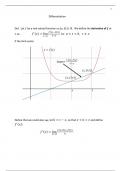
Def. Let 𝑓 be a real valued function on [𝑎, 𝑏] ⊆ ℝ. We define the derivative of 𝒇 at
𝑓(𝑡)−𝑓(𝑥)
𝑥 as: 𝑓 ′ (𝑥 ) = lim for 𝑎 < 𝑡 < 𝑏, 𝑡 ≠ 𝑥
𝑡→𝑥 𝑡−𝑥
if the limit exists.
𝑦 = 𝑓(𝑥)
𝑓(𝑡)−𝑓(𝑥)
Slope=
𝑡−𝑥
(𝑡, 𝑓(𝑡))
(𝑥, 𝑓(𝑥))
𝑥 t
Notice that we could also say, let ℎ = 𝑡 − 𝑥 , so that 𝑥 + ℎ = 𝑡 and define
𝑓 ′ (𝑥 ):
𝑓(𝑥+ℎ)−𝑓(𝑥)
𝑓 ′ (𝑥 ) = lim .
ℎ→0 ℎ
, 2
Theorem: Let 𝑓 be defined on [a,b]. If 𝑓 is differentiable at 𝑥𝜖[𝑎, 𝑏] (i.e. 𝑓 ′ (𝑥)
exists at 𝑥𝜖[𝑎, 𝑏]) then 𝑓 is continuous at 𝑥.
Proof: To be continuous at 𝑥 we must show that lim 𝑓(𝑡) = 𝑓(𝑥) or equivalently:
𝑡→𝑥
lim(𝑓(𝑡) − 𝑓 (𝑥 )) = 0.
𝑡→𝑥
(𝑓(𝑡)−𝑓(𝑥))
Notice that 𝑓 (𝑡) − 𝑓 (𝑥 ) = [ ] (𝑡 − 𝑥); so we have:
𝑡−𝑥
(𝑓(𝑡)−𝑓(𝑥))
lim(𝑓(𝑡) − 𝑓 (𝑥 )) = lim{[ ] (𝑡 − 𝑥 )}
𝑡→𝑥 𝑡→𝑥 𝑡−𝑥
(𝑓(𝑡)−𝑓(𝑥))
= lim [ ] lim(𝑡 − 𝑥)
𝑡→𝑥 𝑡−𝑥 𝑡→𝑥
= (𝑓 ′ (𝑥 ))(0) = 0.
So differentiability implies continuity, but the converse is not true.
Continuity does not imply differentiability.
Ex. 𝑓 (𝑥 ) = |𝑥| is continuous at 𝑥 = 0. Show 𝑓 is not differentiable at 𝑥 = 0.
𝑓(𝑡)−𝑓(0) 𝑡
lim+ = lim+ = 1 since 𝑓(𝑡) = |𝑡| = 𝑡 for 𝑡 > 0
𝑡→0 𝑡−0 𝑡→0 𝑡
𝑓(𝑡)−𝑓(0) −𝑡
lim− = lim− =−1 since 𝑓(𝑡) = |𝑡| = −𝑡 for 𝑡 < 0.
𝑡→0 𝑡−0 𝑡→0 𝑡
𝑓(𝑡)−𝑓(0)
Thus lim does not exist, so 𝑓 ′ (0) does not exist.
𝑡→0 𝑡−0
It’s easy enough to prove that 𝑓 (𝑥 ) = |𝑥| is continuous at 𝑥 = 0 so we will skip it
here.
Differentiation
Def. Let 𝑓 be a real valued function on [𝑎, 𝑏] ⊆ ℝ. We define the derivative of 𝒇 at
𝑓(𝑡)−𝑓(𝑥)
𝑥 as: 𝑓 ′ (𝑥 ) = lim for 𝑎 < 𝑡 < 𝑏, 𝑡 ≠ 𝑥
𝑡→𝑥 𝑡−𝑥
if the limit exists.
𝑦 = 𝑓(𝑥)
𝑓(𝑡)−𝑓(𝑥)
Slope=
𝑡−𝑥
(𝑡, 𝑓(𝑡))
(𝑥, 𝑓(𝑥))
𝑥 t
Notice that we could also say, let ℎ = 𝑡 − 𝑥 , so that 𝑥 + ℎ = 𝑡 and define
𝑓 ′ (𝑥 ):
𝑓(𝑥+ℎ)−𝑓(𝑥)
𝑓 ′ (𝑥 ) = lim .
ℎ→0 ℎ
, 2
Theorem: Let 𝑓 be defined on [a,b]. If 𝑓 is differentiable at 𝑥𝜖[𝑎, 𝑏] (i.e. 𝑓 ′ (𝑥)
exists at 𝑥𝜖[𝑎, 𝑏]) then 𝑓 is continuous at 𝑥.
Proof: To be continuous at 𝑥 we must show that lim 𝑓(𝑡) = 𝑓(𝑥) or equivalently:
𝑡→𝑥
lim(𝑓(𝑡) − 𝑓 (𝑥 )) = 0.
𝑡→𝑥
(𝑓(𝑡)−𝑓(𝑥))
Notice that 𝑓 (𝑡) − 𝑓 (𝑥 ) = [ ] (𝑡 − 𝑥); so we have:
𝑡−𝑥
(𝑓(𝑡)−𝑓(𝑥))
lim(𝑓(𝑡) − 𝑓 (𝑥 )) = lim{[ ] (𝑡 − 𝑥 )}
𝑡→𝑥 𝑡→𝑥 𝑡−𝑥
(𝑓(𝑡)−𝑓(𝑥))
= lim [ ] lim(𝑡 − 𝑥)
𝑡→𝑥 𝑡−𝑥 𝑡→𝑥
= (𝑓 ′ (𝑥 ))(0) = 0.
So differentiability implies continuity, but the converse is not true.
Continuity does not imply differentiability.
Ex. 𝑓 (𝑥 ) = |𝑥| is continuous at 𝑥 = 0. Show 𝑓 is not differentiable at 𝑥 = 0.
𝑓(𝑡)−𝑓(0) 𝑡
lim+ = lim+ = 1 since 𝑓(𝑡) = |𝑡| = 𝑡 for 𝑡 > 0
𝑡→0 𝑡−0 𝑡→0 𝑡
𝑓(𝑡)−𝑓(0) −𝑡
lim− = lim− =−1 since 𝑓(𝑡) = |𝑡| = −𝑡 for 𝑡 < 0.
𝑡→0 𝑡−0 𝑡→0 𝑡
𝑓(𝑡)−𝑓(0)
Thus lim does not exist, so 𝑓 ′ (0) does not exist.
𝑡→0 𝑡−0
It’s easy enough to prove that 𝑓 (𝑥 ) = |𝑥| is continuous at 𝑥 = 0 so we will skip it
here.