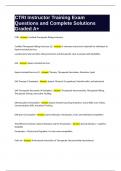
CTRI Instructor Training Exam
Questions and Complete Solutions
Graded A+
CTRI - Answer: Certified Therapeutic Riding Instructor
Certified Therapeutic Riding Instructor (2) - Answer: A voluntary entry level credential for individuals in
Equine Assisted Services.
a professional who provides riding instruction and therapeutic value to people with disabilities.
EAS - Answer: Equine Assisted Services
Equine Assisted Services (4) - Answer: Therapy, Therapeutic Recreation, Education, Sport
EAS Therapy (5 Examples) - Answer: Speech, Physical, Occupational, Mental health, and behavioral
EAS Therapeutic Recreation (4 Examples) - Answer: Therapeutic Horsemanship, Therapeutic Riding,
Therapeutic Driving, Interactive Vaulting
EAS Education (5 Examples) - Answer: Equine Assisted Learning Academics, Social Skills, Core Values,
Communication skills, Vocational Training
EAS Sport (3 examples) - Answer: Special Olympics, Paralympics, Team and Individual Competition
The Difference between Special Olympics and the Paralympics - Answer: Special Olympics - Cognitive
Disability
Paralympics - Physical and Cognitive, it is also more competitive.
Path Intl - Answer: Professional Association of Therapeutic Horsemanship International.
, What makes a good instructor? - Answer: observant, empathetic, Prioritizes Safety, Adaptive, Good
Communicator, Active Listener, People First Mindset, Knowledgeable, Direct, Positive Attitude, Patient,
Team Orientated, Trust Worthy,
Riding Skill Knowledge - Answer: Mounting, Safety check and observation of tack, walk, trot, and canter
in both directions, Posting diagonals and change of diagonals as needed, bending, half halts prior to
transitions and as needed, canter leads in both direction, posture and alignment, keep horse
comfortable and relaxed, light reign contact, basic ring figures, use of natural aids
CTRI Video Requirements - Answer: Teach and able bodied rider the riding pattern, must include a warm
up appropriate for the pattern, teach the aids for all riding skills expected in pattern, corrections and
praise for rider as seen in the moment, needs to include what, how, why, and where, Respond to what
you see, prepare the rider with the aids, half halts as needed, observations, timing of correction and
praise.
Learning Styles (3) - Answer: Visual, Auditory, kinesthetic learner
Visual Learner - Answer: Visual Markers and points of reference in the arena are important tools for the
visual learner
Auditory Learner - Answer: clear instructions with clear reinforcement from the side walkers is effective
kinesthetic learner - Answer: movement and doing enhance the learning experience for the student
Team Members - Answer: Leader, Rider, Sidewalker, Horse
First Riding Skills - Answer: walk halt transitions
What are riding Skills? - Answer: Communication with our horse
Benefits of Therapeutic Riding - Answer: Physical, cognitive, social, emotional
Questions and Complete Solutions
Graded A+
CTRI - Answer: Certified Therapeutic Riding Instructor
Certified Therapeutic Riding Instructor (2) - Answer: A voluntary entry level credential for individuals in
Equine Assisted Services.
a professional who provides riding instruction and therapeutic value to people with disabilities.
EAS - Answer: Equine Assisted Services
Equine Assisted Services (4) - Answer: Therapy, Therapeutic Recreation, Education, Sport
EAS Therapy (5 Examples) - Answer: Speech, Physical, Occupational, Mental health, and behavioral
EAS Therapeutic Recreation (4 Examples) - Answer: Therapeutic Horsemanship, Therapeutic Riding,
Therapeutic Driving, Interactive Vaulting
EAS Education (5 Examples) - Answer: Equine Assisted Learning Academics, Social Skills, Core Values,
Communication skills, Vocational Training
EAS Sport (3 examples) - Answer: Special Olympics, Paralympics, Team and Individual Competition
The Difference between Special Olympics and the Paralympics - Answer: Special Olympics - Cognitive
Disability
Paralympics - Physical and Cognitive, it is also more competitive.
Path Intl - Answer: Professional Association of Therapeutic Horsemanship International.
, What makes a good instructor? - Answer: observant, empathetic, Prioritizes Safety, Adaptive, Good
Communicator, Active Listener, People First Mindset, Knowledgeable, Direct, Positive Attitude, Patient,
Team Orientated, Trust Worthy,
Riding Skill Knowledge - Answer: Mounting, Safety check and observation of tack, walk, trot, and canter
in both directions, Posting diagonals and change of diagonals as needed, bending, half halts prior to
transitions and as needed, canter leads in both direction, posture and alignment, keep horse
comfortable and relaxed, light reign contact, basic ring figures, use of natural aids
CTRI Video Requirements - Answer: Teach and able bodied rider the riding pattern, must include a warm
up appropriate for the pattern, teach the aids for all riding skills expected in pattern, corrections and
praise for rider as seen in the moment, needs to include what, how, why, and where, Respond to what
you see, prepare the rider with the aids, half halts as needed, observations, timing of correction and
praise.
Learning Styles (3) - Answer: Visual, Auditory, kinesthetic learner
Visual Learner - Answer: Visual Markers and points of reference in the arena are important tools for the
visual learner
Auditory Learner - Answer: clear instructions with clear reinforcement from the side walkers is effective
kinesthetic learner - Answer: movement and doing enhance the learning experience for the student
Team Members - Answer: Leader, Rider, Sidewalker, Horse
First Riding Skills - Answer: walk halt transitions
What are riding Skills? - Answer: Communication with our horse
Benefits of Therapeutic Riding - Answer: Physical, cognitive, social, emotional