Surface Area of Parametric Surfaces
Def. Let 𝛷⃗ : 𝐷 ⊂ ℝ2 → ℝ3 , be a parametrization of a 𝐶 1 surface 𝑆. We define
the surface area of 𝑆 to be:
⃗ 𝒖×𝑻
𝑨(𝑺) = ∬𝑫 |𝑻 ⃗ 𝒗 |𝒅𝒖𝒅𝒗
⃗⃗⃗
𝜕𝛷 ⃗⃗⃗
𝜕𝛷
⃗𝑢 =
where 𝑇 ⃗𝑣 =
and 𝑇 .
𝜕𝑢 𝜕𝑣
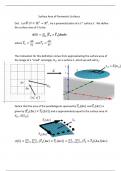
The motivation for this definition comes from approximating the surface area of
the image of a “small” rectangle, 𝑅𝑖𝑗 , on a surface 𝑆, which we will call 𝑆𝑖𝑗 .
⃗ (𝑅𝑖𝑗 )
𝑆𝑖𝑗 = 𝛷
⃗
𝛷 𝑆
Δ𝑣
𝑅𝑖𝑗
Δ𝑢
(𝑢𝑖∗ , 𝑣𝑗∗ )
⃗ 𝑢 (Δ𝑢) and 𝑇
Notice that the area of the parallelogram spanned by 𝑇 ⃗ 𝑣 (Δ𝑣) is
⃗ 𝑢 (Δ𝑢) × 𝑇
given by |𝑇 ⃗ 𝑣 (Δ𝑣)| and is approximately equal to the surface area of
𝑆𝑖𝑗 , 𝐴(𝑆𝑖𝑗 ).
⃗ 𝑣 (Δ𝑣)
𝑇 𝑆𝑖𝑗
⃗ 𝑢 (Δ𝑢)
𝑇
𝐴(𝑆) ≈ ∑𝑛𝑖=1 ∑𝑚 ⃗ ⃗ 𝑛 𝑚 ⃗ ⃗
𝑗=1 |𝑇𝑢 (Δ𝑢 ) × 𝑇𝑣 (Δ𝑣 )| = ∑𝑖=1 ∑𝑗=1 |𝑇𝑢 × 𝑇𝑣 |(Δ𝑢 )(Δ𝑣 ).
, 2
Now take a limit as Δ𝑢, Δ𝑣 go to zero to get:
⃗𝑢 × 𝑇
𝐴(𝑆) = ∬𝐷 |𝑇 ⃗ 𝑣 |𝑑𝑢𝑑𝑣
Ex. Find the surface area of the portion of a cone defined by:
𝑥 = 𝑟𝑐𝑜𝑠𝜃 𝑦 = 𝑟𝑠𝑖𝑛𝜃 𝑧=𝑟; 0 ≤ 𝑟 ≤ 2, 0 ≤ 𝜃 ≤ 2𝜋.
𝑧
⃗ (𝑟, 𝜃) =< 𝑟𝑐𝑜𝑠𝜃, 𝑟𝑠𝑖𝑛𝜃, 𝑟 >
𝛷
⃗ 𝑟 =< 𝑐𝑜𝑠𝜃, 𝑠𝑖𝑛𝜃, 0 >
𝑇
𝑦
⃗ 𝜃 =< −𝑟𝑠𝑖𝑛𝜃, 𝑟𝑐𝑜𝑠𝜃, 1 >
𝑇
𝑖 𝑗 𝑘⃗ 𝑥
⃗𝑇𝑟 × 𝑇
⃗ 𝜃 = | 𝑐𝑜𝑠𝜃 𝑠𝑖𝑛𝜃 1|
−𝑟𝑠𝑖𝑛𝜃 𝑟𝑐𝑜𝑠𝜃 0
= −𝑟𝑐𝑜𝑠𝜃𝑖 − 𝑟𝑠𝑖𝑛𝜃𝑗 + 𝑟𝑘⃗ ; So we have:
⃗𝑟 × 𝑇
|𝑇 ⃗ 𝜃 | = √𝑟 2 𝑐𝑜𝑠 2 𝜃 + 𝑟 2 𝑠𝑖𝑛2 𝜃 + 𝑟 2 .
= |𝑟|√2 (𝑟 > 0, so don’t need | |).
⃗ 𝑣 |𝑑𝑢𝑑𝑣 = ∫𝜃=2𝜋 ∫𝑟=2 𝑟√2 𝑑𝑟𝑑𝜃
⃗𝑢 × 𝑇
𝐴(𝑆) = ∬𝐷 |𝑇 𝜃=0 𝑟=0
𝜃=2𝜋 𝑟=2
𝐴(𝑆) = √2 ∫𝜃=0 ∫𝑟=0 𝑟 𝑑𝑟𝑑𝜃
𝜃=2𝜋 𝑟 2 2 𝜃=2𝜋
= √2 ∫𝜃=0 | 𝑑𝜃 = 2√2 ∫𝜃=0 𝑑𝜃 = 4𝜋√2.
2 0
Def. Let 𝛷⃗ : 𝐷 ⊂ ℝ2 → ℝ3 , be a parametrization of a 𝐶 1 surface 𝑆. We define
the surface area of 𝑆 to be:
⃗ 𝒖×𝑻
𝑨(𝑺) = ∬𝑫 |𝑻 ⃗ 𝒗 |𝒅𝒖𝒅𝒗
⃗⃗⃗
𝜕𝛷 ⃗⃗⃗
𝜕𝛷
⃗𝑢 =
where 𝑇 ⃗𝑣 =
and 𝑇 .
𝜕𝑢 𝜕𝑣
The motivation for this definition comes from approximating the surface area of
the image of a “small” rectangle, 𝑅𝑖𝑗 , on a surface 𝑆, which we will call 𝑆𝑖𝑗 .
⃗ (𝑅𝑖𝑗 )
𝑆𝑖𝑗 = 𝛷
⃗
𝛷 𝑆
Δ𝑣
𝑅𝑖𝑗
Δ𝑢
(𝑢𝑖∗ , 𝑣𝑗∗ )
⃗ 𝑢 (Δ𝑢) and 𝑇
Notice that the area of the parallelogram spanned by 𝑇 ⃗ 𝑣 (Δ𝑣) is
⃗ 𝑢 (Δ𝑢) × 𝑇
given by |𝑇 ⃗ 𝑣 (Δ𝑣)| and is approximately equal to the surface area of
𝑆𝑖𝑗 , 𝐴(𝑆𝑖𝑗 ).
⃗ 𝑣 (Δ𝑣)
𝑇 𝑆𝑖𝑗
⃗ 𝑢 (Δ𝑢)
𝑇
𝐴(𝑆) ≈ ∑𝑛𝑖=1 ∑𝑚 ⃗ ⃗ 𝑛 𝑚 ⃗ ⃗
𝑗=1 |𝑇𝑢 (Δ𝑢 ) × 𝑇𝑣 (Δ𝑣 )| = ∑𝑖=1 ∑𝑗=1 |𝑇𝑢 × 𝑇𝑣 |(Δ𝑢 )(Δ𝑣 ).
, 2
Now take a limit as Δ𝑢, Δ𝑣 go to zero to get:
⃗𝑢 × 𝑇
𝐴(𝑆) = ∬𝐷 |𝑇 ⃗ 𝑣 |𝑑𝑢𝑑𝑣
Ex. Find the surface area of the portion of a cone defined by:
𝑥 = 𝑟𝑐𝑜𝑠𝜃 𝑦 = 𝑟𝑠𝑖𝑛𝜃 𝑧=𝑟; 0 ≤ 𝑟 ≤ 2, 0 ≤ 𝜃 ≤ 2𝜋.
𝑧
⃗ (𝑟, 𝜃) =< 𝑟𝑐𝑜𝑠𝜃, 𝑟𝑠𝑖𝑛𝜃, 𝑟 >
𝛷
⃗ 𝑟 =< 𝑐𝑜𝑠𝜃, 𝑠𝑖𝑛𝜃, 0 >
𝑇
𝑦
⃗ 𝜃 =< −𝑟𝑠𝑖𝑛𝜃, 𝑟𝑐𝑜𝑠𝜃, 1 >
𝑇
𝑖 𝑗 𝑘⃗ 𝑥
⃗𝑇𝑟 × 𝑇
⃗ 𝜃 = | 𝑐𝑜𝑠𝜃 𝑠𝑖𝑛𝜃 1|
−𝑟𝑠𝑖𝑛𝜃 𝑟𝑐𝑜𝑠𝜃 0
= −𝑟𝑐𝑜𝑠𝜃𝑖 − 𝑟𝑠𝑖𝑛𝜃𝑗 + 𝑟𝑘⃗ ; So we have:
⃗𝑟 × 𝑇
|𝑇 ⃗ 𝜃 | = √𝑟 2 𝑐𝑜𝑠 2 𝜃 + 𝑟 2 𝑠𝑖𝑛2 𝜃 + 𝑟 2 .
= |𝑟|√2 (𝑟 > 0, so don’t need | |).
⃗ 𝑣 |𝑑𝑢𝑑𝑣 = ∫𝜃=2𝜋 ∫𝑟=2 𝑟√2 𝑑𝑟𝑑𝜃
⃗𝑢 × 𝑇
𝐴(𝑆) = ∬𝐷 |𝑇 𝜃=0 𝑟=0
𝜃=2𝜋 𝑟=2
𝐴(𝑆) = √2 ∫𝜃=0 ∫𝑟=0 𝑟 𝑑𝑟𝑑𝜃
𝜃=2𝜋 𝑟 2 2 𝜃=2𝜋
= √2 ∫𝜃=0 | 𝑑𝜃 = 2√2 ∫𝜃=0 𝑑𝜃 = 4𝜋√2.
2 0