1
The Change of Variables Theorem
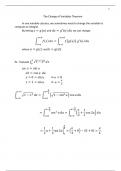
In one variable calculus, we sometimes need to change the variable to
compute an integral.
By letting 𝑥 = 𝑔(𝑢) and 𝑑𝑥 = 𝑔′ (𝑢) 𝑑𝑢 we can change:
𝑥=𝑏 𝑢=𝑑
∫ 𝑓(𝑥 ) 𝑑𝑥 = ∫ 𝑓(𝑔(𝑢)) 𝑔′ (𝑢) 𝑑𝑢
𝑥=𝑎 𝑢=𝑐
where 𝑎 = 𝑔(𝑐) and 𝑏 = 𝑔(𝑑).
1
Ex. Evaluate ∫0 √1 − 𝑥 2 𝑑𝑥
Let: 𝑥 = sin 𝑢
𝑑𝑥 = cos 𝑢 𝑑𝑢
𝑥 = 0 = sin 𝑢 ⇒𝑢 = 0
𝜋
𝑥 = 1 = sin 𝑢 ⇒𝑢=
2
𝜋
𝑥=1 𝑢= 2
∫ √1 − 𝑥 2 𝑑𝑥 = ∫ (√1 − sin2 𝑢) cos 𝑢 𝑑𝑢
𝑥=0 𝑢=0
𝜋 𝜋
𝑢= 2 𝑢= 2
1 1
=∫ cos2 𝑢 𝑑𝑢 = ∫ ( + cos 2𝑢) 𝑑𝑢
𝑢=0 𝑢=0 2 2
𝜋
1 1 𝜋 2 𝜋
= 𝑢 + sin 2𝑢| = ( + 0) − (0 + 0) = .
2 4 0 4 4
, 2
If we have ∬𝑅 𝑓 (𝑥, 𝑦)𝑑𝐴, how do we change variables in the integral when
𝑥 = 𝑔(𝑢, 𝑣) and 𝑦 = ℎ(𝑢, 𝑣)?
Def. (Jacobian Determinant): Let 𝑇: 𝐷 ∗ ⊆ ℝ2 → ℝ2 be a continuously
differentiable mapping where 𝑇 (𝑢, 𝑣 ) = (𝑔(𝑢, 𝑣 ), ℎ(𝑢, 𝑣 )). That is,
𝑥 = 𝑔(𝑢, 𝑣), 𝑦 = ℎ(𝑢, 𝑣). The Jacobian Determinant of 𝑻, is written
and defined by the following:
𝜕𝑥 𝜕𝑥
𝜕(𝑥,𝑦) 𝜕𝑢 𝜕𝑣
= | 𝜕𝑦 𝜕𝑦
| .
𝜕(𝑢,𝑣)
𝜕𝑢 𝜕𝑣
Ex. Let 𝑇 be the change of coordinates given by 𝑥 = 𝑟 cos 𝜃 and
𝜕(𝑥,𝑦)
𝑦 = 𝑟 sin 𝜃 (i.e. 𝑇(𝑟, 𝜃 ) = (𝑟 cos 𝜃 , 𝑟 sin 𝜃)). Calculate .
𝜕(𝑟,𝜃)
𝑥 = 𝑟 cos 𝜃 𝑦 = 𝑟 sin 𝜃
𝜕𝑥 𝜕𝑥
= cos 𝜃 = −𝑟 sin 𝜃
𝜕𝑟 𝜕𝜃
𝜕𝑦 𝜕𝑦
= sin 𝜃 = 𝑟 cos 𝜃
𝜕𝑟 𝜕𝜃
𝜕(𝑥,𝑦) cos 𝜃 −𝑟 sin 𝜃
= | |
𝜕(𝑟,𝜃) sin 𝜃 𝑟 cos 𝜃
𝜕(𝑥,𝑦)
= 𝑟 cos2 𝜃 + 𝑟 sin2 𝜃 = 𝑟.
𝜕(𝑟,𝜃)
, 3
In one variable calculus, when we changed variables by letting 𝑥 = 𝑔(𝑢) we
got:
𝑥=𝑏 𝑢=𝑑
∫ 𝑓(𝑥 ) 𝑑𝑥 = ∫ 𝑓(𝑔(𝑢)) 𝑔′ (𝑢) 𝑑𝑢.
𝑥=𝑎 𝑢=𝑐
So 𝑔′ (𝑢) was the “correction” factor we needed in the integral after substituting
𝑥 = 𝑔(𝑢) into the integral (we also needed to adjust the endpoints of
integration by 𝑎 = 𝑔(𝑐) and 𝑏 = 𝑔(𝑑)).
For a double integral, when we substitute 𝑥 = 𝑔(𝑢, 𝑣 ) and 𝑦 = ℎ(𝑢, 𝑣 ) the
“adjustment factor” in the integral is:
𝜕 (𝑥, 𝑦)
| |
𝜕(𝑢, 𝑣)
So the absolute value of the Jacobian determinant plays the role of 𝑔′ (𝑢) for a
double integral (this is also true for triple integrals).
If we substitute 𝑥 = 𝑔(𝑢, 𝑣 ), 𝑦 = ℎ(𝑢, 𝑣 ) in a double integral, the change of
variable formula is:
𝝏(𝒙, 𝒚)
∬ 𝒇(𝒙, 𝒚)𝒅𝑨 = ∬ 𝒇(𝒈(𝒖, 𝒗), 𝒉(𝒖, 𝒗)) | | 𝒅𝒖 𝒅𝒗.
𝝏(𝒖, 𝒗)
𝑹 𝑺
As with a one variable integral, we will also have to adjust the endpoints of
integration to reflect the new variables. In this case, if
𝑇(𝑢, 𝑣) = (𝑔(𝑢, 𝑣), ℎ(𝑢, 𝑣)), then 𝑆 is the set where 𝑇(𝑆) = 𝑅.
The Change of Variables Theorem
In one variable calculus, we sometimes need to change the variable to
compute an integral.
By letting 𝑥 = 𝑔(𝑢) and 𝑑𝑥 = 𝑔′ (𝑢) 𝑑𝑢 we can change:
𝑥=𝑏 𝑢=𝑑
∫ 𝑓(𝑥 ) 𝑑𝑥 = ∫ 𝑓(𝑔(𝑢)) 𝑔′ (𝑢) 𝑑𝑢
𝑥=𝑎 𝑢=𝑐
where 𝑎 = 𝑔(𝑐) and 𝑏 = 𝑔(𝑑).
1
Ex. Evaluate ∫0 √1 − 𝑥 2 𝑑𝑥
Let: 𝑥 = sin 𝑢
𝑑𝑥 = cos 𝑢 𝑑𝑢
𝑥 = 0 = sin 𝑢 ⇒𝑢 = 0
𝜋
𝑥 = 1 = sin 𝑢 ⇒𝑢=
2
𝜋
𝑥=1 𝑢= 2
∫ √1 − 𝑥 2 𝑑𝑥 = ∫ (√1 − sin2 𝑢) cos 𝑢 𝑑𝑢
𝑥=0 𝑢=0
𝜋 𝜋
𝑢= 2 𝑢= 2
1 1
=∫ cos2 𝑢 𝑑𝑢 = ∫ ( + cos 2𝑢) 𝑑𝑢
𝑢=0 𝑢=0 2 2
𝜋
1 1 𝜋 2 𝜋
= 𝑢 + sin 2𝑢| = ( + 0) − (0 + 0) = .
2 4 0 4 4
, 2
If we have ∬𝑅 𝑓 (𝑥, 𝑦)𝑑𝐴, how do we change variables in the integral when
𝑥 = 𝑔(𝑢, 𝑣) and 𝑦 = ℎ(𝑢, 𝑣)?
Def. (Jacobian Determinant): Let 𝑇: 𝐷 ∗ ⊆ ℝ2 → ℝ2 be a continuously
differentiable mapping where 𝑇 (𝑢, 𝑣 ) = (𝑔(𝑢, 𝑣 ), ℎ(𝑢, 𝑣 )). That is,
𝑥 = 𝑔(𝑢, 𝑣), 𝑦 = ℎ(𝑢, 𝑣). The Jacobian Determinant of 𝑻, is written
and defined by the following:
𝜕𝑥 𝜕𝑥
𝜕(𝑥,𝑦) 𝜕𝑢 𝜕𝑣
= | 𝜕𝑦 𝜕𝑦
| .
𝜕(𝑢,𝑣)
𝜕𝑢 𝜕𝑣
Ex. Let 𝑇 be the change of coordinates given by 𝑥 = 𝑟 cos 𝜃 and
𝜕(𝑥,𝑦)
𝑦 = 𝑟 sin 𝜃 (i.e. 𝑇(𝑟, 𝜃 ) = (𝑟 cos 𝜃 , 𝑟 sin 𝜃)). Calculate .
𝜕(𝑟,𝜃)
𝑥 = 𝑟 cos 𝜃 𝑦 = 𝑟 sin 𝜃
𝜕𝑥 𝜕𝑥
= cos 𝜃 = −𝑟 sin 𝜃
𝜕𝑟 𝜕𝜃
𝜕𝑦 𝜕𝑦
= sin 𝜃 = 𝑟 cos 𝜃
𝜕𝑟 𝜕𝜃
𝜕(𝑥,𝑦) cos 𝜃 −𝑟 sin 𝜃
= | |
𝜕(𝑟,𝜃) sin 𝜃 𝑟 cos 𝜃
𝜕(𝑥,𝑦)
= 𝑟 cos2 𝜃 + 𝑟 sin2 𝜃 = 𝑟.
𝜕(𝑟,𝜃)
, 3
In one variable calculus, when we changed variables by letting 𝑥 = 𝑔(𝑢) we
got:
𝑥=𝑏 𝑢=𝑑
∫ 𝑓(𝑥 ) 𝑑𝑥 = ∫ 𝑓(𝑔(𝑢)) 𝑔′ (𝑢) 𝑑𝑢.
𝑥=𝑎 𝑢=𝑐
So 𝑔′ (𝑢) was the “correction” factor we needed in the integral after substituting
𝑥 = 𝑔(𝑢) into the integral (we also needed to adjust the endpoints of
integration by 𝑎 = 𝑔(𝑐) and 𝑏 = 𝑔(𝑑)).
For a double integral, when we substitute 𝑥 = 𝑔(𝑢, 𝑣 ) and 𝑦 = ℎ(𝑢, 𝑣 ) the
“adjustment factor” in the integral is:
𝜕 (𝑥, 𝑦)
| |
𝜕(𝑢, 𝑣)
So the absolute value of the Jacobian determinant plays the role of 𝑔′ (𝑢) for a
double integral (this is also true for triple integrals).
If we substitute 𝑥 = 𝑔(𝑢, 𝑣 ), 𝑦 = ℎ(𝑢, 𝑣 ) in a double integral, the change of
variable formula is:
𝝏(𝒙, 𝒚)
∬ 𝒇(𝒙, 𝒚)𝒅𝑨 = ∬ 𝒇(𝒈(𝒖, 𝒗), 𝒉(𝒖, 𝒗)) | | 𝒅𝒖 𝒅𝒗.
𝝏(𝒖, 𝒗)
𝑹 𝑺
As with a one variable integral, we will also have to adjust the endpoints of
integration to reflect the new variables. In this case, if
𝑇(𝑢, 𝑣) = (𝑔(𝑢, 𝑣), ℎ(𝑢, 𝑣)), then 𝑆 is the set where 𝑇(𝑆) = 𝑅.