Physiotherapy in internal disorders: oncology
H1: introduction
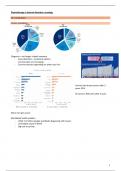
Cancer prevalence
Diagnosis = not longer a death sentence
- Early detection + treatment options
- Survival rates are increasing
- Survival chances depending on where you live
Survival rate breast cancer after 5
years: 95%
All cancers: 69% alive after 5 years
More men get cancer
Worldwide health problem
- 2018: 1.8 million people worldwide diagnosed with cancer
- 2nd largest cause of death
- Big cost to society
1
,Cancer pathophysiology
Primary cancer: solid cancers
Carcinoma
- Develops from epithelial tissue
o More traditional: breast, colon, prostate
- Metastasis: lymphogen and/or hematogen
o Spread through 2 different pathways
o Lymphatic system
▪ Metastasis through lymphatic system
▪ Mostly bad prognosis
o Blood system
▪ Less good prognosis
▪ Not curable at that stage
▪ To different body parts
- E.g. breast, prostate, colon, skin…
o Described to which body part it’s spread
Sarcoma
- Develops from connective tissue
- Metastasis: hematogenic
o Spread out through blood system
- E.g. Osteosarcoma (from bone), leiomyosarcoma (from smooth muscle)
Melanoma
- Melanocytes: cells produce melanin which gives skin colour
- Clustered in groups they form moles
Glioma
- Develops from cells in the brain or spinal cord
- Develops in nerve tissue
Blastoma
- Develops in the cells of a fetus or child
- ‘Malignancies in precursor cells or ‘blasts’
- In any organ
Primary cancer: hematological ‘blood’ cancers
Lymphoma
- Develops from lymphoid tissue
- Metastasis: by invasion and infiltration of lymphoid tissue
- E.g. Hodgkin
Leukemia
- Develops from blood-forming tissues (bone marrow, lymphatic system)
- Metastasis: by invasion and infiltration of lymphoid tissue
- E.g. Acute/chronic Leukemia
2
,Cancer staging
Stage
Stage – prognosis – survival chances
TNM
Cancer treatments
At time of diagnosis, not feeling very sick
It’s not the cancer that makes them sick = the
treatment (LT complications / side effects)
Surgery
Curative – complete removal
- Lymph nodes
- Tumour: with tumour-free edges (tumor cells > 1 cm from edge) →
low chance cancer cell still in body
Palliative care
- Pain relief
- Treating obstructions
o Tumor pressing on other structures
o Blocks throat, eating is difficult → remove parts of tumor to give comfort to P
3
, Lymph node dissection
Regional lymph nodes removed (in relation to tumor location)
- Remove as less as possible → damage to lymphatic system (can’t repair itself)
Extended dissection
- Sentinel lymph node biopsy
- Lymph node "sampling" : when regional lymph nodes are unclear (e.g. abdominal resection,
head/neck area)
- All lymph nodes, e.g. axillary or inguinal lymph node dissection
Sentinel lymph node biopsy
- Radioactive tracer with blue dye injected next to tumor
o Follows same way as the cancer cells
o Scanner: examine whether the sentinel lymph node has cancer cells
▪ = the first lymph node it reaches
- Dye transports itself via lymphatic vessels to lymph nodes
- "Warm & blue" lymph nodes removed for evaluation (1-8 lymph nodes)
- Breast
- Melanoma
- Head and neck cancer
- …
Axillary lymph node dissection
- = axillary clearance level I, II and/or III
- 10 to 50 lymph nodes
o Fat pat remove: under microscope can count how many lymph nodes are removed
- Breast cancer
- Melanoma/Sarcoma
- Head and neck cancer with positive lymph nodes (rare)
Inguinal lymph node dissection
- = inguinal lymph node clearance
- 15-20 lymph nodes
- Melanoma/Sarcoma
- Penile carcinoma/vulvar carcinoma
Tumor resection
4
H1: introduction
Cancer prevalence
Diagnosis = not longer a death sentence
- Early detection + treatment options
- Survival rates are increasing
- Survival chances depending on where you live
Survival rate breast cancer after 5
years: 95%
All cancers: 69% alive after 5 years
More men get cancer
Worldwide health problem
- 2018: 1.8 million people worldwide diagnosed with cancer
- 2nd largest cause of death
- Big cost to society
1
,Cancer pathophysiology
Primary cancer: solid cancers
Carcinoma
- Develops from epithelial tissue
o More traditional: breast, colon, prostate
- Metastasis: lymphogen and/or hematogen
o Spread through 2 different pathways
o Lymphatic system
▪ Metastasis through lymphatic system
▪ Mostly bad prognosis
o Blood system
▪ Less good prognosis
▪ Not curable at that stage
▪ To different body parts
- E.g. breast, prostate, colon, skin…
o Described to which body part it’s spread
Sarcoma
- Develops from connective tissue
- Metastasis: hematogenic
o Spread out through blood system
- E.g. Osteosarcoma (from bone), leiomyosarcoma (from smooth muscle)
Melanoma
- Melanocytes: cells produce melanin which gives skin colour
- Clustered in groups they form moles
Glioma
- Develops from cells in the brain or spinal cord
- Develops in nerve tissue
Blastoma
- Develops in the cells of a fetus or child
- ‘Malignancies in precursor cells or ‘blasts’
- In any organ
Primary cancer: hematological ‘blood’ cancers
Lymphoma
- Develops from lymphoid tissue
- Metastasis: by invasion and infiltration of lymphoid tissue
- E.g. Hodgkin
Leukemia
- Develops from blood-forming tissues (bone marrow, lymphatic system)
- Metastasis: by invasion and infiltration of lymphoid tissue
- E.g. Acute/chronic Leukemia
2
,Cancer staging
Stage
Stage – prognosis – survival chances
TNM
Cancer treatments
At time of diagnosis, not feeling very sick
It’s not the cancer that makes them sick = the
treatment (LT complications / side effects)
Surgery
Curative – complete removal
- Lymph nodes
- Tumour: with tumour-free edges (tumor cells > 1 cm from edge) →
low chance cancer cell still in body
Palliative care
- Pain relief
- Treating obstructions
o Tumor pressing on other structures
o Blocks throat, eating is difficult → remove parts of tumor to give comfort to P
3
, Lymph node dissection
Regional lymph nodes removed (in relation to tumor location)
- Remove as less as possible → damage to lymphatic system (can’t repair itself)
Extended dissection
- Sentinel lymph node biopsy
- Lymph node "sampling" : when regional lymph nodes are unclear (e.g. abdominal resection,
head/neck area)
- All lymph nodes, e.g. axillary or inguinal lymph node dissection
Sentinel lymph node biopsy
- Radioactive tracer with blue dye injected next to tumor
o Follows same way as the cancer cells
o Scanner: examine whether the sentinel lymph node has cancer cells
▪ = the first lymph node it reaches
- Dye transports itself via lymphatic vessels to lymph nodes
- "Warm & blue" lymph nodes removed for evaluation (1-8 lymph nodes)
- Breast
- Melanoma
- Head and neck cancer
- …
Axillary lymph node dissection
- = axillary clearance level I, II and/or III
- 10 to 50 lymph nodes
o Fat pat remove: under microscope can count how many lymph nodes are removed
- Breast cancer
- Melanoma/Sarcoma
- Head and neck cancer with positive lymph nodes (rare)
Inguinal lymph node dissection
- = inguinal lymph node clearance
- 15-20 lymph nodes
- Melanoma/Sarcoma
- Penile carcinoma/vulvar carcinoma
Tumor resection
4