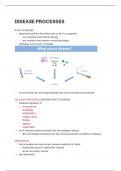
DISEASE PROCESSES
WHAT IS DISEASE
• abnormal condition that affect part or all of an organism
◦ not caused by external force/injury
◦ any condition that impairs normal physiology
• pathology is the study of disease
• various things can encourage disease and can encourage cancer growth
CELLULAR PROCESSES CONTRIBUTING TO DISEASE
• impaired regulation of
◦ sensescence
◦ autophagy
◦ inflammation
◦ oxidant stress
◦ fibrosis
◦ oedema
◦ hypertrophy
• all of these processes increase with chronological ageing
◦ diet and lifestyle will affect how all of these processes contribute to disease
SENESCENCE
• this is durable cell-cycle arrest (pauses replication of cells)
◦ induced by stress or replication induced
◦ serves to prevent cancer
• also defined by
, ◦ expression of anti-proliferative genes (triggers senescence)
◦ activation of damage sensing (and proinflammatory) signalling pathways
• leads to
◦ telomere shortening and chromatin modification
◦ senescence associated secretory phenotype
◦ persistent DNA damage response
WHAT CAUSES SENSESENCE
SENESCENCE AND CANCER
SENESCENCE AND AGE
• increase in secescent cells with both chronological age and molecular age
• age increases rate of accumulation of senescent cells
• molecular age influenced by genetics and lifestyle
◦ e.g. exposure to toxins increases oxidative stress which increases rate of
senescence
• senescent cells
WHAT IS DISEASE
• abnormal condition that affect part or all of an organism
◦ not caused by external force/injury
◦ any condition that impairs normal physiology
• pathology is the study of disease
• various things can encourage disease and can encourage cancer growth
CELLULAR PROCESSES CONTRIBUTING TO DISEASE
• impaired regulation of
◦ sensescence
◦ autophagy
◦ inflammation
◦ oxidant stress
◦ fibrosis
◦ oedema
◦ hypertrophy
• all of these processes increase with chronological ageing
◦ diet and lifestyle will affect how all of these processes contribute to disease
SENESCENCE
• this is durable cell-cycle arrest (pauses replication of cells)
◦ induced by stress or replication induced
◦ serves to prevent cancer
• also defined by
, ◦ expression of anti-proliferative genes (triggers senescence)
◦ activation of damage sensing (and proinflammatory) signalling pathways
• leads to
◦ telomere shortening and chromatin modification
◦ senescence associated secretory phenotype
◦ persistent DNA damage response
WHAT CAUSES SENSESENCE
SENESCENCE AND CANCER
SENESCENCE AND AGE
• increase in secescent cells with both chronological age and molecular age
• age increases rate of accumulation of senescent cells
• molecular age influenced by genetics and lifestyle
◦ e.g. exposure to toxins increases oxidative stress which increases rate of
senescence
• senescent cells