Garantie de satisfaction à 100% Disponible immédiatement après paiement En ligne et en PDF Tu n'es attaché à rien 4,6 TrustPilot
logo-home
Examen

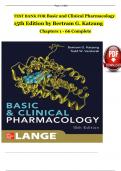
TEST BANK FOR Basic and Clinical Pharmacology 15th Edition by Bertram G. Katzung Chapters 1 - 66 Complete

Vendu
-
Pages
1025
Grade
A+
Publié le
09-12-2024
Écrit en
2024/2025

Table of Contents 1. Introduction: The Nature of Drugs & Drug Development & Regulation 2. Drug Receptors & Pharmacodynamics 3. Pharmacokinetics & Pharmacodynamics: Rational Dosing & the Time Course of Drug Action 4. Drug Biotransformation 5. Pharmacogenomics 6. Introduction to Autonomic Pharmacology 7. Cholinoceptor-Activating & Cholinesterase-Inhibiting Drugs 8. Cholinoceptor-Blocking Drugs 9. Adrenoceptor Agonists & Sympathomimetic Drugs 10. Adrenoceptor Antagonist Drugs 11. Antihypertensive Agents 12. Vasodilators & the Treatment of Angina Pectoris 13. Drugs Used in Heart Failure 14. Agents Used in Cardiac Arrhythmias 15. Diuretic Agents 16. Histamine, Serotonin, & the Ergot Alkaloids 17. Vasoactive Peptides 18. The Eicosanoids: Prostaglandins, Thromboxanes, Leukotrienes, & Related Compounds 19. Nitric Oxide 20. Drugs Used in Asthma 21. Introduction to the Pharmacology of CNS Drugs 22. Sedative-Hypnotic Drugs 23. The Alcohols 24. Antiseizure Drugs 25. General Anesthetics 26. Local Anesthetics 27. Skeletal Muscle Relaxants 28. Pharmacologic Management of Parkinsonism & Other Movement Disorders 29. Antipsychotic Agents & Lithium 30. Antidepressant Agents 31. Opioid Agonists & Antagonists 32. Drugs of Abuse 33. Agents Used in Cytopenias; Hematopoietic Growth Factors Page 3 of 822 34. Drugs Used in Disorders of Coagulation 35. Agents Used in Dyslipidemia 36. Nonsteroidal Anti-Inflammatory Drugs, Disease-Modifying Antirheumatic Drugs, Nonopioid Analgesics, & Drugs Used in Gout 37. Hypothalamic & Pituitary Hormones 38. Thyroid & Antithyroid Drugs 39. Adrenocorticosteroids & Adrenocortical Antagonists 40. The Gonadal Hormones & Inhibitors 41. Pancreatic Hormones & Antidiabetic Drugs 42. Agents That Affect Bone Mineral Homeostasis 43. Beta-Lactam & Other Cell Wall- & Membrane-Active Antibiotics 44. Tetracyclines, Macrolides, Clindamycin, Chloramphenicol, Streptogramins, & Oxazolidinones 45. Aminoglycosides & Spectinomycin 46. Sulfonamides, Trimethoprim, & Quinolones 47. Antimycobacterial Drugs 48. Antifungal Agents 49. Antiviral Agents 50. Miscellaneous Antimicrobial Agents; Disinfectants, Antiseptics, & Sterilants 51. Clinical Use of Antimicrobial Agents 52. Antiprotozoal Drugs 53. Clinical Pharmacology of the Antihelminthic Drugs 54. Cancer Chemotherapy 55. Immunopharmacology 56. Introduction to Toxicology: Occupational & Environmental 57. Heavy Metal Intoxication & Chelators 58. Management of the Poisoned Patient 59. Special Aspects of Perinatal & Pediatric Pharmacology 60. Special Aspects of Geriatric Pharmacology 61. Dermatologic Pharmacology 62. Drugs Used in the Treatment of Gastrointestinal Diseases 63. Therapeutic & Toxic Potential of Over-the-Counter Agents 64. Dietary Supplements & Herbal Medications 65. Rational Prescribing & Prescription Writing 66. Important Drug Interactions & Their Mechanisms Page 4 of 822 Chapter 1. Introduction: The Nature of Drugs & Drug Development & Regulation 1. A nurse working in radiology administers iodine to a patient who is having a computed tomography (CT) scan. The nurse working on the oncology unit administers chemotherapy to patients who have cancer. At the Public Health Department, a nurse administers a measles-mumps-rubella (MMR) vaccine to a 14-month-old child as a routine immunization. Which branch of pharmacology best describes the actions of all three nurses? A) Pharmacoeconomics B) Pharmacotherapeutics C) Pharmacodynamics D) Pharmacokinetics ANSWER: B Feedback: Pharmacology is the study of the biologic effects of chemicals. Nurses are involved with clinical pharmacology or pharmacotherapeutics, which is a branch of pharmacology that deals with the uses of drugs to treat, prevent, and diagnose disease. The radiology nurse is administering a drug to help diagnose a disease. The oncology nurse is administering a drug to help treat a disease. Pharmacoeconomics includes any costs involved in drug therapy. Pharmacodynamics involves how a drug affects the body and pharmacokinetics is how the body acts on the body. 2. A physician has ordered intramuscular (IM) injections of morphine, a narcotic, every 4 hours as needed for pain in a motor vehicle accident victim. The nurse is aware this drug has a high abuse potential. Under what category would morphine be classified? A) Schedule I B) Schedule II Page 5 of 822 C) Schedule III D) Schedule IV ANSWER: B Feedback: Narcotics with a high abuse potential are classified as Schedule II drugs because of severe dependence liability. Schedule I drugs have high abuse potential and no accepted medical use. Schedule III drugs have a lesser abuse potential than II and an accepted medical use. Schedule IV drugs have low abuse potential and limited dependence liability. 3. When involved in phase III drug evaluation studies, what responsibilities would the nurse have? A) Working with animals who are given experimental drugs B) Choosing appropriate patients to be involved in the drug study C) Monitoring and observing patients closely for adverse effects D) Conducting research to determine effectiveness of the drug ANSWER: C Feedback: Phase III studies involve use of a drug in a vast clinical population in which patients are asked to record any symptoms they experience while taking the drugs. Nurses may be responsible for helping collect and analyze the information to be shared with the Food and Drug Administration (FDA) but would not conduct research independently because nurses do not prescribe medications. Use of animals in drug testing is done in the preclinical trials. Select patients who are involved in phase II studies to participate in studies where the participants have the disease the drug is intended to treat. These patients are monitored closely for drug action and adverse effects. Phase I studies involve healthy human volunteers who are usually paid for their participation. Nurses may observe for adverse effects and toxicity. 4. What concept is considered when generic drugs are substituted for brand name drugs? A) Bioavailability Page 6 of 822 B) Critical concentration C) Distribution D) Half-life ANSWER: A Feedback: Bioavailability is the portion of a dose of a drug that reaches the systemic circulation and is available to act on body cells. Binders used in a generic drug may not be the same as those used in the brand name drug. Therefore, the way the body breaks down and uses the drug may differ, which may eliminate a generic drug substitution. Critical concentration is the amount of a drug that is needed to cause a therapeutic effect and should not differ between generic and brand name medications. Distribution is the phase of pharmacokinetics, which involves the movement of a drug to the bodys tissues and is the same in generic and brand name drugs. A drugs half-life is the time it takes for the amount of drug to decrease to half the peak level, which should not change when substituting a generic medication. 5. A nurse is assessing the patients home medication use. After listening to the patient list current medications, the nurse asks what priority question? A) Do you take any generic medications? B) Are any of these medications orphan drugs? C) Are these medications safe to take during pregnancy? D) Do you take any over-the-counter medications? ANSWER: D Feedback: It is important for the nurse to specifically question use of over-the-counter medications because patients may not consider them important. The patient is unlikely to know the meaning of orphan drugs unless they too are health care providers. Safety during pregnancy, use of a generic medication, or classification of orphan drugs are things the patient would be unable to answer but could be found in reference books if the nurse wishes to research them. Page 7 of 822 6. After completing a course on pharmacology for nurses, what will the nurse know? A) Everything necessary for safe and effective medication administration B) Current pharmacologic therapy; the nurse will not require ongoing education for 5 years. C) General drug information; the nurse can consult a drug guide for specific drug information. D) The drug actions that are associated with each classification of medication ANSWER: C Feedback: After completing a pharmacology course nurses will have general drug information needed for safe and effective medication administration but will need to consult a drug guide for specific drug information before administering any medication. Pharmacology is constantly changing, with new drugs entering the market and new uses for existing drugs identified. Continuing education in pharmacology is essential to safe practice. Nurses tend to become familiar with the medications they administer most often, but there will always be a need to research new drugs and also those the nurse is not familiar with because no nurse knows all medications. 7. A nurse is instructing a pregnant patient concerning the potential risk to her fetus from a Pregnancy Category B drug. What would the nurse inform the patient? A) Adequate studies in pregnant women have demonstrated there is no risk to the fetus. B) Animal studies have not demonstrated a risk to the fetus, but there have been no adequate studies in pregnant women. C) Animal studies have shown an adverse effect on the fetus, but there are no adequate studies in pregnant women. D) There is evidence of human fetal risk, but the potential benefits from use of the drug may be acceptable despite potential risks. ANSWER: B Page 8 of 822 Feedback: Category B indicates that animal studies have not demonstrated a risk to the fetus. However, there have not been adequate studies in pregnant women to demonstrate risk to a fetus during the first trimester of pregnancy and no evidence of risk in later trimesters. Category A indicates that adequate studies in pregnant women have not demonstrated a risk to the fetus in the first trimester or in later trimesters. Category C indicates that animal studies have shown an adverse effect on the fetus, but no adequate studies in humans. Category D reveals evidence of human fetal risk, but the potential benefits from the use of the drugs in pregnant women may outweigh potential risks. 8. Discharge planning for patients leaving the hospital should include instructions on the use of over-the-counter (OTC) drugs. Which comment by the patient would demonstrate a good understanding of OTC drugs? A) OTC drugs are safe and do not cause adverse effects if taken properly. B) OTC drugs have been around for years and have not been tested by the Food and Drug Administration (FDA). C) OTC drugs are different from any drugs available by prescription and cost less. D) OTC drugs could cause serious harm if not taken according to directions. ANSWER: D Feedback: It is important to follow package directions because OTCs are medications that can cause serious harm if not taken properly. OTCs are drugs that have been determined to be safe when taken as directed; however, all drugs can produce adverse effects even when taken properly. They may have originally been prescription drugs that were tested by the FDA or they may have been grandfathered in when the FDA laws changed. OTC education should always be included as a part of the hospital discharge instructions. 9. What would be the best source of drug information for a nurse? A) Drug Facts and Comparisons B) A nurses drug guide Page 9 of 822 C) A drug package insert D) The Physicians Drug Reference (PDR) ANSWER: B Feedback: A nurses drug guide provides nursing implications and patient teaching points that are most useful to nurses in addition to need-to-know drug information in a very user friendly organizational style.Lippincotts Nursing Drug Guide (LNDG) has drug monographs organized alphabetically and includes nursing implications and patient teaching points. Numerous other drug handbooks are also on the market and readily available for nurses to use. Although other drug reference books such as Drug Facts and Comparisons, PDR, and drug package inserts can all provide essential drug information, they will not contain nursing implications and teaching points and can be more difficult to use than nurses drug guides

Montrer plus Lire moins
Établissement
Basic And Clinical Pharmacology
Cours
Basic and Clinical Pharmacology


Oups ! Impossible de charger votre document. Réessayez ou contactez le support.

École, étude et sujet

Établissement
Basic and Clinical Pharmacology
Cours
Basic and Clinical Pharmacology

Infos sur le Document

Publié le
9 décembre 2024
Nombre de pages
1025
Écrit en
2024/2025
Type
Examen
Contient
Questions et réponses

Sujets

Aperçu du contenu

Page 1 of 822


TEST BANK FOR Basic and Clinical Pharmacology

15th Edition by Bertram G. Katzung
Chapters 1 - 66 Complete

, Page 2 of 822


Table of Contents

1. Introduction: The Nature of Drugs & Drug Development & Regulation
2. Drug Receptors & Pharmacodynamics
3. Pharmacokinetics & Pharmacodynamics: Rational Dosing & the Time Course of Drug Action
4. Drug Biotransformation
5. Pharmacogenomics


6. Introduction to Autonomic Pharmacology
7. Cholinoceptor-Activating & Cholinesterase-Inhibiting Drugs
8. Cholinoceptor-Blocking Drugs
9. Adrenoceptor Agonists & Sympathomimetic Drugs
10. Adrenoceptor Antagonist Drugs


11. Antihypertensive Agents
12. Vasodilators & the Treatment of Angina Pectoris
13. Drugs Used in Heart Failure
14. Agents Used in Cardiac Arrhythmias
15. Diuretic Agents


16. Histamine, Serotonin, & the Ergot Alkaloids
17. Vasoactive Peptides
18. The Eicosanoids: Prostaglandins, Thromboxanes, Leukotrienes, & Related Compounds
19. Nitric Oxide
20. Drugs Used in Asthma


21. Introduction to the Pharmacology of CNS Drugs
22. Sedative-Hypnotic Drugs
23. The Alcohols
24. Antiseizure Drugs
25. General Anesthetics
26. Local Anesthetics
27. Skeletal Muscle Relaxants
28. Pharmacologic Management of Parkinsonism & Other Movement Disorders
29. Antipsychotic Agents & Lithium
30. Antidepressant Agents
31. Opioid Agonists & Antagonists
32. Drugs of Abuse


33. Agents Used in Cytopenias; Hematopoietic Growth Factors

, Page 3 of 822


34. Drugs Used in Disorders of Coagulation
35. Agents Used in Dyslipidemia
36. Nonsteroidal Anti-Inflammatory Drugs, Disease-Modifying Antirheumatic Drugs, Nonopioid Analgesics, &
Drugs Used in Gout
37. Hypothalamic & Pituitary Hormones
38. Thyroid & Antithyroid Drugs
39. Adrenocorticosteroids & Adrenocortical Antagonists
40. The Gonadal Hormones & Inhibitors
41. Pancreatic Hormones & Antidiabetic Drugs
42. Agents That Affect Bone Mineral Homeostasis


43. Beta-Lactam & Other Cell Wall- & Membrane-Active Antibiotics
44. Tetracyclines, Macrolides, Clindamycin, Chloramphenicol, Streptogramins, & Oxazolidinones
45. Aminoglycosides & Spectinomycin
46. Sulfonamides, Trimethoprim, & Quinolones
47. Antimycobacterial Drugs
48. Antifungal Agents
49. Antiviral Agents
50. Miscellaneous Antimicrobial Agents; Disinfectants, Antiseptics, & Sterilants
51. Clinical Use of Antimicrobial Agents
52. Antiprotozoal Drugs
53. Clinical Pharmacology of the Antihelminthic Drugs
54. Cancer Chemotherapy
55. Immunopharmacology


56. Introduction to Toxicology: Occupational & Environmental
57. Heavy Metal Intoxication & Chelators
58. Management of the Poisoned Patient


59. Special Aspects of Perinatal & Pediatric Pharmacology
60. Special Aspects of Geriatric Pharmacology
61. Dermatologic Pharmacology
62. Drugs Used in the Treatment of Gastrointestinal Diseases
63. Therapeutic & Toxic Potential of Over-the-Counter Agents
64. Dietary Supplements & Herbal Medications
65. Rational Prescribing & Prescription Writing
66. Important Drug Interactions & Their Mechanisms

, Page 4 of 822


Chapter 1. Introduction: The Nature of Drugs & Drug Development & Regulation

1. A nurse working in radiology administers iodine to a patient who is having a
computed tomography (CT) scan. The nurse working on the oncology unit
administers chemotherapy to patients who have cancer. At the Public Health
Department, a nurse administers a measles-mumps-rubella (MMR) vaccine to
a 14-month-old child as a routine immunization. Which branch of
pharmacology best describes the actions of all three nurses?

A) Pharmacoeconomics

B) Pharmacotherapeutics

C) Pharmacodynamics

D) Pharmacokinetics

ANSWER: B

Feedback:

Pharmacology is the study of the biologic effects of chemicals. Nurses are
involved with clinical pharmacology or pharmacotherapeutics, which is a
branch of pharmacology that deals with the uses of drugs to treat, prevent,
and diagnose disease. The radiology nurse is administering a drug to help
diagnose a disease. The oncology nurse is administering a drug to help treat a
disease. Pharmacoeconomics includes any costs involved in drug therapy.
Pharmacodynamics involves how a drug affects the body and
pharmacokinetics is how the body acts on the body.


2. A physician has ordered intramuscular (IM) injections of morphine, a
narcotic, every 4 hours as needed for pain in a motor vehicle accident victim.
The nurse is aware this drug has a high abuse potential. Under what category
would morphine be classified?

A) Schedule I

B) Schedule II
$21.49
Accéder à l'intégralité du document:

Garantie de satisfaction à 100%
Disponible immédiatement après paiement
En ligne et en PDF
Tu n'es attaché à rien


Document également disponible en groupe

Thumbnail
Package deal
all bestTEST bank
-
1 99 2025
$ 2,012.11 Plus d'infos

Reviews from verified buyers

Affichage de tous les avis
11 mois de cela

5.0

1 revues

5
1
4
0
3
0
2
0
1
0
Avis fiables sur Stuvia

Tous les avis sont réalisés par de vrais utilisateurs de Stuvia après des achats vérifiés.

Faites connaissance avec le vendeur

Seller avatar
Les scores de réputation sont basés sur le nombre de documents qu'un vendeur a vendus contre paiement ainsi que sur les avis qu'il a reçu pour ces documents. Il y a trois niveaux: Bronze, Argent et Or. Plus la réputation est bonne, plus vous pouvez faire confiance sur la qualité du travail des vendeurs.
StuviaSource Teachme2-tutor
Voir profil
S'abonner Vous devez être connecté afin de suivre les étudiants ou les cours
Vendu
21
Membre depuis
1 année
Nombre de followers
2
Documents
672
Dernière vente
4 jours de cela
test bank tutors

Ace Your Exams with Our Top-Quality Test Banks! Unlock your academic potential with our expertly curated test banks, available now on Stuvia. Get access to comprehensive and reliable study materials to boost your grades and confidence. Why Choose Us? Extensive range of subjects and courses Accurate and up-to-date content Guaranteed to enhance your study sessions Act Now! Visit my Stuvia profile and get the test banks you need to succeed. Don’t miss out—start preparing smarter today!

Lire la suite Lire moins
4.9

104 revues

5
98
4
4
3
0
2
0
1
2

Récemment consulté par vous

Pourquoi les étudiants choisissent Stuvia

Créé par d'autres étudiants, vérifié par les avis

Une qualité sur laquelle compter : rédigé par des étudiants qui ont réussi et évalué par d'autres qui ont utilisé ce document.

Le document ne convient pas ? Choisis un autre document

Aucun souci ! Tu peux sélectionner directement un autre document qui correspond mieux à ce que tu cherches.

Paye comme tu veux, apprends aussitôt

Aucun abonnement, aucun engagement. Paye selon tes habitudes par carte de crédit et télécharge ton document PDF instantanément.

Student with book image

“Acheté, téléchargé et réussi. C'est aussi simple que ça.”

Alisha Student

Foire aux questions