THEME 2 – HEMATOLOGICAL DISORDERS
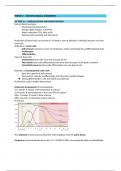
LECTURE 23 – NORMAL BLOOD AND HEMATOPOIESIS
Normal blood functions:
- Homeostasis (temperature)
- Energy supply (oxygen, nutrients)
- Waste collection (CO2, lactic acid)
- Defense (anti-microbial and anti-tumor)
Production of blood cells can increase in 3-8 folds in case of infection / bleeding. Because: we have
stem cells.
Definitions of stem cells:
- Self-renewal; numerous cycles of cell division, while maintaining the undifferentiated state
- Proliferation
- Differentiation
Types of stem cells:
- Omni-potent stem cells; turn into any type of cell
- Pluri-potent stem cells; differentiate into more than one type of cell (path is chosen)
- Committed precursor stem cells; differentiate into one type of cell
Definition of hematopoietic stem cells:
- Have the capacity of self-renewal
- Pluri-potent; capacity to differentiate into all lymph-myeloid lineages
During differentiation: cells lose ability to proliferate
Per decision: path is further determined.
Embryonic development of hematopoiesis:
3-11 weeks islands of hematopoiesis in yolk sac
6-24 weeks hematopoiesis in liver and (20%) in spleen
After 11 weeks some in bone marrow
After 24 weeks dominant in bone marrow
In schema:
The collection of bone marrow therefore often happens from the pelvis bones.
Frequency of hematopoietic stem cells: 2-.000-15.000, microscopically often not identifiable.
, Microscopical image of bone marrow
Niche of hematopoietic stem cells:
- Micro-environment:
Stromal cells; fibroblasts & fat cells
Specialized cells; CAR-cells, NES+-cells
(mesenchymal stem cells)
Erythropoiesis: development of red blood cells:
The last step takes place in the blood.
Erythrocytes characteristics:
- Largest fraction of the blood
- Life span: 120 days
- No nucleus, no proliferation
Thrombopoiesis; formation of platelets
- Formed by fragmentation of megakaryocytes
- Life span: 7-10 days
- Normal value: 150-400 x 10^9 / L
Thrombocytes:
- Bind to “von Willenbrand Factor” in damaged tissue activation of the coagulation
cascade
LECTURE 23 – NORMAL BLOOD AND HEMATOPOIESIS
Normal blood functions:
- Homeostasis (temperature)
- Energy supply (oxygen, nutrients)
- Waste collection (CO2, lactic acid)
- Defense (anti-microbial and anti-tumor)
Production of blood cells can increase in 3-8 folds in case of infection / bleeding. Because: we have
stem cells.
Definitions of stem cells:
- Self-renewal; numerous cycles of cell division, while maintaining the undifferentiated state
- Proliferation
- Differentiation
Types of stem cells:
- Omni-potent stem cells; turn into any type of cell
- Pluri-potent stem cells; differentiate into more than one type of cell (path is chosen)
- Committed precursor stem cells; differentiate into one type of cell
Definition of hematopoietic stem cells:
- Have the capacity of self-renewal
- Pluri-potent; capacity to differentiate into all lymph-myeloid lineages
During differentiation: cells lose ability to proliferate
Per decision: path is further determined.
Embryonic development of hematopoiesis:
3-11 weeks islands of hematopoiesis in yolk sac
6-24 weeks hematopoiesis in liver and (20%) in spleen
After 11 weeks some in bone marrow
After 24 weeks dominant in bone marrow
In schema:
The collection of bone marrow therefore often happens from the pelvis bones.
Frequency of hematopoietic stem cells: 2-.000-15.000, microscopically often not identifiable.
, Microscopical image of bone marrow
Niche of hematopoietic stem cells:
- Micro-environment:
Stromal cells; fibroblasts & fat cells
Specialized cells; CAR-cells, NES+-cells
(mesenchymal stem cells)
Erythropoiesis: development of red blood cells:
The last step takes place in the blood.
Erythrocytes characteristics:
- Largest fraction of the blood
- Life span: 120 days
- No nucleus, no proliferation
Thrombopoiesis; formation of platelets
- Formed by fragmentation of megakaryocytes
- Life span: 7-10 days
- Normal value: 150-400 x 10^9 / L
Thrombocytes:
- Bind to “von Willenbrand Factor” in damaged tissue activation of the coagulation
cascade