Chapter 9: Cellular Respiration and Fermentation 9.1
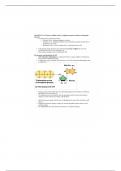
-Plant and animal cells break down
organic molecules by cellular respiration in the mitochondria.
-The chemical energy in food is transformed into chemical energy in ATP.
-Some energy is released to the environment as heat.
Concept 9.1: Catabolic pathways yield energy by oxidizing organic fuels
-Energy will enter the ecosystem as light and exit as heat.
-The chemical elements essential to life are recycled, such as Photosynthesis uses CO2 and
H2O to make organic molecules and O2
-Cellular respiration uses O2 and organic molecules to make ATP; CO2 and H2O are produced as
waste.
-Catabolic Pathways release stored energy by breaking down complex molecules.
Electron transfer from food molecules to other molecules plays a significant role in these
pathways.
-These processes are central to cellular respiration.
Catabolic Pathways and Production of ATP
-The Breakdown of organic molecules is exergonic.
-Fermentation is a partial degradation of Sugars that occurs without oxygen.
-Aerobic Respiration consumes organic molecules and oxygen and yields ATP.
-Anaerobic respiration is similar to aerobic respiration but consumes compounds other than
oxygen.
-Cellular Respiration includes both aerobic and anaerobic respiration but is often used to refer
to aerobic respiration.
-Though Carbohydrates, fats, and proteins are all consumed as fuel, it is helpful to trace cellular
respiration with sugar glucose.
C6H12O6 + 6 O2 → 6 CO2 + 6 H2O + Energy (ATP + heat)
, -Catabolic pathways do not directly power work in the cell; they are linked to work by ATP.
-Cells must constantly regenerate their supply of ATP from ADP and phosphate.
Redox reaction: Oxidation and Reduction
-The transfer of electrons during chemical reactions releases energy stored in organic molecules.
-This energy is ultimately used to synthesize ATP.
Principle of Redox
-Chemical reactions that transfer electrons between reactants are oxidation-reduction or redox
reactions.
-In redox reactions, the loss of electrons from a substance is called oxidation.
-The addition of electrons to a substance is called reduction
(the amount of positive charge is reduced.)
-Oxidation and reduction always go hand in hand.
-The electron donor is called the reducing agent; it reduces the electron acceptor.
- The electron acceptor is the oxidizing agent; it oxidizes the electron donor.
-Instead of fully transferring electrons, some redox reaction change electron sharing in covalent
bonds.
-Oxygen (O) atoms are very electronegative; they attract electrons and do not share them equally.
-The partial “gains” of electrons by O atoms and the partial “loss” of electrons by their bonding
partners constitute a redox reaction.
-Plant and animal cells break down
organic molecules by cellular respiration in the mitochondria.
-The chemical energy in food is transformed into chemical energy in ATP.
-Some energy is released to the environment as heat.
Concept 9.1: Catabolic pathways yield energy by oxidizing organic fuels
-Energy will enter the ecosystem as light and exit as heat.
-The chemical elements essential to life are recycled, such as Photosynthesis uses CO2 and
H2O to make organic molecules and O2
-Cellular respiration uses O2 and organic molecules to make ATP; CO2 and H2O are produced as
waste.
-Catabolic Pathways release stored energy by breaking down complex molecules.
Electron transfer from food molecules to other molecules plays a significant role in these
pathways.
-These processes are central to cellular respiration.
Catabolic Pathways and Production of ATP
-The Breakdown of organic molecules is exergonic.
-Fermentation is a partial degradation of Sugars that occurs without oxygen.
-Aerobic Respiration consumes organic molecules and oxygen and yields ATP.
-Anaerobic respiration is similar to aerobic respiration but consumes compounds other than
oxygen.
-Cellular Respiration includes both aerobic and anaerobic respiration but is often used to refer
to aerobic respiration.
-Though Carbohydrates, fats, and proteins are all consumed as fuel, it is helpful to trace cellular
respiration with sugar glucose.
C6H12O6 + 6 O2 → 6 CO2 + 6 H2O + Energy (ATP + heat)
, -Catabolic pathways do not directly power work in the cell; they are linked to work by ATP.
-Cells must constantly regenerate their supply of ATP from ADP and phosphate.
Redox reaction: Oxidation and Reduction
-The transfer of electrons during chemical reactions releases energy stored in organic molecules.
-This energy is ultimately used to synthesize ATP.
Principle of Redox
-Chemical reactions that transfer electrons between reactants are oxidation-reduction or redox
reactions.
-In redox reactions, the loss of electrons from a substance is called oxidation.
-The addition of electrons to a substance is called reduction
(the amount of positive charge is reduced.)
-Oxidation and reduction always go hand in hand.
-The electron donor is called the reducing agent; it reduces the electron acceptor.
- The electron acceptor is the oxidizing agent; it oxidizes the electron donor.
-Instead of fully transferring electrons, some redox reaction change electron sharing in covalent
bonds.
-Oxygen (O) atoms are very electronegative; they attract electrons and do not share them equally.
-The partial “gains” of electrons by O atoms and the partial “loss” of electrons by their bonding
partners constitute a redox reaction.