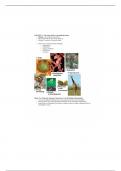
CONCEPT 8.3: ATP powers cellular work by coupling exergonic reactions to endergonic
reactions
• A cell does three main kinds of work:
– Chemical work—pushing endergonic reactions
– Transport work—pumping substances across membranes against the direction of
spontaneous movement
– Mechanical work—such as beating cilia or contracting muscle cells
• Cells manage energy resources to do work through energy coupling, the use of an
exergonic process to drive an endergonic one
• Most energy coupling in cells is mediated by ATP
The Structure and Hydrolysis of ATP
• ATP (adenosine triphosphate) is composed of ribose (a sugar), adenine (a nitrogenous
base), and three phosphate groups
• In addition to energy coupling, ATP functions as one of the nucleoside triphosphates used
to make RNA
• Energy is released from ATP when the terminal phosphate bond is broken by hydrolysis,
the addition of a water molecule
• The energy does not come directly from the phosphate bonds, but from the chemical
change to a state of lower free energy in the products
• ATP releases more energy with the loss of a phosphate than most other molecules could
deliver
• Repulsion between the negative charges of the three phosphate groups creates a lot of
potential energy
• The triphosphate tail is the chemical equivalent of a compressed spring
reactions
• A cell does three main kinds of work:
– Chemical work—pushing endergonic reactions
– Transport work—pumping substances across membranes against the direction of
spontaneous movement
– Mechanical work—such as beating cilia or contracting muscle cells
• Cells manage energy resources to do work through energy coupling, the use of an
exergonic process to drive an endergonic one
• Most energy coupling in cells is mediated by ATP
The Structure and Hydrolysis of ATP
• ATP (adenosine triphosphate) is composed of ribose (a sugar), adenine (a nitrogenous
base), and three phosphate groups
• In addition to energy coupling, ATP functions as one of the nucleoside triphosphates used
to make RNA
• Energy is released from ATP when the terminal phosphate bond is broken by hydrolysis,
the addition of a water molecule
• The energy does not come directly from the phosphate bonds, but from the chemical
change to a state of lower free energy in the products
• ATP releases more energy with the loss of a phosphate than most other molecules could
deliver
• Repulsion between the negative charges of the three phosphate groups creates a lot of
potential energy
• The triphosphate tail is the chemical equivalent of a compressed spring