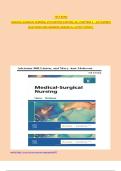
TEST BANK - Nursing Today: Transition and Trends,
11th Edition (Zerwekh)
Chapters 1 - 26 | All Chapters
,Test Bank - Nursing Today: Transition and Trends, 11th Edition
jd jd jd jd jd jd jd jd jd jd
TABLE OF CONTENTS jd jd
,Chapter 01: Role Transitions jd jd jd
.
abirb.com/test
MULTIPLE CHOICE jd
1. A graduate nurse has been hired as a nurse at a local hospital. The new nurse is inth
jd jd jd jd jd jd jd jd jd jd jd jd jd jd jd jd jd jd
.
e honeymoon phase of role transition when making which of the following statemen
jd
jd
jd jd jd jd jd jd jd jd jd jd jd
ts? a. “I am so nervous about being on my own as a nurse.”
j d jd jd jd jd jd jd jd jd jd jd jd jd
b. “This will be a great learning experience.” jd jd jd jd jd jd .
c. “I can’t wait to have a steady paycheck.”
jd jd jd jd jd jd jd
d. “This job is perfect. I can finally do things my own way.”
jd jd jd jd jd jd jd jd jd jd jd
ANSWER: D jd .
The honeymoon phase is when the student nurse sees the world of nursing as quite rosy. O
jd jd jd jd jd jd jd jd jd jd jd jd jd jd jd jd
ften, the new graduate is fascinated with the thrill of arriving in the profession. Realitysho
jd jd jd jd jd jd jd jd jd jd jd jd jd jd jd
ck occurs when one moves into the workforce after several years of educational preparatio
jd jd jd jd jd jd jd jd jd jd jd jd jd
n. Recovery and resolution occur when the graduate nurse is able to laugh at . encountered
jd jd jd jd jd jd jd jd jd jd jd jd jd jd
jd
jd
situations. During this time, tension decreases, perception increases, and thenurse is able t
jd jd jd jd jd jd jd jd jd jd jd jd jd
o grow as a person.
jd jd jd jd
.
PTS: 1 jd DIF: Cognitive Level: Application/Applying
jd jd jd
REF: Table 1.1 jd jd OBJ: Identify the characteristics of reality shock.
jd jd jd jd jd jd
TOP: Reality shock jd jd MSC: NCLEX®: Safe and effective care environment jd jd jd jd jd jd
.
2. Which of the following actions by the graduate nurse is an inappropriate methodologyt
jd jd jd jd jd jd jd jd jd jd jd jd jd
o recover from reality shock?
j d jd jd jd
a. Networking .
b. Obtaining a mentor jd jd
c. Returning to school jd jd
d. Joining a support group jd jd jd
.
ANSWER: C jd
The transition period is successfully managed when the graduate is able to evaluate the wor
jd jd jd jd jd jd jd jd jd jd jd jd jd jd
k situation objectively and predict effectively the actions and reactions of other staff.
j d jd jd jd jd jd jd jd jd jd jd jd
Nurturing
the ability to see humor in a situation may be a first step. Returning to school is a positivest
jd jd jd jd jd jd jd jd jd jd jd jd jd jd jd jd jd jd jd
ep . after the graduate has worked through role transition, has some clinical experience,and
jd jd jd jd jd jd jd jd jd jd jd jd jd jd jd
is ready to focus on a new career objective. Networking, obtaining a mentor, and joining a s
jd jd jd jd jd jd jd jd jd jd jd jd jd jd jd jd
upport group would give the graduate nurse an opportunity to talk to others experiencing th
jd jd jd jd jd jd jd jd jd jd jd jd jd jd
e .
j d
, stress associated with reality shock. The nurse would benefit from “talking through” issuesa
jd jd jd jd jd jd jd jd jd jd jd jd jd
nd learning how to cope.
jd jd jd jd
PTS: 1 jd DIF: Cognitive Level: Application/Applying .
jd jd jd jd
REF: p. 9 jd jd
OBJ: Describe methods to promote a successful transition.
jd jd jd jd jd jd jd jd
TOP: Reality shock jd jd
MSC: NCLEX®: Safe and effective care environment Not applicable
jd jd jd jd jd jd jd jd
.
3. A nurse is trying to avoid burnout. Which of the following actions is a valid way to achieveth
jd jd jd jd jd jd jd jd jd jd jd jd jd jd jd jd jd jd
is?
a. Refusing to constantly work extra shifts jd jd jd jd jd .
b. Withdrawing from peer support group jd jd jd jd
c. “Going native” jd
d. Changing jobs every 6 to 12 months . jd jd jd jd jd jd jd
ANSWER: A jd
One of the quickest ways to experience burnout is to “overwork the overtime.” Set priorities
jd jd jd jd jd jd jd jd jd jd jd jd jd jd jd
with your mental and physical health being the highest priority. Learning to say “no” to extr
jd jd jd jd jd jd jd jd jd jd jd jd jd jd jd
a shifts is a positive means of coping of avoiding burnout. “Going native” is the term that . d
jd jd jd jd jd jd jd jd jd jd jd jd jd jd jd jd jd jd
escribes how recent graduates begin to copy and identify the reality of theirrole-
jd jd jd jd jd jd jd jd jd jd jd jd jd
transition experience by rejecting the values from nursing school and functioning more like
jd jd jd jd jd jd jd jd jd jd jd jd jd
a team member at their place of employment. Withdrawing from peer support groups, “goin
jd jd jd jd jd jd jd jd jd jd jd jd jd
g native,” . and changing jobs every 6 to 12 months would increase the chance of the nurse e
jd jd jd jd jd jd jd jd jd jd jd jd jd jd jd jd jd jd
xperiencing
burnout. The nurse should instead focus on his/her practice and seek out support fromot
jd jd jd jd jd jd jd jd jd jd jd jd jd jd
her nurses.j d
.
PTS: 1 jd DIF: Cognitive Level: Application/Applying
jd jd jd
REF: p. 7 jd jd
OBJ: Describe methods to promote a successful transition.
jd jd jd jd jd jd jd jd
TOP: Reality shock jd jd
MSC: NCLEX®: Safe and effective care environment Not applicable .
jd jd jd jd jd jd jd jd jd
4. Which of the following statements by the graduate nurse shows an understanding ofr
jd jd jd jd jd jd jd jd jd jd jd jd jd
eality shock as it applies to nursing? .
j d jd jd jd jd jd jd
a. “Reality shock is the period when a person moves from school into the jd jd jd jd jd jd jd jd jd jd jd jd
b. workforce.”“Reality shock is the realization that practice and education are not thes jd jd jd jd jd jd jd jd jd jd jd jd
ame.”
c. “Reality shock is the period from graduation to becoming an experienced nurse.”.
jd jd jd jd jd jd jd jd jd jd jd
d. “Reality shock is a transition phase that new graduates go through before changingj
jd jd jd jd jd jd jd jd jd jd jd jd jd
obs.”
ANSWER: A jd .
11th Edition (Zerwekh)
Chapters 1 - 26 | All Chapters
,Test Bank - Nursing Today: Transition and Trends, 11th Edition
jd jd jd jd jd jd jd jd jd jd
TABLE OF CONTENTS jd jd
,Chapter 01: Role Transitions jd jd jd
.
abirb.com/test
MULTIPLE CHOICE jd
1. A graduate nurse has been hired as a nurse at a local hospital. The new nurse is inth
jd jd jd jd jd jd jd jd jd jd jd jd jd jd jd jd jd jd
.
e honeymoon phase of role transition when making which of the following statemen
jd
jd
jd jd jd jd jd jd jd jd jd jd jd
ts? a. “I am so nervous about being on my own as a nurse.”
j d jd jd jd jd jd jd jd jd jd jd jd jd
b. “This will be a great learning experience.” jd jd jd jd jd jd .
c. “I can’t wait to have a steady paycheck.”
jd jd jd jd jd jd jd
d. “This job is perfect. I can finally do things my own way.”
jd jd jd jd jd jd jd jd jd jd jd
ANSWER: D jd .
The honeymoon phase is when the student nurse sees the world of nursing as quite rosy. O
jd jd jd jd jd jd jd jd jd jd jd jd jd jd jd jd
ften, the new graduate is fascinated with the thrill of arriving in the profession. Realitysho
jd jd jd jd jd jd jd jd jd jd jd jd jd jd jd
ck occurs when one moves into the workforce after several years of educational preparatio
jd jd jd jd jd jd jd jd jd jd jd jd jd
n. Recovery and resolution occur when the graduate nurse is able to laugh at . encountered
jd jd jd jd jd jd jd jd jd jd jd jd jd jd
jd
jd
situations. During this time, tension decreases, perception increases, and thenurse is able t
jd jd jd jd jd jd jd jd jd jd jd jd jd
o grow as a person.
jd jd jd jd
.
PTS: 1 jd DIF: Cognitive Level: Application/Applying
jd jd jd
REF: Table 1.1 jd jd OBJ: Identify the characteristics of reality shock.
jd jd jd jd jd jd
TOP: Reality shock jd jd MSC: NCLEX®: Safe and effective care environment jd jd jd jd jd jd
.
2. Which of the following actions by the graduate nurse is an inappropriate methodologyt
jd jd jd jd jd jd jd jd jd jd jd jd jd
o recover from reality shock?
j d jd jd jd
a. Networking .
b. Obtaining a mentor jd jd
c. Returning to school jd jd
d. Joining a support group jd jd jd
.
ANSWER: C jd
The transition period is successfully managed when the graduate is able to evaluate the wor
jd jd jd jd jd jd jd jd jd jd jd jd jd jd
k situation objectively and predict effectively the actions and reactions of other staff.
j d jd jd jd jd jd jd jd jd jd jd jd
Nurturing
the ability to see humor in a situation may be a first step. Returning to school is a positivest
jd jd jd jd jd jd jd jd jd jd jd jd jd jd jd jd jd jd jd
ep . after the graduate has worked through role transition, has some clinical experience,and
jd jd jd jd jd jd jd jd jd jd jd jd jd jd jd
is ready to focus on a new career objective. Networking, obtaining a mentor, and joining a s
jd jd jd jd jd jd jd jd jd jd jd jd jd jd jd jd
upport group would give the graduate nurse an opportunity to talk to others experiencing th
jd jd jd jd jd jd jd jd jd jd jd jd jd jd
e .
j d
, stress associated with reality shock. The nurse would benefit from “talking through” issuesa
jd jd jd jd jd jd jd jd jd jd jd jd jd
nd learning how to cope.
jd jd jd jd
PTS: 1 jd DIF: Cognitive Level: Application/Applying .
jd jd jd jd
REF: p. 9 jd jd
OBJ: Describe methods to promote a successful transition.
jd jd jd jd jd jd jd jd
TOP: Reality shock jd jd
MSC: NCLEX®: Safe and effective care environment Not applicable
jd jd jd jd jd jd jd jd
.
3. A nurse is trying to avoid burnout. Which of the following actions is a valid way to achieveth
jd jd jd jd jd jd jd jd jd jd jd jd jd jd jd jd jd jd
is?
a. Refusing to constantly work extra shifts jd jd jd jd jd .
b. Withdrawing from peer support group jd jd jd jd
c. “Going native” jd
d. Changing jobs every 6 to 12 months . jd jd jd jd jd jd jd
ANSWER: A jd
One of the quickest ways to experience burnout is to “overwork the overtime.” Set priorities
jd jd jd jd jd jd jd jd jd jd jd jd jd jd jd
with your mental and physical health being the highest priority. Learning to say “no” to extr
jd jd jd jd jd jd jd jd jd jd jd jd jd jd jd
a shifts is a positive means of coping of avoiding burnout. “Going native” is the term that . d
jd jd jd jd jd jd jd jd jd jd jd jd jd jd jd jd jd jd
escribes how recent graduates begin to copy and identify the reality of theirrole-
jd jd jd jd jd jd jd jd jd jd jd jd jd
transition experience by rejecting the values from nursing school and functioning more like
jd jd jd jd jd jd jd jd jd jd jd jd jd
a team member at their place of employment. Withdrawing from peer support groups, “goin
jd jd jd jd jd jd jd jd jd jd jd jd jd
g native,” . and changing jobs every 6 to 12 months would increase the chance of the nurse e
jd jd jd jd jd jd jd jd jd jd jd jd jd jd jd jd jd jd
xperiencing
burnout. The nurse should instead focus on his/her practice and seek out support fromot
jd jd jd jd jd jd jd jd jd jd jd jd jd jd
her nurses.j d
.
PTS: 1 jd DIF: Cognitive Level: Application/Applying
jd jd jd
REF: p. 7 jd jd
OBJ: Describe methods to promote a successful transition.
jd jd jd jd jd jd jd jd
TOP: Reality shock jd jd
MSC: NCLEX®: Safe and effective care environment Not applicable .
jd jd jd jd jd jd jd jd jd
4. Which of the following statements by the graduate nurse shows an understanding ofr
jd jd jd jd jd jd jd jd jd jd jd jd jd
eality shock as it applies to nursing? .
j d jd jd jd jd jd jd
a. “Reality shock is the period when a person moves from school into the jd jd jd jd jd jd jd jd jd jd jd jd
b. workforce.”“Reality shock is the realization that practice and education are not thes jd jd jd jd jd jd jd jd jd jd jd jd
ame.”
c. “Reality shock is the period from graduation to becoming an experienced nurse.”.
jd jd jd jd jd jd jd jd jd jd jd
d. “Reality shock is a transition phase that new graduates go through before changingj
jd jd jd jd jd jd jd jd jd jd jd jd jd
obs.”
ANSWER: A jd .