IPP PCR
Professional Conduct and Regulation
The legal profession and regulating the profession
THE LEGAL PROFESSION
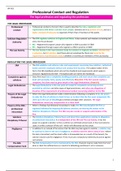
Professional → Professional conduct is the term that is used to describe the rules, regulations and
conduct requirements with which a solicitor must comply. Solicitors are in a position of trust, and so a
higher standard of behaviour is expected of them than of members of the public.
Solicitors Regulation → The SRA regulates solicitors in England and Wales. It also controls such matters as training and
Authority entry into the profession.
→ REL – Registered European Lawyer who registers w SRA to practice in E&W
→ RFL – Registered Foreign Lawyer who registers w SRA to practice in E&W
The Law Society → The Law Society is the representative body for solicitors in England and Wales. Membership
is voluntary, but all solicitors (and those who are employed by them) are bound by the
requirements of professional conduct whether or not they are members of The Law Society.
REGULATING THE LEGAL PROFESSION
SRA → The SRA publishes and enforces rules and requirements concerning how solicitors, authorised
bodies and their employees behave and conduct their business. The subject matter of this
Part is the SRA Handbook which sets out the standards and requirements which apply to
everyone regulated by the SRA – Principles/Codes are within the Handbook
Complaints against → Every firm must have a complaints handling procedure, and must ensure that complaints are
solicitors dealt with promptly, fairly, openly and effectively (Para 8.5). If the firm cannot resolve a
complaint, the client must be given details of the Legal Ombudsman. (Para 8.4).
Legal Ombudsman → The Legal Ombudsman is the sole point of receipt for complaints concerning services
provided by solicitors and other types of legal practitioner, and refers any allegations of
breaches of the requirements of professional conduct concerning solicitors to the SRA.
Powers of the Legal → Where the Legal Ombudsman makes a determination following a complaint, it has the power
Ombudsman to order the firm of solicitors to limit its fees, or to direct that the firm must compensate the
client up to the sum of £50,000 (plus interest) amongst other sanctions. The Legal
Ombudsman cannot pay compensation to a client itself.
Powers of the SRA – → Where a finding of professional misconduct is made, the SRA may discipline the firm or
professional regulated individual by imposing disciplinary sanctions, or referring the matter to the
misconduct Solicitors Disciplinary Tribunal. The SRA may also revoke or suspend authorisation of the
firm.
Solicitors → The Solicitors Disciplinary Tribunal hears and determines applications relating to allegations
Disciplinary Tribunal of professional misconduct. It is independent of the SRA and The Law Society. It has the
power to suspend a solicitor, to fine a solicitor an unlimited amount and, in the most extreme
cases, to strike a solicitor off the roll – which will effectively end his career.
Negligence → In addition to or instead of the actions that the SRA may take against a solicitor, a solicitor may
be sued by his client in the tort of negligence. A solicitor owes his client a duty of care. Where
this duty is breached, and the client suffers a foreseeable loss as a result of that breach, the
solicitor may be sued for negligence. Firms must carry compulsory indemnity insurance against
such actions.
The SRA → The SRA Compensation Fund is maintained by the SRA. Payment may be made from the Fund
Compensation Fund when a client has suffered loss as a result of a defaulting practitioner’s act or omission.
1
Professional Conduct and Regulation
The legal profession and regulating the profession
THE LEGAL PROFESSION
Professional → Professional conduct is the term that is used to describe the rules, regulations and
conduct requirements with which a solicitor must comply. Solicitors are in a position of trust, and so a
higher standard of behaviour is expected of them than of members of the public.
Solicitors Regulation → The SRA regulates solicitors in England and Wales. It also controls such matters as training and
Authority entry into the profession.
→ REL – Registered European Lawyer who registers w SRA to practice in E&W
→ RFL – Registered Foreign Lawyer who registers w SRA to practice in E&W
The Law Society → The Law Society is the representative body for solicitors in England and Wales. Membership
is voluntary, but all solicitors (and those who are employed by them) are bound by the
requirements of professional conduct whether or not they are members of The Law Society.
REGULATING THE LEGAL PROFESSION
SRA → The SRA publishes and enforces rules and requirements concerning how solicitors, authorised
bodies and their employees behave and conduct their business. The subject matter of this
Part is the SRA Handbook which sets out the standards and requirements which apply to
everyone regulated by the SRA – Principles/Codes are within the Handbook
Complaints against → Every firm must have a complaints handling procedure, and must ensure that complaints are
solicitors dealt with promptly, fairly, openly and effectively (Para 8.5). If the firm cannot resolve a
complaint, the client must be given details of the Legal Ombudsman. (Para 8.4).
Legal Ombudsman → The Legal Ombudsman is the sole point of receipt for complaints concerning services
provided by solicitors and other types of legal practitioner, and refers any allegations of
breaches of the requirements of professional conduct concerning solicitors to the SRA.
Powers of the Legal → Where the Legal Ombudsman makes a determination following a complaint, it has the power
Ombudsman to order the firm of solicitors to limit its fees, or to direct that the firm must compensate the
client up to the sum of £50,000 (plus interest) amongst other sanctions. The Legal
Ombudsman cannot pay compensation to a client itself.
Powers of the SRA – → Where a finding of professional misconduct is made, the SRA may discipline the firm or
professional regulated individual by imposing disciplinary sanctions, or referring the matter to the
misconduct Solicitors Disciplinary Tribunal. The SRA may also revoke or suspend authorisation of the
firm.
Solicitors → The Solicitors Disciplinary Tribunal hears and determines applications relating to allegations
Disciplinary Tribunal of professional misconduct. It is independent of the SRA and The Law Society. It has the
power to suspend a solicitor, to fine a solicitor an unlimited amount and, in the most extreme
cases, to strike a solicitor off the roll – which will effectively end his career.
Negligence → In addition to or instead of the actions that the SRA may take against a solicitor, a solicitor may
be sued by his client in the tort of negligence. A solicitor owes his client a duty of care. Where
this duty is breached, and the client suffers a foreseeable loss as a result of that breach, the
solicitor may be sued for negligence. Firms must carry compulsory indemnity insurance against
such actions.
The SRA → The SRA Compensation Fund is maintained by the SRA. Payment may be made from the Fund
Compensation Fund when a client has suffered loss as a result of a defaulting practitioner’s act or omission.
1