GPSTC Exam 2- Criminal Procedure
Questions With Complete Solutions
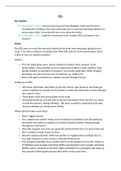
History of Exclusionary Rule 1. Weeks V. United States (1914): Lottery tickets were
seized from home w/out search warrant
*AT this time, the rule ONLY applied to federal government
*If this evidence was admitted, it would reduce 4th amendment
2. Wolfe V. Colorado (1949): Silver Platter doctrine was struck down
*At this time, exclusionary rule DID NOT apply to local officers
*Silver Platter Doctrine: Fed. Agents were going to local officers and would ask them to search
people's property w/out warrant and IF any evidence, to turn it in to Federal Gov.
3. Mapp V. Ohio (1961): When evidence was obtained in violation of the 4th amendment
(unreasonable search) and could not be admitted in a STATE court criminal proceeding.
* Because of this, the exclusionary rule has now been applied to state, county, and local gov't
*Now, everyone has to get a warrant for evidence to be legally obtained
Exceptions of Exclusionary Rule 1. Good Faith Exception:
2. Independent Source
, GPSTC Exam 2- Criminal Procedure
Questions With Complete Solutions
3. The Inevitable Discovery
4. Purged Taint
1. Good Faith Exception
*DOES NOT APPLY IN GEORGIA U.S V. Leon (1984):
A search warrant was made and large amounts of drugs were found and Leon was indicted.
Evidence was suppressed b/c there was no PC. The US Supreme Court created the Good Faith
exception to the exclusionary rule.
*When officers act in "Good Faith" by doing everything he/she can
17-5-30 Motion to Suppress Evidence (GA's stricter law on Good. Faith)
Background:
U.S. Supreme Court: Declared the state has power to impose higher standards on
searches/seizures if chosen to do so IF UNREASONABLY searched, defendant can have
property returned (if it is lawful):
Questions With Complete Solutions
History of Exclusionary Rule 1. Weeks V. United States (1914): Lottery tickets were
seized from home w/out search warrant
*AT this time, the rule ONLY applied to federal government
*If this evidence was admitted, it would reduce 4th amendment
2. Wolfe V. Colorado (1949): Silver Platter doctrine was struck down
*At this time, exclusionary rule DID NOT apply to local officers
*Silver Platter Doctrine: Fed. Agents were going to local officers and would ask them to search
people's property w/out warrant and IF any evidence, to turn it in to Federal Gov.
3. Mapp V. Ohio (1961): When evidence was obtained in violation of the 4th amendment
(unreasonable search) and could not be admitted in a STATE court criminal proceeding.
* Because of this, the exclusionary rule has now been applied to state, county, and local gov't
*Now, everyone has to get a warrant for evidence to be legally obtained
Exceptions of Exclusionary Rule 1. Good Faith Exception:
2. Independent Source
, GPSTC Exam 2- Criminal Procedure
Questions With Complete Solutions
3. The Inevitable Discovery
4. Purged Taint
1. Good Faith Exception
*DOES NOT APPLY IN GEORGIA U.S V. Leon (1984):
A search warrant was made and large amounts of drugs were found and Leon was indicted.
Evidence was suppressed b/c there was no PC. The US Supreme Court created the Good Faith
exception to the exclusionary rule.
*When officers act in "Good Faith" by doing everything he/she can
17-5-30 Motion to Suppress Evidence (GA's stricter law on Good. Faith)
Background:
U.S. Supreme Court: Declared the state has power to impose higher standards on
searches/seizures if chosen to do so IF UNREASONABLY searched, defendant can have
property returned (if it is lawful):