
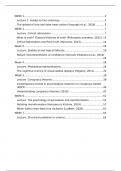
WEEK 1........................................................................................................2
Lecture 1. Guides to fact-checking...........................................................2
The spread of true and false news online (Vosoughi et al., 2018)............5
WEEK 2........................................................................................................7
Lecture. Critical rationalism......................................................................7
What is truth? Classical theories of truth (Philosophy overdose, 2022). 12
Critical Rationalism and Post-Truth (Hainscho, 2023)............................14
Week 3......................................................................................................16
Lecture. Statistical and logical fallacies..................................................16
Robust misinterpretation of confidence intervals (Hoekstra et al., 2014)
...............................................................................................................26
Week 4......................................................................................................28
Lecture. Misleading representations.......................................................28
The cognitive science of visual-spatial displays (Hegarty, 2011)...........35
WEEK 5......................................................................................................39
Lecture. Conspiracy theories..................................................................39
Contemporary trends in psychological research on conspiracy beliefs
(2023).....................................................................................................45
Understanding conspiracy theories (2019).............................................47
WEEK 6......................................................................................................51
Lecture. The psychology of persuasion and misinformation...................51
Refuting misinformation (Amazeen & Krishna, 2024).............................57
When (fake) news feels true (Schwarz & Jalbert, 2020).........................61
WEEK 7......................................................................................................65
Lecture. Structural problems in science.................................................65
,WEEK 1.
Lecture 1. Guides to fact-checking
Digital wildfires: massive digital misleading information. Its impact is amplified by hyperconnectivity.
It’s a rapid viral spread of information, with potential serious consequences.
Artificial amplification: the spread of misleading information by bots, messages, followers, likes, etc.
It creates an illusion of popularity and support.
Lies spread faster than the truth (Vosoughi, Roy & Aral, 2018)
False news reaches more people than true news, probabily because it is more juicy. Falsehood also
diffused faster than the truth.
Information of the government, scientists, and religions are trusted less nowadays.
Misinformation vs Disinformation. Misinformation is wrong, but can be unintentional, an honest
mistake. Disinformation is wrong but intentional, there is an intention to deceive.
Misinformed, informed people vs disinformed, informed people. Those people can be stubborn and
won't change their opinion because they have received some kind of information.
Overarching objective: developing a healthy critical attitude towards information and data in
(online) messages.
Fact-checking guidelines (not one fixed protocol)
,Lateral reading: not looking at one source, but reading more pieces of information which might be
relevant. Place information into a wider context to adequately evaluate its credibility, as well as
teach how informtion is ranked and presented on search engines and social media.
Discovering potential disinformation using linguistic cues:
- Ideological bias/(hyper-)partisan bias: negative referrences to lef-learning, progressive
political actors or issues, positive referencces to (populist) right learning political actors or
issues.
- Use and presence of emotions: greater use of emotive and affective language, especially
negative emotions typically more present. In news, content contains heavy emotional appeal
to readers, provoking fear, anger, outrage, etc.
- Verifiability: less verifiable facts, more use of anonymous sources.
- Headlines: fake news headlines tend to be relatively long and eye-cathing, with a propensity
for exaggeration and scaremongering.
- Capitalization: excessive use of capitalization in order to attract attention.
- Pronouns: high use of personal pronouns.
- Length: articles tend to be short (body of text), tweets tend to be longer.
- Informal words and language: more use of inofrmal words and informal language (slang,
swear). Higher likelihood of hate speech and incivility.
Fact-checking tools and sources: for example, Google has a fact-checker tool. Other examples:
factcheck.org, politifact, etc.
, Some questions you have to ask yourself (with text and verbal claims):
- Accuacy: titles, product names, place names, locations, etc.
- Double-check the original source: names and titles, either by finding a source's official bio
online of by asking them directly. Based on a study? Dig up the original study and make sure
the summary was accurate. Same goes for things like statistics, dates and just about
anyhting else you can double-check in primary document.
- Check with multiple sources: if you're fact-checking something like an event (what
happened, who did what, etc.) it is good to use extra/multiple sources.
- Trust your gut: if something a source it telling you doesn't ring true, check with another
expert (or two or three).
- Underspecified terms and declarative statements: take a closer look at sentences including
underspecified terms like: ‘increasing amount, often, presumably, probably, etc. Check
declarative statements, for example: this is a big deal, the area is huge, always, exaclty, etc.
- Trustworthiness of the sources: fact-check the trustworthiness of the sources: can they be
trusted, are they biased, are they real, etc. Check relevant sources.
Some questions you have to ask yourself (with pictures or video's):
- Is it real or manipulated in some way? Use your eyes and gut instinct to discover something
suspicious.
- Is it what/where/when it is claimed to be? Verify the source: who originally shot/uploaded
the photo/video, and is this source reliably? Locate the photo/video: where was it shot? And
verify the date: when it was shot?
- If possible: check with the uploader/creator
- Use reverse image search enginges (google, bing, etc.)
- Check exif data associated with an image (https://www.fotoforensics.com/)
- Check google maps and street view to discover anything out of place of something wrong.
- Get eact weather data for time/place and compare
Fact-checking video's is harder than photos. Also verify the source, locate the video and verify the
date. Tools:
- Search youtube with keywords from the video's description, tag, comment or some piece of
identifying text.
- Reverse image search of thumbnails and screenshots
- Use thumbnails for a reversed iamge search
Fact-checking picutres/video's: pay attention to the face: manipulations are almost always facial
transformations. Especially look at:
- Cheeks and forehead: does the skin appear too smooth or too wrinkly?
- Eyes and eyebrows: do shadows appear in places that you would expect?
Lecture 1. Guides to fact-checking...........................................................2
The spread of true and false news online (Vosoughi et al., 2018)............5
WEEK 2........................................................................................................7
Lecture. Critical rationalism......................................................................7
What is truth? Classical theories of truth (Philosophy overdose, 2022). 12
Critical Rationalism and Post-Truth (Hainscho, 2023)............................14
Week 3......................................................................................................16
Lecture. Statistical and logical fallacies..................................................16
Robust misinterpretation of confidence intervals (Hoekstra et al., 2014)
...............................................................................................................26
Week 4......................................................................................................28
Lecture. Misleading representations.......................................................28
The cognitive science of visual-spatial displays (Hegarty, 2011)...........35
WEEK 5......................................................................................................39
Lecture. Conspiracy theories..................................................................39
Contemporary trends in psychological research on conspiracy beliefs
(2023).....................................................................................................45
Understanding conspiracy theories (2019).............................................47
WEEK 6......................................................................................................51
Lecture. The psychology of persuasion and misinformation...................51
Refuting misinformation (Amazeen & Krishna, 2024).............................57
When (fake) news feels true (Schwarz & Jalbert, 2020).........................61
WEEK 7......................................................................................................65
Lecture. Structural problems in science.................................................65
,WEEK 1.
Lecture 1. Guides to fact-checking
Digital wildfires: massive digital misleading information. Its impact is amplified by hyperconnectivity.
It’s a rapid viral spread of information, with potential serious consequences.
Artificial amplification: the spread of misleading information by bots, messages, followers, likes, etc.
It creates an illusion of popularity and support.
Lies spread faster than the truth (Vosoughi, Roy & Aral, 2018)
False news reaches more people than true news, probabily because it is more juicy. Falsehood also
diffused faster than the truth.
Information of the government, scientists, and religions are trusted less nowadays.
Misinformation vs Disinformation. Misinformation is wrong, but can be unintentional, an honest
mistake. Disinformation is wrong but intentional, there is an intention to deceive.
Misinformed, informed people vs disinformed, informed people. Those people can be stubborn and
won't change their opinion because they have received some kind of information.
Overarching objective: developing a healthy critical attitude towards information and data in
(online) messages.
Fact-checking guidelines (not one fixed protocol)
,Lateral reading: not looking at one source, but reading more pieces of information which might be
relevant. Place information into a wider context to adequately evaluate its credibility, as well as
teach how informtion is ranked and presented on search engines and social media.
Discovering potential disinformation using linguistic cues:
- Ideological bias/(hyper-)partisan bias: negative referrences to lef-learning, progressive
political actors or issues, positive referencces to (populist) right learning political actors or
issues.
- Use and presence of emotions: greater use of emotive and affective language, especially
negative emotions typically more present. In news, content contains heavy emotional appeal
to readers, provoking fear, anger, outrage, etc.
- Verifiability: less verifiable facts, more use of anonymous sources.
- Headlines: fake news headlines tend to be relatively long and eye-cathing, with a propensity
for exaggeration and scaremongering.
- Capitalization: excessive use of capitalization in order to attract attention.
- Pronouns: high use of personal pronouns.
- Length: articles tend to be short (body of text), tweets tend to be longer.
- Informal words and language: more use of inofrmal words and informal language (slang,
swear). Higher likelihood of hate speech and incivility.
Fact-checking tools and sources: for example, Google has a fact-checker tool. Other examples:
factcheck.org, politifact, etc.
, Some questions you have to ask yourself (with text and verbal claims):
- Accuacy: titles, product names, place names, locations, etc.
- Double-check the original source: names and titles, either by finding a source's official bio
online of by asking them directly. Based on a study? Dig up the original study and make sure
the summary was accurate. Same goes for things like statistics, dates and just about
anyhting else you can double-check in primary document.
- Check with multiple sources: if you're fact-checking something like an event (what
happened, who did what, etc.) it is good to use extra/multiple sources.
- Trust your gut: if something a source it telling you doesn't ring true, check with another
expert (or two or three).
- Underspecified terms and declarative statements: take a closer look at sentences including
underspecified terms like: ‘increasing amount, often, presumably, probably, etc. Check
declarative statements, for example: this is a big deal, the area is huge, always, exaclty, etc.
- Trustworthiness of the sources: fact-check the trustworthiness of the sources: can they be
trusted, are they biased, are they real, etc. Check relevant sources.
Some questions you have to ask yourself (with pictures or video's):
- Is it real or manipulated in some way? Use your eyes and gut instinct to discover something
suspicious.
- Is it what/where/when it is claimed to be? Verify the source: who originally shot/uploaded
the photo/video, and is this source reliably? Locate the photo/video: where was it shot? And
verify the date: when it was shot?
- If possible: check with the uploader/creator
- Use reverse image search enginges (google, bing, etc.)
- Check exif data associated with an image (https://www.fotoforensics.com/)
- Check google maps and street view to discover anything out of place of something wrong.
- Get eact weather data for time/place and compare
Fact-checking video's is harder than photos. Also verify the source, locate the video and verify the
date. Tools:
- Search youtube with keywords from the video's description, tag, comment or some piece of
identifying text.
- Reverse image search of thumbnails and screenshots
- Use thumbnails for a reversed iamge search
Fact-checking picutres/video's: pay attention to the face: manipulations are almost always facial
transformations. Especially look at:
- Cheeks and forehead: does the skin appear too smooth or too wrinkly?
- Eyes and eyebrows: do shadows appear in places that you would expect?


