lOMoARcPSD|22499267
BSN366 EXIT HESI Notes - hesi
Concepts of Nursing II (Nightingale College)
Scan to open on Studocu
Studocu is not sponsored or endorsed by any college or university
Downloaded by Shola Kasali ()
, lOMoARcPSD|22499267
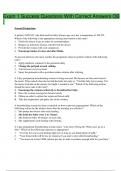
A client is admitted to the intensive care unit with diabetes insipidus due to a pituitary gland
tumor. Which potential complication should the nurse monitor closely?
A. Hypokalemia
B. Ketonuria.
C. Peripheral edema
D. Elevated blood pressure.
(Pituitary tumors that suppress antidiuretic hormone (ADH) result in diabetes insipidus, which
causes massive polyuria and serum electrolyte imbalances, including hypokalemia, which can
lead to lethal arrhythmias.)
After an unsuccessful resuscitation attempt, the nurse calls the family of the deceased. The
family wish to see the body before it is taken to the funeral home. Which interventions should
the nurse take to prepare the body before the family enters the room? (Select all that apply.)
a. Take out dentures and place in a labeled cup
b. Apply a body shroud
c. Place a small pillow under the head
d. Remove resuscitation equipment from the room
e. Gently close the eyes
When conducting diet teaching for a client who is on a postoperative full liquid diet, which foods
should the nurse encourage the client to eat? (Select all that apply.)
a. Lentils
b. Potato soup
c. Tea
d. Cheese
The nurse is caring for a client who reports sudden right-sided numbness and weakness of the
arm and leg. The nurse also observes a distinct right-sided facial droop. After reporting the
findings to the healthcare provider, the nurse receives several prescriptions for the client,
including a STAT computerized tomography scan of the head. After obtaining vital signs, the
nurse should implement which intervention?
A. Use Glasgow Coma Scale to assess level of consciousness prior to transport for imaging.
B. Raise the head of the bed to 30 degrees keeping head and neck in neutral alignment.
C. Verity prescribed laboratory tests include prothrombin time and platelet count.
D. Initiate bilateral intermittent sequential pneumatic compression devices.
The nurse is caring for four clients, Client A, who has emphysema and who's oxygen saturation
is 94%. Client B, with the postoperative hemoglobin of 8.2 mg/dL (82 g/L). Client C, newly
admitted with a potassium level of 3.8 mEq/L (3.8 mmol/L) and Client D, scheduled for an
appendectomy who has a white blood cell (WBC) count of 14,000 mm3 (14 x 103/L). What
intervention should the nurse implement?
A. Move Client D into an isolation room 24 hours before surgery(WBC 4,500-11,000 normal)
B. Increase Client A's oxygen to 4 L a minute per nasal cannula
C. Ask the dietitian to add a banana to Client C's breakfast tray(K=3.5-5 normal)
D. Verify that Client B has two units of packed cells available(hemoglobin less than 11-13 =low)
Downloaded by Shola Kasali ()
, lOMoARcPSD|22499267
The nurse is caring for a client who developed signs and symptoms of septic shock following a
urinary tract infection one week ago. the healthcare provider prescribes a sepsis protocol to be
initiated. Which intervention is most important for the nurse to include in the plan of care?
a. Maintain strict intake and output.
b. Assess warmth of extremities.
c. Keep HOB elevated at 45 degree.
d. Monitor blood sugar level.
The nurse is preparing a teaching plan for an older female client diagnosed with osteoporosis.
Which expected outcome has the highest priority for this client?
a. Identifies 2 treatments for constipation due to immobility
b. Names 3 home safety hazards to be resolved immediately
c. States 4 risk factors for the development of osteoporosis
d. Lists five calcium rich foods to be added to her daily diet.
Case study:
The client is in the hospital after her house collapsed during a hurricane. She has been in the
intensive care unit for 2 weeks and moved today to the surgical floor to continue monitoring her
respiratory function and to complete intravenous antibiotic administration.
Downloaded by Shola Kasali ()
, lOMoARcPSD|22499267
Downloaded by Shola Kasali ()
BSN366 EXIT HESI Notes - hesi
Concepts of Nursing II (Nightingale College)
Scan to open on Studocu
Studocu is not sponsored or endorsed by any college or university
Downloaded by Shola Kasali ()
, lOMoARcPSD|22499267
A client is admitted to the intensive care unit with diabetes insipidus due to a pituitary gland
tumor. Which potential complication should the nurse monitor closely?
A. Hypokalemia
B. Ketonuria.
C. Peripheral edema
D. Elevated blood pressure.
(Pituitary tumors that suppress antidiuretic hormone (ADH) result in diabetes insipidus, which
causes massive polyuria and serum electrolyte imbalances, including hypokalemia, which can
lead to lethal arrhythmias.)
After an unsuccessful resuscitation attempt, the nurse calls the family of the deceased. The
family wish to see the body before it is taken to the funeral home. Which interventions should
the nurse take to prepare the body before the family enters the room? (Select all that apply.)
a. Take out dentures and place in a labeled cup
b. Apply a body shroud
c. Place a small pillow under the head
d. Remove resuscitation equipment from the room
e. Gently close the eyes
When conducting diet teaching for a client who is on a postoperative full liquid diet, which foods
should the nurse encourage the client to eat? (Select all that apply.)
a. Lentils
b. Potato soup
c. Tea
d. Cheese
The nurse is caring for a client who reports sudden right-sided numbness and weakness of the
arm and leg. The nurse also observes a distinct right-sided facial droop. After reporting the
findings to the healthcare provider, the nurse receives several prescriptions for the client,
including a STAT computerized tomography scan of the head. After obtaining vital signs, the
nurse should implement which intervention?
A. Use Glasgow Coma Scale to assess level of consciousness prior to transport for imaging.
B. Raise the head of the bed to 30 degrees keeping head and neck in neutral alignment.
C. Verity prescribed laboratory tests include prothrombin time and platelet count.
D. Initiate bilateral intermittent sequential pneumatic compression devices.
The nurse is caring for four clients, Client A, who has emphysema and who's oxygen saturation
is 94%. Client B, with the postoperative hemoglobin of 8.2 mg/dL (82 g/L). Client C, newly
admitted with a potassium level of 3.8 mEq/L (3.8 mmol/L) and Client D, scheduled for an
appendectomy who has a white blood cell (WBC) count of 14,000 mm3 (14 x 103/L). What
intervention should the nurse implement?
A. Move Client D into an isolation room 24 hours before surgery(WBC 4,500-11,000 normal)
B. Increase Client A's oxygen to 4 L a minute per nasal cannula
C. Ask the dietitian to add a banana to Client C's breakfast tray(K=3.5-5 normal)
D. Verify that Client B has two units of packed cells available(hemoglobin less than 11-13 =low)
Downloaded by Shola Kasali ()
, lOMoARcPSD|22499267
The nurse is caring for a client who developed signs and symptoms of septic shock following a
urinary tract infection one week ago. the healthcare provider prescribes a sepsis protocol to be
initiated. Which intervention is most important for the nurse to include in the plan of care?
a. Maintain strict intake and output.
b. Assess warmth of extremities.
c. Keep HOB elevated at 45 degree.
d. Monitor blood sugar level.
The nurse is preparing a teaching plan for an older female client diagnosed with osteoporosis.
Which expected outcome has the highest priority for this client?
a. Identifies 2 treatments for constipation due to immobility
b. Names 3 home safety hazards to be resolved immediately
c. States 4 risk factors for the development of osteoporosis
d. Lists five calcium rich foods to be added to her daily diet.
Case study:
The client is in the hospital after her house collapsed during a hurricane. She has been in the
intensive care unit for 2 weeks and moved today to the surgical floor to continue monitoring her
respiratory function and to complete intravenous antibiotic administration.
Downloaded by Shola Kasali ()
, lOMoARcPSD|22499267
Downloaded by Shola Kasali ()