The Mens Rea of Intention
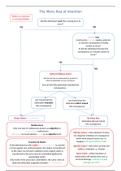
Motive is irrelevant
to criminal liability
Did the defendant want the consequence to
occur?
YES NO
Nedrick Test
(confirmed by Woollin = leading authority)
1) was the consequence virtually
certain to occur?
2) did the defendant foresee the
consequence as virtually certain to
occur?
YES
Indirect/Oblique Intent
(Not the aim but an unfortunate by-product of
what the defendant set out to achieve.)
Jury can find the defendant intended the
consequence…
Jury found that the Jury found that the
defendant intended defendant didn’t intend
the consequence the consequence
Direct Intent [R v Moloney] No Mens Rea
Defendant did not intend
the consequence
Recklessness
Only one test of recklessness known as subjective or
Cunningham recklessness.
Ulterior Intent = extra element of mens
(Caldwell test overruled by R v G, so no objective test)
rea required, intention of consequence
which went beyond actus reus i.e.
Transferred Malice Burglary s.9(1)(a) Theft Act 1968
If the defendant has the malice [R v Cunningham] to commit Specific Intent = only mens rea that will
a crime against one victim/property, the malice is transferred suffice is intention i.e. Murder
so the mens rea he had in relation to the original victim is
transferred to the actus reus he committed against the Basic Intent = either intention or
unintended victim. recklessness will satisfy mens rea i.e.
Only works if the actus reus committed is the same crime as Criminal Damage s.1(2)(a) Criminal
what the defendant originally intended [R v Pembliton] Damage Act 1971
, Case/Act Concerns Explanation
Metropolitan The Caldwell test for Two alternatives:
Police recklessness 1. The defendant foresaw a risk and went without
Commissioner v justification to take that risk (first/subjective
limb)
Caldwell [1982]
2. The defendant who failed to give any thought
AC 341 to a risk which would have been obvious to the
reasonable person (second/objective limb)
R v Cunningham 1) Subjective test for 1) Recklessness was regarded as requiring proof that
[1957] 2 QB 396 recklessness the particular defendant foresaw the risk and went on
2) Definition of ‘malice’ to take it. The facts that the court felt that he should
have foreseen it was not enough to establish
recklessness.
2) Byrne J agreed with the definition given by Professor
Kenny in 1902 – an intention to do the harm that was
done or the recklessness as to whether the harm
should occur or not
R v G [2004] 1 Overruled the decision in R v Caldwell was overruled by the House of Lords and
AC 1034 Caldwell so there is no longer an objective test for recklessness
R v Moloney Direct intention Means that the defendant desire something to happen,
[1985] 1 AC 905 or it was his aim, purpose or goal. In other words, the
word ‘intention’ is given its ordinary meaning.
R v Nedrick The Nedrick test - guidance The Court of Appeal suggested the following questions
[1986] 1 WLR on the meaning of should be posed to the jury:
1025 (CA) indirect/oblique intent 1. Did the jury consider that death or serious
(Court of Appeal) injury was virtually certain to occur as a
consequence of the defendant’s actions?
2. If so, did the jury believe that the defendant
foresaw death or serious injury as a virtual
certainty?
Jury told that intention could not be inferred unless
they answered ‘yes’ to both of these questions. “May
find”
R v Pembliton Condition of transferred Defendant was fighting in the street and threw a stone
(1874) LR 2 CCR malice during the fight which broke a window. The defendant
119 was convicted of ‘unlawfully and maliciously’ causing
damage to a property and the appealed conviction. It
was found that the defendant did not have the mens
rea for criminal damage and this the doctrine of
transferred malice did not work.
R v Woollin Approval/confirming of the The defendant killed his three-month-old son by
[1999] 1 AC 82 Nedrick test of throwing him against a hard surface. The defendant
(HL) indirect/oblique intent had no desire (direct intent) to kill or seriously injure
(House of Lords) – leading his son but was convicted of manslaughter. Lord Steyn
authority of indirect intent approved the test set out in Nedrick. “May find”
s.1(2)(a) Criminal Damage Intending to destroy or damage any property or being
reckless as to whether any property would be
destroyed or damaged
s.9(1)(a) Theft Act Burglary A person is guilt of burglary if he enters any building or
part of a building as a trespasser and with the intent to
commit any such offence as is mention in subsection (2)
Motive is irrelevant
to criminal liability
Did the defendant want the consequence to
occur?
YES NO
Nedrick Test
(confirmed by Woollin = leading authority)
1) was the consequence virtually
certain to occur?
2) did the defendant foresee the
consequence as virtually certain to
occur?
YES
Indirect/Oblique Intent
(Not the aim but an unfortunate by-product of
what the defendant set out to achieve.)
Jury can find the defendant intended the
consequence…
Jury found that the Jury found that the
defendant intended defendant didn’t intend
the consequence the consequence
Direct Intent [R v Moloney] No Mens Rea
Defendant did not intend
the consequence
Recklessness
Only one test of recklessness known as subjective or
Cunningham recklessness.
Ulterior Intent = extra element of mens
(Caldwell test overruled by R v G, so no objective test)
rea required, intention of consequence
which went beyond actus reus i.e.
Transferred Malice Burglary s.9(1)(a) Theft Act 1968
If the defendant has the malice [R v Cunningham] to commit Specific Intent = only mens rea that will
a crime against one victim/property, the malice is transferred suffice is intention i.e. Murder
so the mens rea he had in relation to the original victim is
transferred to the actus reus he committed against the Basic Intent = either intention or
unintended victim. recklessness will satisfy mens rea i.e.
Only works if the actus reus committed is the same crime as Criminal Damage s.1(2)(a) Criminal
what the defendant originally intended [R v Pembliton] Damage Act 1971
, Case/Act Concerns Explanation
Metropolitan The Caldwell test for Two alternatives:
Police recklessness 1. The defendant foresaw a risk and went without
Commissioner v justification to take that risk (first/subjective
limb)
Caldwell [1982]
2. The defendant who failed to give any thought
AC 341 to a risk which would have been obvious to the
reasonable person (second/objective limb)
R v Cunningham 1) Subjective test for 1) Recklessness was regarded as requiring proof that
[1957] 2 QB 396 recklessness the particular defendant foresaw the risk and went on
2) Definition of ‘malice’ to take it. The facts that the court felt that he should
have foreseen it was not enough to establish
recklessness.
2) Byrne J agreed with the definition given by Professor
Kenny in 1902 – an intention to do the harm that was
done or the recklessness as to whether the harm
should occur or not
R v G [2004] 1 Overruled the decision in R v Caldwell was overruled by the House of Lords and
AC 1034 Caldwell so there is no longer an objective test for recklessness
R v Moloney Direct intention Means that the defendant desire something to happen,
[1985] 1 AC 905 or it was his aim, purpose or goal. In other words, the
word ‘intention’ is given its ordinary meaning.
R v Nedrick The Nedrick test - guidance The Court of Appeal suggested the following questions
[1986] 1 WLR on the meaning of should be posed to the jury:
1025 (CA) indirect/oblique intent 1. Did the jury consider that death or serious
(Court of Appeal) injury was virtually certain to occur as a
consequence of the defendant’s actions?
2. If so, did the jury believe that the defendant
foresaw death or serious injury as a virtual
certainty?
Jury told that intention could not be inferred unless
they answered ‘yes’ to both of these questions. “May
find”
R v Pembliton Condition of transferred Defendant was fighting in the street and threw a stone
(1874) LR 2 CCR malice during the fight which broke a window. The defendant
119 was convicted of ‘unlawfully and maliciously’ causing
damage to a property and the appealed conviction. It
was found that the defendant did not have the mens
rea for criminal damage and this the doctrine of
transferred malice did not work.
R v Woollin Approval/confirming of the The defendant killed his three-month-old son by
[1999] 1 AC 82 Nedrick test of throwing him against a hard surface. The defendant
(HL) indirect/oblique intent had no desire (direct intent) to kill or seriously injure
(House of Lords) – leading his son but was convicted of manslaughter. Lord Steyn
authority of indirect intent approved the test set out in Nedrick. “May find”
s.1(2)(a) Criminal Damage Intending to destroy or damage any property or being
reckless as to whether any property would be
destroyed or damaged
s.9(1)(a) Theft Act Burglary A person is guilt of burglary if he enters any building or
part of a building as a trespasser and with the intent to
commit any such offence as is mention in subsection (2)