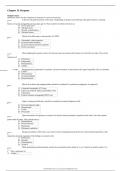
Chapter 18. Fever
1. Your healthcare provider will consider that you to have a fever if your temperature taken by
mouth is:
A. 98.7°F (37°C)
B. 99°F (37.2°C)
C. 99.5°F (37.5°C) D. 100.4°F (38°C)
The correct answer is D. 100.4°F (38°C).
If you have a temperature above your normal temperature but below 100.4, it’s called a low- grade fever. A
low-grade fever is mild, and most healthcare providers don’t consider it to be of medical importance.
Normal body temperature is 98.6, but that can vary by 1 to 2 degrees from person to person. Your normal
temperature may also be lower in the early morning and higher in late afternoon. You can find your own
normal temperature by taking it several times a day for several days—when you’re not sick.
2. A child’s body temperature will show as the same number, no matter if it’s measured by
mouth, in the armpit, or in the rectum.
True , False, Not sure
The correct answer is B. False.
A person’s temperature varies depending on how it’s taken. Check with your child’s healthcare provider to
find out what temperature he or she considers a fever. Some providers say that a child is considered to have
a fever if his or her temperature is 99.5°F (37.5°C) or higher by mouth,
99°F (37.2°C) or higher in the armpit, or 100.4°F (38°C) or higher in the rectum. If you use a thermometer
that's put in the ear (tympanic) or held near the forehead (temporal), ask your provider what temperature
means a fever on that device.
3. Infections from viruses or bacteria can cause fever. What else can cause fever?
A. Cancer
B. Surgery
C. Some medicines
D. HeatstrokeD. All of the above
The correct answer is D. All of the above.
Fever is a common symptom of cancer, especially with a cancer that affects the immune system, or a blood
cancer such as leukemia or lymphoma. Many people have a fever for a day or two after major surgery, with
no sign of infection. This is called “postoperative fever.” And many medicines can cause a fever, such as
pain medicines, diuretics, antiseizure medicines, sedatives, and antihistamines. Heatstroke is a life-
threatening condition that happens when a person is
exposed to high heat. It can happen if an adult or child is in a hot car or outside on a hot day with no shade.
Other symptoms include hot skin, lack of sweat, and confusion or loss of consciousness. If a person has
heatstroke, call 911. Move the person into shade and spray or shower them with water until help arrives.
4. Some children can have a seizure caused by fever (febrile seizure). These are often harmless, and
are most common in children ages:
A. Newborn to 6 months
B. 6 months to 5 years old
C. 6 to 8 years old
Downloaded by Ce Co ()
1. Your healthcare provider will consider that you to have a fever if your temperature taken by
mouth is:
A. 98.7°F (37°C)
B. 99°F (37.2°C)
C. 99.5°F (37.5°C) D. 100.4°F (38°C)
The correct answer is D. 100.4°F (38°C).
If you have a temperature above your normal temperature but below 100.4, it’s called a low- grade fever. A
low-grade fever is mild, and most healthcare providers don’t consider it to be of medical importance.
Normal body temperature is 98.6, but that can vary by 1 to 2 degrees from person to person. Your normal
temperature may also be lower in the early morning and higher in late afternoon. You can find your own
normal temperature by taking it several times a day for several days—when you’re not sick.
2. A child’s body temperature will show as the same number, no matter if it’s measured by
mouth, in the armpit, or in the rectum.
True , False, Not sure
The correct answer is B. False.
A person’s temperature varies depending on how it’s taken. Check with your child’s healthcare provider to
find out what temperature he or she considers a fever. Some providers say that a child is considered to have
a fever if his or her temperature is 99.5°F (37.5°C) or higher by mouth,
99°F (37.2°C) or higher in the armpit, or 100.4°F (38°C) or higher in the rectum. If you use a thermometer
that's put in the ear (tympanic) or held near the forehead (temporal), ask your provider what temperature
means a fever on that device.
3. Infections from viruses or bacteria can cause fever. What else can cause fever?
A. Cancer
B. Surgery
C. Some medicines
D. HeatstrokeD. All of the above
The correct answer is D. All of the above.
Fever is a common symptom of cancer, especially with a cancer that affects the immune system, or a blood
cancer such as leukemia or lymphoma. Many people have a fever for a day or two after major surgery, with
no sign of infection. This is called “postoperative fever.” And many medicines can cause a fever, such as
pain medicines, diuretics, antiseizure medicines, sedatives, and antihistamines. Heatstroke is a life-
threatening condition that happens when a person is
exposed to high heat. It can happen if an adult or child is in a hot car or outside on a hot day with no shade.
Other symptoms include hot skin, lack of sweat, and confusion or loss of consciousness. If a person has
heatstroke, call 911. Move the person into shade and spray or shower them with water until help arrives.
4. Some children can have a seizure caused by fever (febrile seizure). These are often harmless, and
are most common in children ages:
A. Newborn to 6 months
B. 6 months to 5 years old
C. 6 to 8 years old
Downloaded by Ce Co ()