Literature
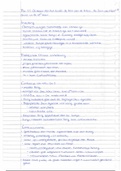
Week 1 - Migrants and policy
Czaika & De Haas (2013); The effectiveness of immigration policies
Effectiveness regarding immigration policies are widely debated
Why they dont work
Other factors, such as labor market imbalances, inequalities in wealth, political conflict,
etc. are more important
Once migration reaches a threshold, migration netwerks, employers and the migration
industry will facilitate the continuing movement of people
States have limited control, becayse they are bound to human/international rights
Why they do work
Literature 1
, Visa requirements and border controls made migration more difficult
Restrictions affect magnitude and composition of migration flows
Different types of arguements because of the unclearity of what makes policy affective?
‘What is immigration policy?’
International migration policies → rules that national states define and implement with the
objective of affecting the volume, origin, direction and internal composition of migration flows
Volume → the size of migration flows (can be increased, decreased, kept natural)
Composition → The region of origin of migrants
can also relate to particular categories within a migrant group; i.e. high skilled, low
skilled, students, etc.
→ these policy objectives can overlap
Immigration policy effectiveness: objevtives, outcomes, and gaps
Policy doesnt always work, the effect can be small or in the opposite direction, revealing 2
problems:
1. How can migration be empirically changed (correlation is not causation)
2. How can we determine the intended effect?
Conceptualizing policy gaps: discource, implementation and efficacy
3. there are gaps between immigration discourses and policies
There are 3 types of gaps:
Discursive gap → discrepancy between discourses and actual migration policies in
the form of laws and regulations
explained by:
intentions are influenced by various parties and interest groups
Literature 2
, various economic, political and legal constraints limit policy options
migration discourses are often of a general nature, whereas in practice
migration polucues target speecific categories and groups.
The implementation gap → Discrepancy between policies on papers and actual
implementation
first source of real ‘policy failure’
explained by:
practical, planning constraints
corruption, ignorance, subversion
Efficacy gap → the degree to which the implemented have the intended effect on
the volume, timing, direction and composition of migration flows
second source of real ‘policy failure’
explained by:
4 substitution effects:
1. spatial substitution → diversion of migrants to other countries
2. categorical substitution → reorientatipn toward other legal or illegal
channels of immigration
3. Inter-temporal substitution → affect the timing of migration; now or
never
4. reverse flow substitution → when immigration restrictions not only
influence inflows but also return migration, which can make the
effects on net immigration ambiguous.
Policy effectiveness (within this framework) → the relation between the objectives of policies on
paper and actual migration inflows, with implementation and efficacy gaps potentially
undermining the effectiveness of policies.
It isnt always a policy failure but can also be inefficient policy (→ policy outcomes may not
justify the amount of resources invested in producing these outcomes)
Literature 3
Week 1 - Migrants and policy
Czaika & De Haas (2013); The effectiveness of immigration policies
Effectiveness regarding immigration policies are widely debated
Why they dont work
Other factors, such as labor market imbalances, inequalities in wealth, political conflict,
etc. are more important
Once migration reaches a threshold, migration netwerks, employers and the migration
industry will facilitate the continuing movement of people
States have limited control, becayse they are bound to human/international rights
Why they do work
Literature 1
, Visa requirements and border controls made migration more difficult
Restrictions affect magnitude and composition of migration flows
Different types of arguements because of the unclearity of what makes policy affective?
‘What is immigration policy?’
International migration policies → rules that national states define and implement with the
objective of affecting the volume, origin, direction and internal composition of migration flows
Volume → the size of migration flows (can be increased, decreased, kept natural)
Composition → The region of origin of migrants
can also relate to particular categories within a migrant group; i.e. high skilled, low
skilled, students, etc.
→ these policy objectives can overlap
Immigration policy effectiveness: objevtives, outcomes, and gaps
Policy doesnt always work, the effect can be small or in the opposite direction, revealing 2
problems:
1. How can migration be empirically changed (correlation is not causation)
2. How can we determine the intended effect?
Conceptualizing policy gaps: discource, implementation and efficacy
3. there are gaps between immigration discourses and policies
There are 3 types of gaps:
Discursive gap → discrepancy between discourses and actual migration policies in
the form of laws and regulations
explained by:
intentions are influenced by various parties and interest groups
Literature 2
, various economic, political and legal constraints limit policy options
migration discourses are often of a general nature, whereas in practice
migration polucues target speecific categories and groups.
The implementation gap → Discrepancy between policies on papers and actual
implementation
first source of real ‘policy failure’
explained by:
practical, planning constraints
corruption, ignorance, subversion
Efficacy gap → the degree to which the implemented have the intended effect on
the volume, timing, direction and composition of migration flows
second source of real ‘policy failure’
explained by:
4 substitution effects:
1. spatial substitution → diversion of migrants to other countries
2. categorical substitution → reorientatipn toward other legal or illegal
channels of immigration
3. Inter-temporal substitution → affect the timing of migration; now or
never
4. reverse flow substitution → when immigration restrictions not only
influence inflows but also return migration, which can make the
effects on net immigration ambiguous.
Policy effectiveness (within this framework) → the relation between the objectives of policies on
paper and actual migration inflows, with implementation and efficacy gaps potentially
undermining the effectiveness of policies.
It isnt always a policy failure but can also be inefficient policy (→ policy outcomes may not
justify the amount of resources invested in producing these outcomes)
Literature 3