

Part 1
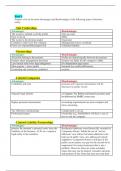
Prepare a list of the main advantages and disadvantages of the following types of business
entity:
• Sole Traderships
Advantages: Disadvantages
The owner is entitled to all the profits Start-up costs
Easy to set up Debts
The owner is the decision maker Expansion
Complete control over the company Management/ heavy workload
Fewer tax responsibility/paperwork Unlimited liability
• Partnerships
Advantages: Disadvantages:
All profits belong to the partners Profits are shared equally between the partners
Partners share management decisions Partners are liable for the company’s debts
Less formal with fewer legal obligations No independent legal status
More partner = more capital Potential for conflict/differences
Ownership and control are combined taxation
• Limited Companies
Advantages: Disadvantages;
Credibility and trust personal and corporate information will be
disclosed on public record
Separate legal identity a Company Tax Return and annual accounts must
be delivered to HMRC every year.
Higher personal remuneration accounting requirements are more complex and
time-consuming
Tax efficiency and planning Complicated to set up
Professional status Ownership e.g., shareholders will have a say on
how to run the company
• Limited Liability Partnerships
Advantages: Disadvantages:
protects the member’s personal assets from the Residential addresses were historically recorded at
liabilities of the business. LLPs are a separate Companies House. Whilst the use of ‘service
legal entity to the members. addresses’ now allows for home addresses to be
kept out of public view, any address previously
supplied to Companies House is still part of the
public record unless you pay for the records to be
suppressed. For many businesses this is not a
problem. However, there are some examples
where this may not be desired. Consider solicitors
and partners of law firms that may not want their
Prepare a list of the main advantages and disadvantages of the following types of business
entity:
• Sole Traderships
Advantages: Disadvantages
The owner is entitled to all the profits Start-up costs
Easy to set up Debts
The owner is the decision maker Expansion
Complete control over the company Management/ heavy workload
Fewer tax responsibility/paperwork Unlimited liability
• Partnerships
Advantages: Disadvantages:
All profits belong to the partners Profits are shared equally between the partners
Partners share management decisions Partners are liable for the company’s debts
Less formal with fewer legal obligations No independent legal status
More partner = more capital Potential for conflict/differences
Ownership and control are combined taxation
• Limited Companies
Advantages: Disadvantages;
Credibility and trust personal and corporate information will be
disclosed on public record
Separate legal identity a Company Tax Return and annual accounts must
be delivered to HMRC every year.
Higher personal remuneration accounting requirements are more complex and
time-consuming
Tax efficiency and planning Complicated to set up
Professional status Ownership e.g., shareholders will have a say on
how to run the company
• Limited Liability Partnerships
Advantages: Disadvantages:
protects the member’s personal assets from the Residential addresses were historically recorded at
liabilities of the business. LLPs are a separate Companies House. Whilst the use of ‘service
legal entity to the members. addresses’ now allows for home addresses to be
kept out of public view, any address previously
supplied to Companies House is still part of the
public record unless you pay for the records to be
suppressed. For many businesses this is not a
problem. However, there are some examples
where this may not be desired. Consider solicitors
and partners of law firms that may not want their


