BOT 251 Notes:
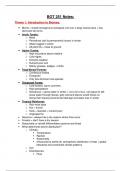
Theme 1: Introduction to Biomes:
• Biome = broad homogenous ecological unit over a large neutral area + has
dominant life forms
• Arctic Tundra:
o Moist
o Permafrost (soil is permanently frozen) in winter
o Water-logged in winter
o All plant life = close to ground
• Alpine Tundra:
o High mountains above treeline
o Cold nights
o Extreme weather
o Nutrient-poor soil
o Mainly grasses, sedges + herbs
• Taiga/Boreal Forests:
o Coniferous forests
o Evergreen
o Only few dominant tree species
• Temperate Forest:
o Cold winters, warm summers
o High precipitation
o Deciduous = saves water in winter = not a lot of sun, not logical to still
loose water through leaves, gets cold and leaves would freeze so
losing their leaves prevents leaf damage and water loss in winter
• Tropical Rainforest:
o Rain most days
o Hot + humid
o Soils = leached = nutrient-poor
o Angiosperms
• Savanna = always has a dry season where fires occur
• Forests = don't have a dry season
• Seasonality of rainfall differentiates savanna and forest
• What determines biome distribution?
o Climate:
Temperature
Rainfall
Seasonality
Influenced by earths tilt, atmospheric distribution of heat + global
latitudinal and continental climate patterns
o Soil
o Disturbances:
Fires
,• Advantages + disadvantages of biome concept:
o Biome = useful generalised concept
o Identify comparable areas across world
o Lack of consistency among world biome maps + definitions
o In SA = biome = highest level of ecosystem organisation
• SA biomes:
o Climate aids in determining distribution
o Natural disturbances
o Biome = climate + disturbance = life-form
o Defined based on vegetation characteristics
o Largest ecological unit defined
o Dominant life forms separate biomes
o Based = Raunkiaer type system (location of renewal buds)
, o Tropical north = species-poor
o Temperate south = very species-rich
• Endemism + endemics:
o Endemics = species in one area only
o Endemism = Term relating to area + its endemics:
Cape = high level of endemism
Drakensburg = center of endemism
• Succulents:
o SA = 46% of worlds succulents
o Aixoaceae = 1800 species in SA
• Processes assembling the SA flora:
o Where did it come from
o What mechanisms drove the assembly
o All biotas assembled by combination of biotic processes:
Speciation
Immigration
Emigration
Extinction
o Topography plays a role
• Major events in SA’s geological history:
o Separation from other Gondwanan fragments –erosion of the coastal
plain from old African surface and establishment of escarpment; re-
exposure of the Cape Fold Mountains
o “Splendid isolation” for much of the Cenozoic–surrounded by ocean on
three sides and from other temperate floras by the tropics = Asteraceae
(daisies); Apiaceae (carrot); Podocarpus (yellowwoods); Proteaceae
lineages (proteas + conebushes); Erica (heaths);
o Establishment of circum-Antarctic currents –cooling and drying of the
subcontinent during the Oligocene
o Recent (5-10mya) uplift of the eastern half of the subcontinent –eastern
escarpment raised 100m-900m to form the Drakensberg
o Mostly escaped the worst of the ice ages (no glaciation, little change in
temperature)
• Speciation: Drakensburg uplift:
o Oligocene cooling extinctions and Drakensberg uplift created many
open niches = filled by speciation of local lineages
o Fynbos/thicket elements adapted to drying climate = founding elements
of succulent karoo biome
o Grassland/Fynbos elements adapted to high elevations = subalpine
Drakensburg flora
• Extinction:
o Oligocene cooling/drying:
Early Cenozoic SA = subtropical forest
Establishment of circum-Antarctic ocean currents = drying +
cooling of subcontinent
Massive extinction of subtrop elements
, • Disjunct distribution patterns:
o Case 1: Same taxon has evolved twice:
Explanation only accepted in exceptional circumstances for
animals
Fairly common, depends on species concept for plants
Mechanism = speciation via polyploidy
o Case 2: Remnant of former wider range:
Once widespread species = confined to small portion of original
range
X = relict/paleoendemic taxon + site is a refuge
Supported by historical + palaeobotanical evidence
Mechanism = extinction
o Case 3: Long-distance dispersal:
Dispersed from source pop, across intervening barriers to new
habitat
Mechanism = dispersal via wind, animals, ocean current vectors
leading to speciation
Theme 1: Introduction to Biomes:
• Biome = broad homogenous ecological unit over a large neutral area + has
dominant life forms
• Arctic Tundra:
o Moist
o Permafrost (soil is permanently frozen) in winter
o Water-logged in winter
o All plant life = close to ground
• Alpine Tundra:
o High mountains above treeline
o Cold nights
o Extreme weather
o Nutrient-poor soil
o Mainly grasses, sedges + herbs
• Taiga/Boreal Forests:
o Coniferous forests
o Evergreen
o Only few dominant tree species
• Temperate Forest:
o Cold winters, warm summers
o High precipitation
o Deciduous = saves water in winter = not a lot of sun, not logical to still
loose water through leaves, gets cold and leaves would freeze so
losing their leaves prevents leaf damage and water loss in winter
• Tropical Rainforest:
o Rain most days
o Hot + humid
o Soils = leached = nutrient-poor
o Angiosperms
• Savanna = always has a dry season where fires occur
• Forests = don't have a dry season
• Seasonality of rainfall differentiates savanna and forest
• What determines biome distribution?
o Climate:
Temperature
Rainfall
Seasonality
Influenced by earths tilt, atmospheric distribution of heat + global
latitudinal and continental climate patterns
o Soil
o Disturbances:
Fires
,• Advantages + disadvantages of biome concept:
o Biome = useful generalised concept
o Identify comparable areas across world
o Lack of consistency among world biome maps + definitions
o In SA = biome = highest level of ecosystem organisation
• SA biomes:
o Climate aids in determining distribution
o Natural disturbances
o Biome = climate + disturbance = life-form
o Defined based on vegetation characteristics
o Largest ecological unit defined
o Dominant life forms separate biomes
o Based = Raunkiaer type system (location of renewal buds)
, o Tropical north = species-poor
o Temperate south = very species-rich
• Endemism + endemics:
o Endemics = species in one area only
o Endemism = Term relating to area + its endemics:
Cape = high level of endemism
Drakensburg = center of endemism
• Succulents:
o SA = 46% of worlds succulents
o Aixoaceae = 1800 species in SA
• Processes assembling the SA flora:
o Where did it come from
o What mechanisms drove the assembly
o All biotas assembled by combination of biotic processes:
Speciation
Immigration
Emigration
Extinction
o Topography plays a role
• Major events in SA’s geological history:
o Separation from other Gondwanan fragments –erosion of the coastal
plain from old African surface and establishment of escarpment; re-
exposure of the Cape Fold Mountains
o “Splendid isolation” for much of the Cenozoic–surrounded by ocean on
three sides and from other temperate floras by the tropics = Asteraceae
(daisies); Apiaceae (carrot); Podocarpus (yellowwoods); Proteaceae
lineages (proteas + conebushes); Erica (heaths);
o Establishment of circum-Antarctic currents –cooling and drying of the
subcontinent during the Oligocene
o Recent (5-10mya) uplift of the eastern half of the subcontinent –eastern
escarpment raised 100m-900m to form the Drakensberg
o Mostly escaped the worst of the ice ages (no glaciation, little change in
temperature)
• Speciation: Drakensburg uplift:
o Oligocene cooling extinctions and Drakensberg uplift created many
open niches = filled by speciation of local lineages
o Fynbos/thicket elements adapted to drying climate = founding elements
of succulent karoo biome
o Grassland/Fynbos elements adapted to high elevations = subalpine
Drakensburg flora
• Extinction:
o Oligocene cooling/drying:
Early Cenozoic SA = subtropical forest
Establishment of circum-Antarctic ocean currents = drying +
cooling of subcontinent
Massive extinction of subtrop elements
, • Disjunct distribution patterns:
o Case 1: Same taxon has evolved twice:
Explanation only accepted in exceptional circumstances for
animals
Fairly common, depends on species concept for plants
Mechanism = speciation via polyploidy
o Case 2: Remnant of former wider range:
Once widespread species = confined to small portion of original
range
X = relict/paleoendemic taxon + site is a refuge
Supported by historical + palaeobotanical evidence
Mechanism = extinction
o Case 3: Long-distance dispersal:
Dispersed from source pop, across intervening barriers to new
habitat
Mechanism = dispersal via wind, animals, ocean current vectors
leading to speciation