BIO 214
HUMAN-MICROBE INTERATIONS HW
1) Explain how the human body could be considered 90% prokaryotic.
2) How do bacteria enable a baby to extract nutrition from the mother's milk? (See the paper
and be very specific about the enzymes involved).
*Questions 3 - 7. Use supportive evidence from the assigned reading and at least one
additional source per question.
*3) How could the bacterial microbiome impact obesity?
*4.) What is Clostridium difficile and why is a Clostridium difficile infection so difficult to treat?
*5.) How can bacteria impact cardiac disease?
*6) How might the bacterial microbiota affect type 2 diabetes?
*7) How can bacteria impact autoimmune diseases?
8.) How does Vibrio fischeri control bioluminescence?
9.) Define pathogenicity and virulence.
10). What are anti-quorum sensing molecules and what might they replace someday?
Complete the following questions on the PowerPhys lab report!
Results:
1. What are the average hematocrit values (%) at low altitude and then after the subject
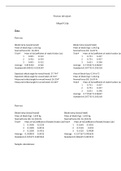
trained at high altitude for 2 months? (1 pt) The average Hct value at low altitude is 42 and
after the subject trained at high altitude for 2 months, it increased to 48.
2. Did average hematocrit increase, decrease, or not change after training at high altitude
for 2 months? (1 pt) increase
3. What are the average hemoglobin values (g/100 ml) at low altitude and then after the
subject trained at high altitude for 2 months? (1 pt) The average Hb value at low altitude is 14.3
and after the subject trained at high altitude for 2 months, it increased to 17.2.
4. What is the blood type of the mother, father, and child in Family 1? (1 pt)
mother = AB-; father = O+; child = A+
5. What is the blood type of the mother, father, and child in Family 2? (1 pt)
mother = O+; father = B-; child = B
6. What is the blood type of the mother, father, and child in Family 3? (1 pt)
mother = A-; father = O-; child = A-
HUMAN-MICROBE INTERATIONS HW
1) Explain how the human body could be considered 90% prokaryotic.
2) How do bacteria enable a baby to extract nutrition from the mother's milk? (See the paper
and be very specific about the enzymes involved).
*Questions 3 - 7. Use supportive evidence from the assigned reading and at least one
additional source per question.
*3) How could the bacterial microbiome impact obesity?
*4.) What is Clostridium difficile and why is a Clostridium difficile infection so difficult to treat?
*5.) How can bacteria impact cardiac disease?
*6) How might the bacterial microbiota affect type 2 diabetes?
*7) How can bacteria impact autoimmune diseases?
8.) How does Vibrio fischeri control bioluminescence?
9.) Define pathogenicity and virulence.
10). What are anti-quorum sensing molecules and what might they replace someday?
Complete the following questions on the PowerPhys lab report!
Results:
1. What are the average hematocrit values (%) at low altitude and then after the subject
trained at high altitude for 2 months? (1 pt) The average Hct value at low altitude is 42 and
after the subject trained at high altitude for 2 months, it increased to 48.
2. Did average hematocrit increase, decrease, or not change after training at high altitude
for 2 months? (1 pt) increase
3. What are the average hemoglobin values (g/100 ml) at low altitude and then after the
subject trained at high altitude for 2 months? (1 pt) The average Hb value at low altitude is 14.3
and after the subject trained at high altitude for 2 months, it increased to 17.2.
4. What is the blood type of the mother, father, and child in Family 1? (1 pt)
mother = AB-; father = O+; child = A+
5. What is the blood type of the mother, father, and child in Family 2? (1 pt)
mother = O+; father = B-; child = B
6. What is the blood type of the mother, father, and child in Family 3? (1 pt)
mother = A-; father = O-; child = A-