NURS 3119 Introduction to Pharm Exam
1 With Solution
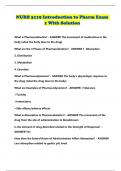
What is Pharmacokinetics? - ANSWER The movement of medications in the
body (what the body does to the drug)
What are the 4 Phases of Pharmacokinetics? - ANSWER 1. Absorption
2. Distribution
3. Metabolism
4. Excretion
What is Pharmacodynamics? - ANSWER The body's physiologic response to
the drug (what the drug does to the body)
What are Examples of Pharmacodynamics? - ANSWER >Tolerance
>Toxicity
>Interactions
>Side affects/adverse effects
What is Absorption in Pharmacokinetics? - ANSWER The movement of the
drug from the site of administration to bloodstream
Is the Amount of drug Absorbed related to the Strength of Response? -
ANSWER Yes
How does the Enteral Route of Administration Affect Absorption? - ANSWER
Less absorption related to gastric pH, food
,How does the Sublingual/Buccal/Suppository Route of Administration Affect
Absorption? - ANSWER Quick absorb through vascular mucous membranes
How does the Inhalation Route of Administration Impact Absorption?
ANSWER Quick absorption; inspiratory effort and lung consolidation affect
absorption rate How does the Topical/Intradermal Route of Administration
Impact Absorption? ANSWER Slower; dependent on location How does the
IM Route of Administration Impact Absorption? ANSWER Quicker; dependent
on solubility of the medication, blood flow to injection site How does the IV
Route of Administration Impact Absorption? ANSWER Complete and
immediate
What is Distribution in Pharmacokinetics? - ANSWER Movement of a drug
from the blood to the site of action
What Does Distribution in Pharmacokinetics Affected by? - ANSWER
>Perfusion
>Ability of drug to diffuse across capillary cells and membranes
>Competition for binding sites
>Some drugs are "protein bound" and require proteins to act
What is a Common Protein for Distribution? - ANSWER Albumin; medications
that cannot find Albumin to bind to becomes free drug in the blood stream
What is Competition for Binding Sites? - ANSWER Higher risk when using
multiple meds, leads to unbound (free) in the bloodstream
, What is Drug Binding? - ANSWER Medications bind to receptor sites and
either increase or decrease the activity of that site
What is an Agonist Binding Site? Example? - ANSWER Binds to a site and
mimics the activity of that receptor.
>Opioid Agonist (Fentanyl) binds to Mu receptor site to block pain reception
- also blocks respiratory drive among other things
What is an Antagonist Binding Site? Example? - ANSWER Binds to the site
and blocks the activity of that receptor
Naloxone (Narcan) binds to the Mu receptor to push off the opioids to
reverse drug effects-increase respirations
What is a Partial Agonist Binding Site? Example? - ANSWER Binds to more
than one receptor site and can act as either, depending on the receptor site
>Butorphanol (opioid agonist/antagonist) Binds to Kappa for pain relief
(agonist), Blocks antagonist Mu receptor that causes respiratory depression
and other unwanted opioid side effects
What is Therapeutic Range? -ANSWER The range where the drug reaches its
desired effect.
1 With Solution
What is Pharmacokinetics? - ANSWER The movement of medications in the
body (what the body does to the drug)
What are the 4 Phases of Pharmacokinetics? - ANSWER 1. Absorption
2. Distribution
3. Metabolism
4. Excretion
What is Pharmacodynamics? - ANSWER The body's physiologic response to
the drug (what the drug does to the body)
What are Examples of Pharmacodynamics? - ANSWER >Tolerance
>Toxicity
>Interactions
>Side affects/adverse effects
What is Absorption in Pharmacokinetics? - ANSWER The movement of the
drug from the site of administration to bloodstream
Is the Amount of drug Absorbed related to the Strength of Response? -
ANSWER Yes
How does the Enteral Route of Administration Affect Absorption? - ANSWER
Less absorption related to gastric pH, food
,How does the Sublingual/Buccal/Suppository Route of Administration Affect
Absorption? - ANSWER Quick absorb through vascular mucous membranes
How does the Inhalation Route of Administration Impact Absorption?
ANSWER Quick absorption; inspiratory effort and lung consolidation affect
absorption rate How does the Topical/Intradermal Route of Administration
Impact Absorption? ANSWER Slower; dependent on location How does the
IM Route of Administration Impact Absorption? ANSWER Quicker; dependent
on solubility of the medication, blood flow to injection site How does the IV
Route of Administration Impact Absorption? ANSWER Complete and
immediate
What is Distribution in Pharmacokinetics? - ANSWER Movement of a drug
from the blood to the site of action
What Does Distribution in Pharmacokinetics Affected by? - ANSWER
>Perfusion
>Ability of drug to diffuse across capillary cells and membranes
>Competition for binding sites
>Some drugs are "protein bound" and require proteins to act
What is a Common Protein for Distribution? - ANSWER Albumin; medications
that cannot find Albumin to bind to becomes free drug in the blood stream
What is Competition for Binding Sites? - ANSWER Higher risk when using
multiple meds, leads to unbound (free) in the bloodstream
, What is Drug Binding? - ANSWER Medications bind to receptor sites and
either increase or decrease the activity of that site
What is an Agonist Binding Site? Example? - ANSWER Binds to a site and
mimics the activity of that receptor.
>Opioid Agonist (Fentanyl) binds to Mu receptor site to block pain reception
- also blocks respiratory drive among other things
What is an Antagonist Binding Site? Example? - ANSWER Binds to the site
and blocks the activity of that receptor
Naloxone (Narcan) binds to the Mu receptor to push off the opioids to
reverse drug effects-increase respirations
What is a Partial Agonist Binding Site? Example? - ANSWER Binds to more
than one receptor site and can act as either, depending on the receptor site
>Butorphanol (opioid agonist/antagonist) Binds to Kappa for pain relief
(agonist), Blocks antagonist Mu receptor that causes respiratory depression
and other unwanted opioid side effects
What is Therapeutic Range? -ANSWER The range where the drug reaches its
desired effect.