NUR258 Week 1 Test With
Complete Solution
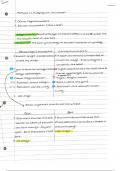
Emergent / Resuscitative Phase - ANSWER Onset of injury to completion of
fluid resuscitation
Rehabilitation phase - ANSWER From wound closure to return to optimal
physical and psychosocial adjustment
Acute/Intermediate Phase - ANSWER From beginning of diuresis to wound
closure
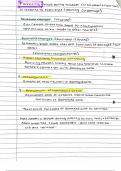
Curling's ulcer - ANSWER Stress ulcer secondary to systemic burns
Rule of nines - ANSWER estimate the total body surface area of burns is
based on anatomic regions
Zone of stasis - ANSWER area of injured cells that may remain viable but,
with persistent ischemia, will undergo necrosis within 24-48 hours
zone of hyperemia - ANSWER Sustains minimal injury and may fully recover
, spontaneously over time
Zone of coagulation - ANSWER characteristic coagulation necrosis of cells
that occurs in the center of the wound
4th degree burn - ANSWER burn that extends deeper than the subcutaneous
tissue and involves muscle, bone or both
methods of wound debridement in burns - ANSWER mechanical, natural,
surgical
Types of burn pain - ANSWER Breakthrough, Procedural, Background/resting
factors to determine burn depth - ANSWER Duration of contact with the
agent, Temperature of agent, Causative agent
causes of hypoperfusion and organ hypofunction - ANSWER Fluid shifts,
Shock
collaborative complications of burns - ANSWER Heart failure and pulmonary
edema, Acute Respiratory Distress Syndrome (ARDS)
Complete Solution
Emergent / Resuscitative Phase - ANSWER Onset of injury to completion of
fluid resuscitation
Rehabilitation phase - ANSWER From wound closure to return to optimal
physical and psychosocial adjustment
Acute/Intermediate Phase - ANSWER From beginning of diuresis to wound
closure
Curling's ulcer - ANSWER Stress ulcer secondary to systemic burns
Rule of nines - ANSWER estimate the total body surface area of burns is
based on anatomic regions
Zone of stasis - ANSWER area of injured cells that may remain viable but,
with persistent ischemia, will undergo necrosis within 24-48 hours
zone of hyperemia - ANSWER Sustains minimal injury and may fully recover
, spontaneously over time
Zone of coagulation - ANSWER characteristic coagulation necrosis of cells
that occurs in the center of the wound
4th degree burn - ANSWER burn that extends deeper than the subcutaneous
tissue and involves muscle, bone or both
methods of wound debridement in burns - ANSWER mechanical, natural,
surgical
Types of burn pain - ANSWER Breakthrough, Procedural, Background/resting
factors to determine burn depth - ANSWER Duration of contact with the
agent, Temperature of agent, Causative agent
causes of hypoperfusion and organ hypofunction - ANSWER Fluid shifts,
Shock
collaborative complications of burns - ANSWER Heart failure and pulmonary
edema, Acute Respiratory Distress Syndrome (ARDS)