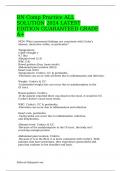
Hesi Pediatric Questions and Verified
Answers Graded+
1. A 4-year-old child has cystic fibrosis. Which stage of Erikson theory of
psychosocial development is the nurse addressing when teaching inhalation
therapy? - ANSWER- A. Autonomy
B. Industry
C. Trust
D. Initiative
Rationale:
Children 4 to 5 years of age are in the "Initiative vs. Guilt" stage of Erikson theory
of psychosocial development. They enjoy being active and participating in role
playing. "Autonomy vs. Shame and Doubt" occurs at 1 to 3 years of age. "Industry
vs. Inferiority" occurs at 6 to 11 years; "Trust vs. Mistrust" occurs from birth to 1
year of age.
2. A child is admitted to the hospital for confirmation of a diagnosis of acute
lymphoblastic leukemia. During the initial nursing assessment, which symptoms
will this child most likely exhibit? - ANSWER- A. Bone pain, pallor
B. Weakness, tremors
C. Nystagmus, anorexia
D. Fever, abdominal distention
Rationale:
Option A lists the most common presenting symptoms of leukemia. Leukemic cells
invade the bone marrow, gradually causing a weakening of the bone and a
tendency toward pathologic fractures. As leukemic cells invade the periosteum,
increasing pressure causes severe pain and anemia results from decreased
,erythrocytes, causing pallor. Options B and C could be associated with central
nervous system disorders. Option D commonly occurs in children but is not
specific for leukemia.
3. Which nursing interventions are therapeutic when caring for a hospitalized
toddler? (Select all that apply.) - ANSWER- A. Require parents to leave the room
when performing invasive procedures.
B. Allow the toddler to choose a colored Band-Aid after an injection.
C. Give brief but simple explanations to the child before procedures.
D. Insert a urinary catheter if bedwetting occurs during hospitalization.
E. Do not allow any toys to be brought in from the child's home.
Rationale:
Giving the toddler a choice may increase autonomy in the hospitalized setting.
Brief but simple explanations are beneficial with the toddler. Separation from the
parent can cause emotional distress. Regression is expected, and bedwetting is not
an indication for a urinary catheter. The nurse should encourage age-appropriate
toys to be brought in from home.
4. The nurse is taking the family history of a 2-year-old child with atopic dermatitis
(eczema). Which statement by the mother is most important in formulating a plan
of care for this child? - ANSWER- A. "Our first child was born with a cleft lip."
B. "We are very careful not to get sunburns in our family."
C. "My first child sometimes got a diaper rash."
D. "My husband and our daughter are both lactose-intolerant."
Rationale:
Environmental exposure to allergens (milk) and a positive family history for milk
allergies are important data in planning care of the child with atopic dermatitis
because milk allergies can contribute to the child's outbreaks. Option A is not a
contributing factor. Option B is an environmental factor in other skin diseases but
does not have a strong correlation with eczema in children. Option C is not unusual
, and occurs in the diaper area, whereas atopic dermatitis occurs most often on the
face and extensor aspects of the arms and legs.
5. A woman whose first child died at 6 weeks of age because of sudden infant
death syndrome (SIDS) is being discharged following the birth of her second child.
The mother tells the nurse that she is fearful that this infant will also develop SIDS.
Which response is best for the nurse to provide this woman? - ANSWER- A. "You
can prevent SIDS if your baby sleeps on the side or back. You will have to monitor
the baby carefully."
B. "The fear of losing another child to SIDS is very realistic. Have you thought
about what support you may need?"
C. "An apnea monitor will alert you if the baby stops breathing. This will give you
the peace of mind that you need."
D. "My neighbor's baby died of SIDS last year, and she went to a SIDS support
group. That really helped her."
Rationale:
The most effective way to provide emotional support is to acknowledge what
clients may be feeling, be a sounding board for them so they can listen to
themselves, and allow them to discover their own solutions. Option A implies to
the mother that she can prevent SIDS from occurring, which is an unrealistic
expectation. Offering a personal opinion about what will help this client or about
what has helped a neighbor is not as effective as helping the client discover what
would be best for her.
6.` The nurse notes that a 16-year-old male client is refusing visits from his
classmates. Further assessment reveals that he is concerned about his edematous
facial features. Based on these assessment findings, the nurse should plan
interventions related to which nursing diagnosis? - ANSWER- A. Social isolation
B. Altered health maintenance
C. Knowledge deficit
D. Ineffective coping
Answers Graded+
1. A 4-year-old child has cystic fibrosis. Which stage of Erikson theory of
psychosocial development is the nurse addressing when teaching inhalation
therapy? - ANSWER- A. Autonomy
B. Industry
C. Trust
D. Initiative
Rationale:
Children 4 to 5 years of age are in the "Initiative vs. Guilt" stage of Erikson theory
of psychosocial development. They enjoy being active and participating in role
playing. "Autonomy vs. Shame and Doubt" occurs at 1 to 3 years of age. "Industry
vs. Inferiority" occurs at 6 to 11 years; "Trust vs. Mistrust" occurs from birth to 1
year of age.
2. A child is admitted to the hospital for confirmation of a diagnosis of acute
lymphoblastic leukemia. During the initial nursing assessment, which symptoms
will this child most likely exhibit? - ANSWER- A. Bone pain, pallor
B. Weakness, tremors
C. Nystagmus, anorexia
D. Fever, abdominal distention
Rationale:
Option A lists the most common presenting symptoms of leukemia. Leukemic cells
invade the bone marrow, gradually causing a weakening of the bone and a
tendency toward pathologic fractures. As leukemic cells invade the periosteum,
increasing pressure causes severe pain and anemia results from decreased
,erythrocytes, causing pallor. Options B and C could be associated with central
nervous system disorders. Option D commonly occurs in children but is not
specific for leukemia.
3. Which nursing interventions are therapeutic when caring for a hospitalized
toddler? (Select all that apply.) - ANSWER- A. Require parents to leave the room
when performing invasive procedures.
B. Allow the toddler to choose a colored Band-Aid after an injection.
C. Give brief but simple explanations to the child before procedures.
D. Insert a urinary catheter if bedwetting occurs during hospitalization.
E. Do not allow any toys to be brought in from the child's home.
Rationale:
Giving the toddler a choice may increase autonomy in the hospitalized setting.
Brief but simple explanations are beneficial with the toddler. Separation from the
parent can cause emotional distress. Regression is expected, and bedwetting is not
an indication for a urinary catheter. The nurse should encourage age-appropriate
toys to be brought in from home.
4. The nurse is taking the family history of a 2-year-old child with atopic dermatitis
(eczema). Which statement by the mother is most important in formulating a plan
of care for this child? - ANSWER- A. "Our first child was born with a cleft lip."
B. "We are very careful not to get sunburns in our family."
C. "My first child sometimes got a diaper rash."
D. "My husband and our daughter are both lactose-intolerant."
Rationale:
Environmental exposure to allergens (milk) and a positive family history for milk
allergies are important data in planning care of the child with atopic dermatitis
because milk allergies can contribute to the child's outbreaks. Option A is not a
contributing factor. Option B is an environmental factor in other skin diseases but
does not have a strong correlation with eczema in children. Option C is not unusual
, and occurs in the diaper area, whereas atopic dermatitis occurs most often on the
face and extensor aspects of the arms and legs.
5. A woman whose first child died at 6 weeks of age because of sudden infant
death syndrome (SIDS) is being discharged following the birth of her second child.
The mother tells the nurse that she is fearful that this infant will also develop SIDS.
Which response is best for the nurse to provide this woman? - ANSWER- A. "You
can prevent SIDS if your baby sleeps on the side or back. You will have to monitor
the baby carefully."
B. "The fear of losing another child to SIDS is very realistic. Have you thought
about what support you may need?"
C. "An apnea monitor will alert you if the baby stops breathing. This will give you
the peace of mind that you need."
D. "My neighbor's baby died of SIDS last year, and she went to a SIDS support
group. That really helped her."
Rationale:
The most effective way to provide emotional support is to acknowledge what
clients may be feeling, be a sounding board for them so they can listen to
themselves, and allow them to discover their own solutions. Option A implies to
the mother that she can prevent SIDS from occurring, which is an unrealistic
expectation. Offering a personal opinion about what will help this client or about
what has helped a neighbor is not as effective as helping the client discover what
would be best for her.
6.` The nurse notes that a 16-year-old male client is refusing visits from his
classmates. Further assessment reveals that he is concerned about his edematous
facial features. Based on these assessment findings, the nurse should plan
interventions related to which nursing diagnosis? - ANSWER- A. Social isolation
B. Altered health maintenance
C. Knowledge deficit
D. Ineffective coping