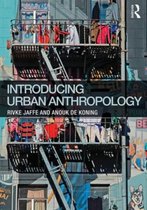
SUMMARY OF BOOK: ‘INTRODUCING URBAN ANTHROPOLOGY’
Index
Chapter 1 2
Chapter 2 6
Chapter 3 9
Chapter 4 11
Chapter 5 13
Chapter 6 16
Chapter 7 18
Chapter 8 20
Chapter 9 22
Chapter 10 24
Chapter 11 26
1
,CHAPTER 1: INTRODUCTION
Urban anthropology
• Rapid urbanization → for the first time in history, more than half the world's population lives in
cities
• Urban anthropologists seek to understand the changing nature of urban social life, the influence
of urban space and place, and more broadly what constitutes a city in the context of global flows
and connections
• Some authors consider any anthropological research conducted in the city to be urban
anthropology → this book does not → what makes it urban anthropology is the explicit reflection
of social phenomena on the implications of the urban context in which these phenomena occur
Why urban anthropology?
• Factors in the emergence and growth of urban anthropology:
1. Global processes of rapid urbanization
• Growth of cities
2. Shifts within broader anthropology
• Globalization
• Expanding the interest in 'traditional' hunter-gatherer or peasant economies, by
giving more attention to social life in 'modern' urban economies
• Decolonizing movement emphasized the need to 'bring anthropology home'
City typologies
• Courttown = ceremonial cities
o Concentration of political and ceremonial power
o Centered on the court and monumental political buildings
• Commercetown = emerged as a consequence of the growth of trade networks, within which
cities developed as crucial nodes
o Marketplace played a crucial role and represented an important urban site
• Coketown = Massive industrial cities, marked by their economic basis in, for instance, textile
manufacturing
o A new city type from the 19th century
Situating urban anthropology
• Urban anthropology = anthropology that engages explicitly with the question of how social life is
structured by and experienced within urban contexts
• Features of urban contexts
o Size
o Density
o Heterogeneity
o Anonymity
o Inequality
• Methods
o Ethnography, and its main component participant observation
▪ Provides access to hidden aspects or segments of urban life, to intimate, informal
and illegal processes
2
, What is a city?
• Louis Wirth
o Size, density and population heterogeneity as the three main characteristics of a city
o Urbanism as a way of life
o What defined the city were the impersonal, formal and business-oriented relationships
between its residents, and their blasé attitudes
• Richard Sennett
o Urban space is a place where strangers meet
o Anonymity and heterogeneity are influential in shaping our understanding of urban space
as a public realm
• Constructivism
o The city is a social construct: a city is a city, rather than a village or a town, if people
believe that it is one
• Recent scholars
o The city is not so much a place but a social-material-technological process, or an
assemblage
o Cities are the intersection of multiple dynamic and unstable networks and flows of people,
animals, money, things, ideas and technology
Historical developments
• Urban anthropology's predecessors
o Three groups of influential writers
1. Literary journalists
▪ Charles Dickens
▪ Elizabeth Gaskell
▪ Émile zola
▪ The lives of the urban poor in the context of industrial urbanism
▪ Political purpose: highlight the exploitation of the urban poor
2. Academically minded reformers
▪ Novel methods: statistics and cartography
▪ Many were associated with the political project of sanitary reform
▪ Others were more radical
▪ Friedrich Engels (Marxism)
3. Empirically oriented sociologists
▪ The Chicago school
▪ Human ecology model = understands human behavior in cities to be shaped
by the urban environment and its competitive character
▪ Emphasized the importance of empirical data and especially fieldwork
▪ In addition, various methods: cognitive mapping and oral history
▪ Case studies of marginalized groups
• Early urban anthropology
o Robert Redfield
▪ Contradistinction between folk society and modern city
• Folk society = culturally uniform, face-to-face community with limited division
of labour
• Continuum, with progressive degrees of cultural disorganization,
secularization and individualization
o Massive rural-to-urban migration in the global South → how do migrants cope in new
urban environments?
o Copperbelt studies
▪ Conducted from a colonial liberal perspective
3
Index
Chapter 1 2
Chapter 2 6
Chapter 3 9
Chapter 4 11
Chapter 5 13
Chapter 6 16
Chapter 7 18
Chapter 8 20
Chapter 9 22
Chapter 10 24
Chapter 11 26
1
,CHAPTER 1: INTRODUCTION
Urban anthropology
• Rapid urbanization → for the first time in history, more than half the world's population lives in
cities
• Urban anthropologists seek to understand the changing nature of urban social life, the influence
of urban space and place, and more broadly what constitutes a city in the context of global flows
and connections
• Some authors consider any anthropological research conducted in the city to be urban
anthropology → this book does not → what makes it urban anthropology is the explicit reflection
of social phenomena on the implications of the urban context in which these phenomena occur
Why urban anthropology?
• Factors in the emergence and growth of urban anthropology:
1. Global processes of rapid urbanization
• Growth of cities
2. Shifts within broader anthropology
• Globalization
• Expanding the interest in 'traditional' hunter-gatherer or peasant economies, by
giving more attention to social life in 'modern' urban economies
• Decolonizing movement emphasized the need to 'bring anthropology home'
City typologies
• Courttown = ceremonial cities
o Concentration of political and ceremonial power
o Centered on the court and monumental political buildings
• Commercetown = emerged as a consequence of the growth of trade networks, within which
cities developed as crucial nodes
o Marketplace played a crucial role and represented an important urban site
• Coketown = Massive industrial cities, marked by their economic basis in, for instance, textile
manufacturing
o A new city type from the 19th century
Situating urban anthropology
• Urban anthropology = anthropology that engages explicitly with the question of how social life is
structured by and experienced within urban contexts
• Features of urban contexts
o Size
o Density
o Heterogeneity
o Anonymity
o Inequality
• Methods
o Ethnography, and its main component participant observation
▪ Provides access to hidden aspects or segments of urban life, to intimate, informal
and illegal processes
2
, What is a city?
• Louis Wirth
o Size, density and population heterogeneity as the three main characteristics of a city
o Urbanism as a way of life
o What defined the city were the impersonal, formal and business-oriented relationships
between its residents, and their blasé attitudes
• Richard Sennett
o Urban space is a place where strangers meet
o Anonymity and heterogeneity are influential in shaping our understanding of urban space
as a public realm
• Constructivism
o The city is a social construct: a city is a city, rather than a village or a town, if people
believe that it is one
• Recent scholars
o The city is not so much a place but a social-material-technological process, or an
assemblage
o Cities are the intersection of multiple dynamic and unstable networks and flows of people,
animals, money, things, ideas and technology
Historical developments
• Urban anthropology's predecessors
o Three groups of influential writers
1. Literary journalists
▪ Charles Dickens
▪ Elizabeth Gaskell
▪ Émile zola
▪ The lives of the urban poor in the context of industrial urbanism
▪ Political purpose: highlight the exploitation of the urban poor
2. Academically minded reformers
▪ Novel methods: statistics and cartography
▪ Many were associated with the political project of sanitary reform
▪ Others were more radical
▪ Friedrich Engels (Marxism)
3. Empirically oriented sociologists
▪ The Chicago school
▪ Human ecology model = understands human behavior in cities to be shaped
by the urban environment and its competitive character
▪ Emphasized the importance of empirical data and especially fieldwork
▪ In addition, various methods: cognitive mapping and oral history
▪ Case studies of marginalized groups
• Early urban anthropology
o Robert Redfield
▪ Contradistinction between folk society and modern city
• Folk society = culturally uniform, face-to-face community with limited division
of labour
• Continuum, with progressive degrees of cultural disorganization,
secularization and individualization
o Massive rural-to-urban migration in the global South → how do migrants cope in new
urban environments?
o Copperbelt studies
▪ Conducted from a colonial liberal perspective
3