

Respiratory Syncytial Virus (RSV)
28 December 2020 14:50
Facts about RSV:
• Incidence ~33million worldwide in children under 5 years of age
• 10% require hospital admission and about 200,000 die annually
• Discovered in 1956
• Causes acute disease and can lead to longer term respiratory conditions (asthma)
• Seasonal nature:
– Temperature zones: late autumn, winter, spring
– Tropical and Arctic: all year around
– Europe: predominantly a disease of winter
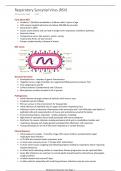
RSV virion:
Genomic Structure:
• Enveloped virus - member of genus Pneumovirus
• Negative sense, single stranded, non-segmented RNA genome (compare 'flu')
• Two subgroups (A and B)
• Surface proteins G (attachment) and F (fusion)
• Most genetic variation located in the G protein
Pathogenesis:
• Initial infection through contact of particles with nose or eyes
• Incubation period 2-8days
• RSV can survive in the environment for long periods
• Initial infection of epithelial cells or upper and lower respiratory tract
• Infections result in extensive inflammation with monocyte and T-cell infiltration and death of
epithelial cells and overproduction of mucus and sometimes syncytial formation
• Environmental factors important - smoke, pollution, crowding
• High levels of replication (virus load) associated with more symptoms
• Risk factor for severe infection include premature birth and co-morbidities (cardiac and
respiratory disease) and maybe genetic predisposition affecting T-cell responses.
• Young individuals are at risk if they have respiratory or cardiac diseases
Clinical features:
• Initial exposure 6 weeks - 9 months of age, RSV causes mild (or asymptomatic) upper
respiratory tract infection
• In 25-40% also involves lower respiratory tract
• In most cases recovery occurs 7-12 days after initial illness
• In more severe cases coughing and wheezing progress leading to respiratory failure requiring
hospital admission
• In infants with underlying cardiac or respiratory disease progression can be rapid and fatal
• Acute RSV infections are common in normal adults characterised by rhinorrhoea, pharyngitis,
cough and fever
• In adults disease lasts around 5 days
• In older patients, especially with underlying disease, infections may be more severe
Respiratory Syncytial virus Page 1
28 December 2020 14:50
Facts about RSV:
• Incidence ~33million worldwide in children under 5 years of age
• 10% require hospital admission and about 200,000 die annually
• Discovered in 1956
• Causes acute disease and can lead to longer term respiratory conditions (asthma)
• Seasonal nature:
– Temperature zones: late autumn, winter, spring
– Tropical and Arctic: all year around
– Europe: predominantly a disease of winter
RSV virion:
Genomic Structure:
• Enveloped virus - member of genus Pneumovirus
• Negative sense, single stranded, non-segmented RNA genome (compare 'flu')
• Two subgroups (A and B)
• Surface proteins G (attachment) and F (fusion)
• Most genetic variation located in the G protein
Pathogenesis:
• Initial infection through contact of particles with nose or eyes
• Incubation period 2-8days
• RSV can survive in the environment for long periods
• Initial infection of epithelial cells or upper and lower respiratory tract
• Infections result in extensive inflammation with monocyte and T-cell infiltration and death of
epithelial cells and overproduction of mucus and sometimes syncytial formation
• Environmental factors important - smoke, pollution, crowding
• High levels of replication (virus load) associated with more symptoms
• Risk factor for severe infection include premature birth and co-morbidities (cardiac and
respiratory disease) and maybe genetic predisposition affecting T-cell responses.
• Young individuals are at risk if they have respiratory or cardiac diseases
Clinical features:
• Initial exposure 6 weeks - 9 months of age, RSV causes mild (or asymptomatic) upper
respiratory tract infection
• In 25-40% also involves lower respiratory tract
• In most cases recovery occurs 7-12 days after initial illness
• In more severe cases coughing and wheezing progress leading to respiratory failure requiring
hospital admission
• In infants with underlying cardiac or respiratory disease progression can be rapid and fatal
• Acute RSV infections are common in normal adults characterised by rhinorrhoea, pharyngitis,
cough and fever
• In adults disease lasts around 5 days
• In older patients, especially with underlying disease, infections may be more severe
Respiratory Syncytial virus Page 1


