

Blood: Its Composition and Function
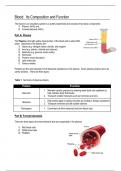
The blood in our circulatory system is a watery based fluid and consists of two basic components:
1) Plasma (55%) and,
2) Formed elements (45%)
Part A: Plasma
The Plasma is the light yellow liquid portion of the blood and is about 90%
water. Dissolved in the plasma are:
1) Gases (e.g. nitrogen carbon dioxide, and oxygen)
2) Ions (e.g. sodium, chloride and calcium)
3) Nutrients (e.g. glucose, amino acids)
4) Hormones
5) Proteins (most abundant)
6) Lipid molecules
7) Various wastes
Proteins are the most abundant of all dissolved substances in the plasma. Some plasma proteins serve as
carrier proteins. There are three types:
Table 1: Summary of plasma proteins
Protein Function
1. Maintain osmotic pressure by drawing water back into capillaries to
Albumins help maintain body fluid levels.
2. Transport smaller molecules such as hormones and ions
1. Help protect again invading microbes by binding to foreign substances
Globulins
2. Transport hormones and fat soluble vitamins
Fibrinogens 1. Converted into fibrin networks that form blood clots.
Part B: Formed elements
There are three types of formed elements that are suspended in the plasma:
1) Red blood cells
2) White blood cells
3) Platelets
The blood in our circulatory system is a watery based fluid and consists of two basic components:
1) Plasma (55%) and,
2) Formed elements (45%)
Part A: Plasma
The Plasma is the light yellow liquid portion of the blood and is about 90%
water. Dissolved in the plasma are:
1) Gases (e.g. nitrogen carbon dioxide, and oxygen)
2) Ions (e.g. sodium, chloride and calcium)
3) Nutrients (e.g. glucose, amino acids)
4) Hormones
5) Proteins (most abundant)
6) Lipid molecules
7) Various wastes
Proteins are the most abundant of all dissolved substances in the plasma. Some plasma proteins serve as
carrier proteins. There are three types:
Table 1: Summary of plasma proteins
Protein Function
1. Maintain osmotic pressure by drawing water back into capillaries to
Albumins help maintain body fluid levels.
2. Transport smaller molecules such as hormones and ions
1. Help protect again invading microbes by binding to foreign substances
Globulins
2. Transport hormones and fat soluble vitamins
Fibrinogens 1. Converted into fibrin networks that form blood clots.
Part B: Formed elements
There are three types of formed elements that are suspended in the plasma:
1) Red blood cells
2) White blood cells
3) Platelets


