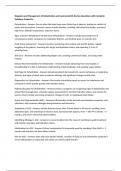
Diagnosis and Management of Dehydration and Gastroenteritis Review Questions with Complete
Solutions Graded A+
Dehydration - Answers Occurs when the body loses more fluids than it takes in, leading to a deficit of
water and electrolytes. Common causes include diarrhea, vomiting, decreased oral intake, sustained
high fever, diabetic ketoacidosis, extensive burns.
Signs of Severe Dehydration (At-the-Door Dehydration) - Answers Include decreased level of
consciousness (LOC), tachypnea or respiratory distress, and mottled, gray, or cyanotic skin.
Fluid Status Assessment - Answers Involves monitoring urine output and specific gravity, regular
weighing of the patient, assessing skin turgor and hydration status, and expecting 1-2 mL of
urine/kg/hour.
Skin Care - Answers Involves addressing diaper rash, avoiding commercial wipes, and using water
instead.
Dietary Recommendations for Dehydration - Answers Include advancing from clear liquids or
breastfeeding to a diet as tolerated, implementing a fluid challenge, and avoiding sugary drinks.
Red Flags for Dehydration - Answers Include persistent decreased LOC, severe tachypnea or respiratory
distress, and signs of shock such as extreme lethargy and significant changes in skin color.
Diagnostics for Dehydration - Answers May involve electrolyte panels to assess for imbalances and
urinalysis to check specific gravity and hydration status.
Patient Education for Dehydration - Answers Instruct caregivers on recognizing signs of dehydration and
proper fluid management, schedule regular assessments to monitor hydration status, and reasons for
sooner return include worsening symptoms, changes in LOC, or inadequate fluid intake.
Acute Viral Gastroenteritis (AGE) - Answers Inflammation of the stomach and intestines caused by viral
infections, with common etiologies being Rotavirus and Norovirus.
Symptoms of AGE - Answers Include diarrhea (more than 3 loose stools in 24 hours), vomiting, fever,
abdominal pain, and watching for blood in stool, decreased wet diapers, fever > 100.4°F in infants < 3
months, and severe electrolyte abnormalities.
Identifying Etiology in AGE - Answers Is crucial to determine the cause of vomiting to guide treatment
and monitor vital signs and hydration status.
Medications for AGE - Answers Zofran (ondansetron) is frequently used for vomiting if the child is > 3
months old and does not have bilious emesis.
Diet for AGE - Answers Start with clear liquids initially, consider IV fluids or oral rehydration solutions if
severe dehydration is suspected, and rarely use antimicrobial therapy.
Solutions Graded A+
Dehydration - Answers Occurs when the body loses more fluids than it takes in, leading to a deficit of
water and electrolytes. Common causes include diarrhea, vomiting, decreased oral intake, sustained
high fever, diabetic ketoacidosis, extensive burns.
Signs of Severe Dehydration (At-the-Door Dehydration) - Answers Include decreased level of
consciousness (LOC), tachypnea or respiratory distress, and mottled, gray, or cyanotic skin.
Fluid Status Assessment - Answers Involves monitoring urine output and specific gravity, regular
weighing of the patient, assessing skin turgor and hydration status, and expecting 1-2 mL of
urine/kg/hour.
Skin Care - Answers Involves addressing diaper rash, avoiding commercial wipes, and using water
instead.
Dietary Recommendations for Dehydration - Answers Include advancing from clear liquids or
breastfeeding to a diet as tolerated, implementing a fluid challenge, and avoiding sugary drinks.
Red Flags for Dehydration - Answers Include persistent decreased LOC, severe tachypnea or respiratory
distress, and signs of shock such as extreme lethargy and significant changes in skin color.
Diagnostics for Dehydration - Answers May involve electrolyte panels to assess for imbalances and
urinalysis to check specific gravity and hydration status.
Patient Education for Dehydration - Answers Instruct caregivers on recognizing signs of dehydration and
proper fluid management, schedule regular assessments to monitor hydration status, and reasons for
sooner return include worsening symptoms, changes in LOC, or inadequate fluid intake.
Acute Viral Gastroenteritis (AGE) - Answers Inflammation of the stomach and intestines caused by viral
infections, with common etiologies being Rotavirus and Norovirus.
Symptoms of AGE - Answers Include diarrhea (more than 3 loose stools in 24 hours), vomiting, fever,
abdominal pain, and watching for blood in stool, decreased wet diapers, fever > 100.4°F in infants < 3
months, and severe electrolyte abnormalities.
Identifying Etiology in AGE - Answers Is crucial to determine the cause of vomiting to guide treatment
and monitor vital signs and hydration status.
Medications for AGE - Answers Zofran (ondansetron) is frequently used for vomiting if the child is > 3
months old and does not have bilious emesis.
Diet for AGE - Answers Start with clear liquids initially, consider IV fluids or oral rehydration solutions if
severe dehydration is suspected, and rarely use antimicrobial therapy.