What is economics?
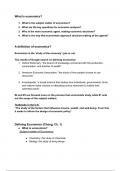
1. What is the subject matter of economics?
2. What are the key questions for economic analysis?
3. Who is the main economic agent, making economic decisions?
4. What is the way that economists approach decision-making of the agents?
A definition of economics?
Economics is the ‘study of the economy’ (yes or no)
The results of Google search on defining economics:
1. Oxford Dictionary: “the branch of knowledge concerned with the production,
consumption, and transfer of wealth”
2. American Economic Association: “the study of how people choose to use
resources”
3. Investopedia: “a social science that studies how individuals, governments, firms,
and nations make choices on allocating scarce resources to satisfy their
unlimited wants”
#2 and #3 are focused more on the process that economists study while #1 sets
out the scope of the subject matters.
Textbooks in the U.K.
“The study of the factors that influence income, wealth, and well-being. From this
it seeks to inform the design of economic policy”
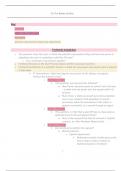
Defining Economics (Chang, Ch. 1)
● What is economics?
:Subject matter of Economics
● Chemistry: the study of chemicals
● Biology: the study of living things
, ● Economics: the study of the economy
or the study of life and everything (?)
Question:
Is economics (almost) about life, the universe and everything?
Neoclassicals:
Economics is the study of rational human choice. Economics is the study of the
allocation of scarce resources among unlimited wants
Lionel Robbins at LSE (1933)
“Economics is the science which studies human behavior as a relationship between
ends and scarce means which have alternative uses”
George Stigler at U. Chicago (1942)
“The study of the principles governing the allocation of scarce resources among
competing ends when the objective is to maximize the attainment of the ends”
→ Pushing questions of philosophy, ethics, history, institutions and other
nonmathematical approaches to the side
The boundaries of economics expanded further as its focus shifts from “scarcity” to
choice”:
Gary Becker (Nobel prize winner) on crime
-Crime is not about “unreasonable violation of society’s reasonable norms and
conventions” but “criminals were making rational career choices based on their natural
preferences.”
-The subjects of the study can be extended to marriage, having children or number of
children, and etc… → Economics Imperialism
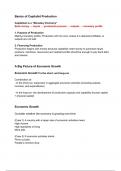
Central questions in economics
1. What is produced?
2. How are goods and services produced?
3. How are resources distributed among the members of society?
1. What is the subject matter of economics?
2. What are the key questions for economic analysis?
3. Who is the main economic agent, making economic decisions?
4. What is the way that economists approach decision-making of the agents?
A definition of economics?
Economics is the ‘study of the economy’ (yes or no)
The results of Google search on defining economics:
1. Oxford Dictionary: “the branch of knowledge concerned with the production,
consumption, and transfer of wealth”
2. American Economic Association: “the study of how people choose to use
resources”
3. Investopedia: “a social science that studies how individuals, governments, firms,
and nations make choices on allocating scarce resources to satisfy their
unlimited wants”
#2 and #3 are focused more on the process that economists study while #1 sets
out the scope of the subject matters.
Textbooks in the U.K.
“The study of the factors that influence income, wealth, and well-being. From this
it seeks to inform the design of economic policy”
Defining Economics (Chang, Ch. 1)
● What is economics?
:Subject matter of Economics
● Chemistry: the study of chemicals
● Biology: the study of living things
, ● Economics: the study of the economy
or the study of life and everything (?)
Question:
Is economics (almost) about life, the universe and everything?
Neoclassicals:
Economics is the study of rational human choice. Economics is the study of the
allocation of scarce resources among unlimited wants
Lionel Robbins at LSE (1933)
“Economics is the science which studies human behavior as a relationship between
ends and scarce means which have alternative uses”
George Stigler at U. Chicago (1942)
“The study of the principles governing the allocation of scarce resources among
competing ends when the objective is to maximize the attainment of the ends”
→ Pushing questions of philosophy, ethics, history, institutions and other
nonmathematical approaches to the side
The boundaries of economics expanded further as its focus shifts from “scarcity” to
choice”:
Gary Becker (Nobel prize winner) on crime
-Crime is not about “unreasonable violation of society’s reasonable norms and
conventions” but “criminals were making rational career choices based on their natural
preferences.”
-The subjects of the study can be extended to marriage, having children or number of
children, and etc… → Economics Imperialism
Central questions in economics
1. What is produced?
2. How are goods and services produced?
3. How are resources distributed among the members of society?