Soils (Chapter 4)
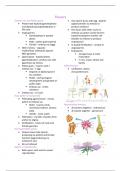
Soil rocks that have not been broken
• Dynamic, complex and constantly down yet
changing part of earth’s crust • Accumulates through weathering of
• Soil a9ects plants which 3 rock types
consequently a9ect it § Igneous rock (volcanic
• Contains rocks & pebbles, powdery activity)
silt, humus, dead leaves, several § Sedimentary rock
grades of sand (depositing by glaciers,
• Soil particles held together by clay water or wind)
and organic matter § Metamorphic rocks
• Small animals (earth worms, (changes to other rock
millipedes and ants) found in soil types by pressure or heat)
• Many microorganisms (bacteria Climate
and fungi) • Desert areas - poorly developed
• Climate, parent material, soils due to lack of rainfall
topography, vegetation, living • Moderate rainfall - well developed
organisms and time a9ect soil type soils are common
• Solid portion of soil - mineral and • High rainfall - excessive flow of
organic matter water through soil leaches out
• Pore spaces (water (smaller) and important minerals
air (larger)) occur between particles • Rocks crack in areas of great
• Size of pores and connection temperature changes, water enters
between a9ect aeration cracks, freezes and further cracks
• Horizons - show soil in di9erent develop - contributes to soil
stages and di9ering compositions development
1. Top soil Living organisms and organic composition
o Upper layer • In good soil - living organisms
o Consists of A horizon constitute 1/1000 of soil weight
(darker upper layer) and E (upper 30cm)
horizon (lighter lower layer) • Bacteria and fungi decompose
o E horizon only in older soils organic matter
o A portion contains most • Carbon dioxide from organic matter
organic matter combines with water to form acid -
o B Horizon (subsoil) - more increases rate of minerals
clay and lighter in colour dissolving
o Number preceding horizon - • Small animals increase organic
used if di9erent parent matter through waste or when they
materials present die
o C horizon (soil parent • Humus - partially decomposed
material) - extends to organic matter
bedrock (not always • Organic matter provides nitrogen,
present) phosphorus and sulfur as well as
Parent material producing acid to dissolve minerals
• First step in soil development - Topography
formation of parent material from
Soil rocks that have not been broken
• Dynamic, complex and constantly down yet
changing part of earth’s crust • Accumulates through weathering of
• Soil a9ects plants which 3 rock types
consequently a9ect it § Igneous rock (volcanic
• Contains rocks & pebbles, powdery activity)
silt, humus, dead leaves, several § Sedimentary rock
grades of sand (depositing by glaciers,
• Soil particles held together by clay water or wind)
and organic matter § Metamorphic rocks
• Small animals (earth worms, (changes to other rock
millipedes and ants) found in soil types by pressure or heat)
• Many microorganisms (bacteria Climate
and fungi) • Desert areas - poorly developed
• Climate, parent material, soils due to lack of rainfall
topography, vegetation, living • Moderate rainfall - well developed
organisms and time a9ect soil type soils are common
• Solid portion of soil - mineral and • High rainfall - excessive flow of
organic matter water through soil leaches out
• Pore spaces (water (smaller) and important minerals
air (larger)) occur between particles • Rocks crack in areas of great
• Size of pores and connection temperature changes, water enters
between a9ect aeration cracks, freezes and further cracks
• Horizons - show soil in di9erent develop - contributes to soil
stages and di9ering compositions development
1. Top soil Living organisms and organic composition
o Upper layer • In good soil - living organisms
o Consists of A horizon constitute 1/1000 of soil weight
(darker upper layer) and E (upper 30cm)
horizon (lighter lower layer) • Bacteria and fungi decompose
o E horizon only in older soils organic matter
o A portion contains most • Carbon dioxide from organic matter
organic matter combines with water to form acid -
o B Horizon (subsoil) - more increases rate of minerals
clay and lighter in colour dissolving
o Number preceding horizon - • Small animals increase organic
used if di9erent parent matter through waste or when they
materials present die
o C horizon (soil parent • Humus - partially decomposed
material) - extends to organic matter
bedrock (not always • Organic matter provides nitrogen,
present) phosphorus and sulfur as well as
Parent material producing acid to dissolve minerals
• First step in soil development - Topography
formation of parent material from