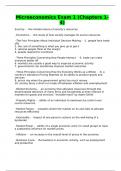
Microeconomics Exam 1 (Chapters 1-
4)
Scarcity - -the limited nature of society's resources
-Economics - -the study of how society manages its scarce resources
-The Four Principles About Individual Decision Making - -1. people face trade
offs
2. the cost of something is what you give up to get it
3. rational people think at the margin
4. people respond to incentives
-Three Principles Concerning How People Interact - -5. trade can make
everyone better off
6. markets are usually a good way to organize economic activity
7. governments can sometimes improve market outcomes
-Three Principles Concerning How the Economy Works as a Whole - -8. a
country's standard of living depends on its ability to produce goods and
services
9. prices rise when the government prints too much money
10. society faces a short-run trade off between inflation and unemployment
-Market Economy - -an economy that allocates resources through the
decentralized decisions of many firms and households as they interact in
markets for goods and services; "invisible hand" by Adam Smith
-Property Rights - -ability of an individual to own/exercise control over
scarce resources
-Market Failure - -situation where the market on its own fails to allocate
resources efficiently
-Externality - -impact of one person's actions on the well-being of a
bystander
-Market-Power - -ability of a single economic actor (or small group) to have
a substantial influence on market prices
-Inflation - -an increase in the overall level of prices in the economy
-Business Cycle - -fluctuations in economic activity, such as employment
and production
4)
Scarcity - -the limited nature of society's resources
-Economics - -the study of how society manages its scarce resources
-The Four Principles About Individual Decision Making - -1. people face trade
offs
2. the cost of something is what you give up to get it
3. rational people think at the margin
4. people respond to incentives
-Three Principles Concerning How People Interact - -5. trade can make
everyone better off
6. markets are usually a good way to organize economic activity
7. governments can sometimes improve market outcomes
-Three Principles Concerning How the Economy Works as a Whole - -8. a
country's standard of living depends on its ability to produce goods and
services
9. prices rise when the government prints too much money
10. society faces a short-run trade off between inflation and unemployment
-Market Economy - -an economy that allocates resources through the
decentralized decisions of many firms and households as they interact in
markets for goods and services; "invisible hand" by Adam Smith
-Property Rights - -ability of an individual to own/exercise control over
scarce resources
-Market Failure - -situation where the market on its own fails to allocate
resources efficiently
-Externality - -impact of one person's actions on the well-being of a
bystander
-Market-Power - -ability of a single economic actor (or small group) to have
a substantial influence on market prices
-Inflation - -an increase in the overall level of prices in the economy
-Business Cycle - -fluctuations in economic activity, such as employment
and production