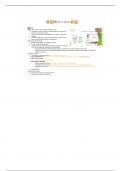
Theories of Aging
Chapter 2
Aging - the process of growing older that begins at birth
● No single known factor causes or prevents aging; no one theory can
explain the complexities of aging.
● Theories of aging offer varying degrees of universality, validity, and
reliability.
● Research efforts aim toward better understanding of aging process to
guide health & postpone negative consequences.
Biological Theories of Aging
● Biological aging differs from species to species.
● No two individuals age identically.
● Theorists divide the many factors, both internal and external of human
body, into two categories: stochastic and nonstochastic.
○ Nonstochastic theories: explain biological aging as resulting from a complex, predetermined process
○ Stochastic theories: view the effects of biological aging as resulting from random assaults from both the internal and
external environment
Stochastic Theories
● Free radicals + lipofuscin theories- (lipofuscin causes age/ liver spots)
● Cross linking theory- Molecules link side to side and get stiffer unless flexible. This causes TISSUE DAMAGE.
● Wear and tear theories
○ Osteoarthritis= wear and tear arthritis.
● EVOLUTION THEORIES
○ Mutation accumulation theory- ( if unable to reproduce this theory is eliminated)
○ Antagonistic pleiotropy theory- (genes beneficial early in life are detrimental later in life. EX Alzheimer disease)
○ Disposable soma theory - (only so much energy that the body can use and repair after a while body cant sustain itself
and dies)
● Biogerontology
Nonstochastic Theories
● Neuroendocrine and neurochemical theories
● Apoptosis – Programmed cell death
Chapter 2
Aging - the process of growing older that begins at birth
● No single known factor causes or prevents aging; no one theory can
explain the complexities of aging.
● Theories of aging offer varying degrees of universality, validity, and
reliability.
● Research efforts aim toward better understanding of aging process to
guide health & postpone negative consequences.
Biological Theories of Aging
● Biological aging differs from species to species.
● No two individuals age identically.
● Theorists divide the many factors, both internal and external of human
body, into two categories: stochastic and nonstochastic.
○ Nonstochastic theories: explain biological aging as resulting from a complex, predetermined process
○ Stochastic theories: view the effects of biological aging as resulting from random assaults from both the internal and
external environment
Stochastic Theories
● Free radicals + lipofuscin theories- (lipofuscin causes age/ liver spots)
● Cross linking theory- Molecules link side to side and get stiffer unless flexible. This causes TISSUE DAMAGE.
● Wear and tear theories
○ Osteoarthritis= wear and tear arthritis.
● EVOLUTION THEORIES
○ Mutation accumulation theory- ( if unable to reproduce this theory is eliminated)
○ Antagonistic pleiotropy theory- (genes beneficial early in life are detrimental later in life. EX Alzheimer disease)
○ Disposable soma theory - (only so much energy that the body can use and repair after a while body cant sustain itself
and dies)
● Biogerontology
Nonstochastic Theories
● Neuroendocrine and neurochemical theories
● Apoptosis – Programmed cell death