

2.1 A world of water
Planet is blue
- 70% is water
o 97% is saline (salty, zoutwater) in the oceans
Oceans are important for plants and animals that live there
Oceans also important for the water cycle
o 3% is freshwater (zoetwater)
2/3 is ice and glaciers (example Antartica / Greenland)
1% is easily accessible to humans: groundwater and surface
water (rivers and lakes). That’s the water humans use for
drinking, bathing, swimming etc.
Water Cycle
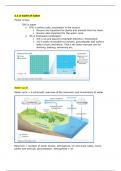
Water cycle = A schematic overview of the reservoirs and movements of water.
Reservoir = location of water (ocean, atmosphere, ice and snow, lakes, rivers,
plants and animals, groundwater). Atmosphere = air.
, Rivers
Water in rivers always flows downhill.
Drainage basin = an area that is drained by one
river. It’s the area where a river gets or drains its
water from.
In the Netherlands there are 4 drainage basins:
- Rhine
- Meuse (Maas)
- Scheldt (Schelde)
- Ems
Tributaries: smaller side rivers. The main river
transports the water from these smaller rivers to the ocean as well.
Watershed = the boundary between two drainage basins.
River bed = the bottom of the river
River banks = sides of the river
Characteristics of the river
Geographers divide the rivers in three
parts:
1. Upper course = area in the
mountains, close to the source.
River still small, high on energy,
lot of erosion, sometimes
waterfalls.
2. Middle course = when the river
has left the high mountains. River has grown larger and carries more water
(also because of tributary rivers). Erosion is decreasing. Less big rocks to
be eroded.
3. Lower course = when the riverbanks are far apart. The river needs space
and it has a lot of extra water. Sand and small pebbles (kiezels).
Planet is blue
- 70% is water
o 97% is saline (salty, zoutwater) in the oceans
Oceans are important for plants and animals that live there
Oceans also important for the water cycle
o 3% is freshwater (zoetwater)
2/3 is ice and glaciers (example Antartica / Greenland)
1% is easily accessible to humans: groundwater and surface
water (rivers and lakes). That’s the water humans use for
drinking, bathing, swimming etc.
Water Cycle
Water cycle = A schematic overview of the reservoirs and movements of water.
Reservoir = location of water (ocean, atmosphere, ice and snow, lakes, rivers,
plants and animals, groundwater). Atmosphere = air.
, Rivers
Water in rivers always flows downhill.
Drainage basin = an area that is drained by one
river. It’s the area where a river gets or drains its
water from.
In the Netherlands there are 4 drainage basins:
- Rhine
- Meuse (Maas)
- Scheldt (Schelde)
- Ems
Tributaries: smaller side rivers. The main river
transports the water from these smaller rivers to the ocean as well.
Watershed = the boundary between two drainage basins.
River bed = the bottom of the river
River banks = sides of the river
Characteristics of the river
Geographers divide the rivers in three
parts:
1. Upper course = area in the
mountains, close to the source.
River still small, high on energy,
lot of erosion, sometimes
waterfalls.
2. Middle course = when the river
has left the high mountains. River has grown larger and carries more water
(also because of tributary rivers). Erosion is decreasing. Less big rocks to
be eroded.
3. Lower course = when the riverbanks are far apart. The river needs space
and it has a lot of extra water. Sand and small pebbles (kiezels).


