3-11
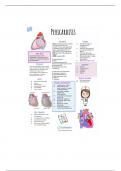
Pericarditis
Assessment: Teaching:
Heart: precordial pain that radiates ❖ Educate the client on
to the left side of the neck, compliance with
shoulder or back, pain aggravated medications.
by breathing, pain is worse when ❖ Have the client take HR
supine, pericardial friction rub, prior to administration of
signs of right of ventricular failure digoxin.
CNS: fever and chills, fatigue and ❖ Have the client keep
What am I? malaise appointments for lab work.
Acute inflammation of the HEME: elevated WBC ❖ Educate the client on signs
pericardium, it can be a chronic and symptoms of
disease that causes thickening of P: precordial pain exacerbation.
the pericardium. A: a-fib ❖ Educate the client to rest.
I: inflamed pericardial sac
Physiology: N: neck pain radiating from chest
E: elevated WBC Treatments:
Chronic pericarditis constricts the D: dysphagia, pain when ❖ NSAIDS
heart causing compression. Due to swallowing ❖ Corticosteroids
inflammation loss of pericardial ❖ Analgesia
elasticity can result or an H: has fluid in the pericardium. ❖ Diuretics
accumulation of fluid within the E: elevated st segment ❖ Digoxin
sac, heart failure or cardiac A: auscultate friction rub
tamponade may result. R: right ventricular failure
symptoms
Causes: T: tiredness
Medical treatment:
❖ Pericardiocentesis
❖ Autoimmune disorders ❖ Pericardiectomy
❖ Lupus Nursing interventions:
❖ Scleroderma ❖ Assess nature of pain.
❖ Rheumatoid arthritis ❖ Place client in High
❖ Heart attack fowler's position , upright
❖ Heart surgery or leaning forward.
❖ Administer analgesic,
NSAIDS and
corticosteroids.
❖ Auscultate for pericardial
friction rub.
❖ Administer antibiotics.
❖ Administer digoxin and
diuretics.
❖ Monitor for cardiac
tamponade.
❖ Notify HCP if signs of
cardiac tamponade occur.
Labs/ Diagnosis:
❖ Electrocardiogram: A-fib,
ST elevation
❖ Complete blood cell (CBC)
❖ Coagulations studies
❖ Serum electrolyte
❖ Blood urea nitrogen (BUN)
and creatinine levels.
www.SimpleNursing.com
Pericarditis
Assessment: Teaching:
Heart: precordial pain that radiates ❖ Educate the client on
to the left side of the neck, compliance with
shoulder or back, pain aggravated medications.
by breathing, pain is worse when ❖ Have the client take HR
supine, pericardial friction rub, prior to administration of
signs of right of ventricular failure digoxin.
CNS: fever and chills, fatigue and ❖ Have the client keep
What am I? malaise appointments for lab work.
Acute inflammation of the HEME: elevated WBC ❖ Educate the client on signs
pericardium, it can be a chronic and symptoms of
disease that causes thickening of P: precordial pain exacerbation.
the pericardium. A: a-fib ❖ Educate the client to rest.
I: inflamed pericardial sac
Physiology: N: neck pain radiating from chest
E: elevated WBC Treatments:
Chronic pericarditis constricts the D: dysphagia, pain when ❖ NSAIDS
heart causing compression. Due to swallowing ❖ Corticosteroids
inflammation loss of pericardial ❖ Analgesia
elasticity can result or an H: has fluid in the pericardium. ❖ Diuretics
accumulation of fluid within the E: elevated st segment ❖ Digoxin
sac, heart failure or cardiac A: auscultate friction rub
tamponade may result. R: right ventricular failure
symptoms
Causes: T: tiredness
Medical treatment:
❖ Pericardiocentesis
❖ Autoimmune disorders ❖ Pericardiectomy
❖ Lupus Nursing interventions:
❖ Scleroderma ❖ Assess nature of pain.
❖ Rheumatoid arthritis ❖ Place client in High
❖ Heart attack fowler's position , upright
❖ Heart surgery or leaning forward.
❖ Administer analgesic,
NSAIDS and
corticosteroids.
❖ Auscultate for pericardial
friction rub.
❖ Administer antibiotics.
❖ Administer digoxin and
diuretics.
❖ Monitor for cardiac
tamponade.
❖ Notify HCP if signs of
cardiac tamponade occur.
Labs/ Diagnosis:
❖ Electrocardiogram: A-fib,
ST elevation
❖ Complete blood cell (CBC)
❖ Coagulations studies
❖ Serum electrolyte
❖ Blood urea nitrogen (BUN)
and creatinine levels.
www.SimpleNursing.com