ARM
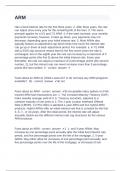
Has a fixed interest rate for the first three years. 2. After three years, the rate
can adjust once every year for the remaining life of the loan. 3. The same
principle applies for a 5/1 and 7/1 ARM. 4. If the rates increase, your monthly
payments increase; however, if rates go down, your payments may not
decrease, depending upon your initial interest rate. 5. Most ARMs also
typically feature an adjustment cap which limits how much the interest rate
can go up or down at each adjustment period. For example: a. A 7/1 ARM
with a 5/2/5 cap structure means that for the first seven years the rate is
unchanged, but on the eighth year the rate can increase by a maximum of 5
percentage points (the first 5) above the initial interest rate. Every year
thereafter, the rate can adjust a maximum of 2 percentage points (the second
number, 2), but the interest rate can never increase more than 5 percentage
points (the last number, 5 - correct answer ✔
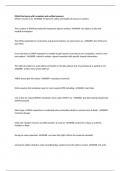
Facts about an ARM A) USDA Loans do? or do not have any ARM programs
available? . B) - correct answer ✔do not
Facts about an ARM - correct answer ✔B) Acceptable index options on FHA
insured ARM loan transactions are: 1. The Constant-Maturity Treasury (CMT)
index (weekly average yield of U.S. Treasury securities, adjusted to a
constant maturity of one year) or 2. The 1-year London Interbank Offered
Rate (LIBOR). C) FHA offers a standard 1-year ARM and four hybrid ARM
products. Hybrid ARMs offer an initial interest rate that is constant for the first
3-,5-,7-, or 10-years. After the initial period, the interest rate will adjust
annually. Below are the different interest rate cap structures for the various
ARM products:
Facts about an ARM - correct answer ✔1. 1- and 3-year ARMs: May
increase by one percentage point annually after the initial fixed interest rate
period, and five percentage points over the life of the mortgage. 2. 5-year
ARMs: May either allow for increases of one percentage point annually, and
five percentage points over the life of the mortgage; or increases of two
, percentage points annually, and six points over the life of the mortgage. 3. 7-
and 10-year ARMs: May only increase by two percentage points annually after
the initial faxed interest rate period, and six percentage points over the life of
the mortgage.
Facts about an ARM - correct answer ✔
There are two types of caps: (i) Annual: Restricts the amount your interest
rate can change, up or down, in any given year. (ii) Life-of-the-loan: Limits the
maximum (and minimum) interest rate you can pay for as long as you have
the mortgage. - correct answer ✔
Initial interest rate period a. When the initial interest rate period has expired,
the new interest rate is calculated by adding a margin to the index. As the
index figure moves up or down, your interest rate will be adjusted accordingly.
b. Increases or decreased in the interest rate will be limited by the interest rate
cap structure of the loan - correct answer ✔
3/1 ARM: - correct answer ✔Most ARMs also typically feature an adjustment
cap which limits how much the interest rate can go up or down at each
adjustment period. For example:
3/1 ARM: 1. Has a fixed interest rate for the first three years. 2. After three
years, the rate can adjust once every year for the remaining life of the loan. 3.
The same principle applies for a 5/1 and 7/1 ARM. 4. If the rates increase,
your monthly payments increase; however, if rates go down, your payments
may not decrease, depending upon your initial interest rate. 5. - correct
answer ✔
A 7/1 ARM with a 5/2/5 cap structure means that for the first seven years the
rate is unchanged, but on the eighth year the rate can increase by a maximum
of 5 percentage points (the first 5) above the initial interest rate. Every year
Has a fixed interest rate for the first three years. 2. After three years, the rate
can adjust once every year for the remaining life of the loan. 3. The same
principle applies for a 5/1 and 7/1 ARM. 4. If the rates increase, your monthly
payments increase; however, if rates go down, your payments may not
decrease, depending upon your initial interest rate. 5. Most ARMs also
typically feature an adjustment cap which limits how much the interest rate
can go up or down at each adjustment period. For example: a. A 7/1 ARM
with a 5/2/5 cap structure means that for the first seven years the rate is
unchanged, but on the eighth year the rate can increase by a maximum of 5
percentage points (the first 5) above the initial interest rate. Every year
thereafter, the rate can adjust a maximum of 2 percentage points (the second
number, 2), but the interest rate can never increase more than 5 percentage
points (the last number, 5 - correct answer ✔
Facts about an ARM A) USDA Loans do? or do not have any ARM programs
available? . B) - correct answer ✔do not
Facts about an ARM - correct answer ✔B) Acceptable index options on FHA
insured ARM loan transactions are: 1. The Constant-Maturity Treasury (CMT)
index (weekly average yield of U.S. Treasury securities, adjusted to a
constant maturity of one year) or 2. The 1-year London Interbank Offered
Rate (LIBOR). C) FHA offers a standard 1-year ARM and four hybrid ARM
products. Hybrid ARMs offer an initial interest rate that is constant for the first
3-,5-,7-, or 10-years. After the initial period, the interest rate will adjust
annually. Below are the different interest rate cap structures for the various
ARM products:
Facts about an ARM - correct answer ✔1. 1- and 3-year ARMs: May
increase by one percentage point annually after the initial fixed interest rate
period, and five percentage points over the life of the mortgage. 2. 5-year
ARMs: May either allow for increases of one percentage point annually, and
five percentage points over the life of the mortgage; or increases of two
, percentage points annually, and six points over the life of the mortgage. 3. 7-
and 10-year ARMs: May only increase by two percentage points annually after
the initial faxed interest rate period, and six percentage points over the life of
the mortgage.
Facts about an ARM - correct answer ✔
There are two types of caps: (i) Annual: Restricts the amount your interest
rate can change, up or down, in any given year. (ii) Life-of-the-loan: Limits the
maximum (and minimum) interest rate you can pay for as long as you have
the mortgage. - correct answer ✔
Initial interest rate period a. When the initial interest rate period has expired,
the new interest rate is calculated by adding a margin to the index. As the
index figure moves up or down, your interest rate will be adjusted accordingly.
b. Increases or decreased in the interest rate will be limited by the interest rate
cap structure of the loan - correct answer ✔
3/1 ARM: - correct answer ✔Most ARMs also typically feature an adjustment
cap which limits how much the interest rate can go up or down at each
adjustment period. For example:
3/1 ARM: 1. Has a fixed interest rate for the first three years. 2. After three
years, the rate can adjust once every year for the remaining life of the loan. 3.
The same principle applies for a 5/1 and 7/1 ARM. 4. If the rates increase,
your monthly payments increase; however, if rates go down, your payments
may not decrease, depending upon your initial interest rate. 5. - correct
answer ✔
A 7/1 ARM with a 5/2/5 cap structure means that for the first seven years the
rate is unchanged, but on the eighth year the rate can increase by a maximum
of 5 percentage points (the first 5) above the initial interest rate. Every year