PSYC 360: PSYCHOTHERAPY 9/24
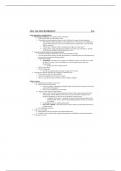
Is psychoanalysis a scientific theory:
Theoretical assumptions: must produce if-then statements
o If this occurs, then we expect that to occur.
o The problem with psychoanalytic theory is that it’s difficult to specify it-then statements.
The Oedipus complex manifests in many different ways. The theory is not equipped to
specific if-the statements, and if it can’t produce these statements then it can’t be easily
tested or confirms
A theory has to indicate when a concept does not apply in certain cases *
A theory that is vague and imprecise and there is not clear ways of testing it—In other
words there are problems with psychoanalytic theory
Concepts in theory should be operationally defined
o You have to be able to specify how you can test a particular concept.
o You can operationalize anxiety through questionnaires or measuring heart rate/ blood pressure or
how anxious someone looks during a speech.
o Empirical procedures
Falsifiability- the theory has to be able to be falsified. You have to be able to say when
the theory is wrong. If it is not falsifiable, it is not a scientific theory. Has ot be
disconfirmed.
Science can’t prove that god exists
o Rules of procedures
o Id? Ego? Superego?
How do you operationalize an id ego or super ego? You can’t
Concepts must specify when they do not apply in a particular case
o Theory must be able to be disconfirmed
o Cannot be manipulated to fit evidence at hand
o How can you specify when child does not have Oedipus complex?
Clinical evidence
Lack of standardized and public observation
o How free are free association?
Are they complex, relationship, culturally bound? Is it about how the person wants to be
perceived by the therapist?
Can you ever really have free association
o Analyst is sole reporter of interventions
Freud’s work was all his observation alone. Science often requires observations from
many people in many different contexts. He was only one person coming up with
narratives hypothesis etc. and was never checked by another person.
Anecdotal observations * - generally, one person observations don thave much
evidential value. They’re great for generating hypotheses, but they are not good
for evidence.
Everything has to have validity and be tested
Inter-rader reliability- other observations in other contexts in other laboratories have to
confirm a theory
o No independent observers
Coherence not enough
o Interpretation valid if consistent with all material disclosed
o Possible to derive diametrically opposed interpretations with different consistent information
Predictable reactions
, o If patient has insight, interpretation valid (sudden recollection of past experiences, aka “aha”
reaction)
o Symptom change: but something other than interpretation might be responsible
Retrospective reports as evidence
o Retrospective: A report about something that happened in the past.
They are not very trustworthy because memory is not very trustworthy.
It can be based upon our current feelings and our mental state can effect what we recall.
o Lewinsohn university of Oregon- 3 groups of people:
1. Never depressed people reported on their family environment
2. people who were currently depressed
3. People who were not currently depressed, but had a history of depression
If depression was caused by a neg family environment, these people should
provide comparable experiences to the currently depressed people.
Instead, he found that the people who were once depressed were very much like
the people who were never depressed. They remembered a positive family
environment
This suggests that one’s current mood can affect your reports of your history; your
memory.
o Mood congruent memory
o Memory is also consistent with context – when you are in the original context, people are more
likely to remember what they learned in that context
People were taught in a classroom and scuba diving. The people who learned while scuba
diving remembered more when they were scuba diving again
o People can be led to believe all kinds of things by suggestion.
o Confabulation- people fill in parts of their memory with hunches and information consistent
with other things that they know; people tend to fill in memory gaps
o Systematic biases and distortions
Main purposes of humanistic psychology
Subjective reality is the principle guiding force of behavior
o Our will is what we believe; each person sees reality differently.
o The brain is trying to simulate representations of what the world is like at all times, and each
person’s representation of reality is going to differ
o The inner world I show the person perceives the outer world, but it might no be how everyone
conceptually perceives the outer world
o One of the reasons people tend to see the world the way they do is due to confirmation bias. The
therapist tries to get a handle on what the person is experiencing, and not judge it but understand
it in a deep way – what is your world like, where are you coming from?
o Understanding the phenomenology- the deep subjective of each person and seeing them as
unique
Little value can be learned by studying animals
Studying individuals is more informative than studying groups
Psychology should study things that expand and enrich human experience
o Research should have a purpose; we want research to be dedicated to helping people.
The purpose of psychological research is to aid in solving human problems
The goal of psychology should be to define what it means to be human
Humanistic psychology
Emphasizes positive aspects
* Seligman- positive psychology
Self-actualization most important theme (Goldstein)
, o At birth, we are born with the instinct to fulfill our human potential
o This can get derailed by bad experiences in life
o We can overcome the roadblocks of negative experiences and become the people we were meant
to be.
o Use it for creative becoming vv
Erich Fromm: productive orientation, similar to Maslow
o People have basic needs at the bottom of the pyramid and the need for self-actualization is
realized after we satisfy our basic needs.
Horney: real self and its realization
Allport: “creative becoming”
Society is responsible for a lot of abnormal behavior
MASLOW: studied self- actualized people
Efficient in perceiving reality
Accepting of themselves and others
Spontaneous
Problem centered
Detached and objective
Autonomous
Unconditional self-regard
Person-centered therapy:
Rogers:
o Each person has unique internal frame of reference
o Self-actualizing tendency: develop all potentialities to maintain or enhance the self
o Infants seek actualizing experiences, avoid unpleasant experiences increasingly differentiate,
symbolize, develop self-concept, “me” or “I”
Your sense of self develops around 2 years old
Particularly, when the child develops the sense of “I” they have a sense of needing
positive regard from other people.
o Need others positive regard
o Unconditional positive regard created unconditional positive self-regard
Unconditional self-regard: it doesn’t mean you like everything that you’ve done, but you like your
basic self. Infants will seek these actualizing experiences and avoid what is unpleasant.
Early development
Child may seek positive regard, rather than actualization
Need for self-regard learned
Conditions of worth: selectively respond to self-experiences as more or less worth of positive regard
o Some conditions of worth: must be thin or muscular/ academic achievement/ having children/ a
good athlete
Value or devalue experiences because of conditions of worth
Selective perceptions: deny or select experiences contrary to conditions of worth.
Incongruence between self-concept and actual experiences: maladjustment to some degree and anxiety
Conditions for change:
A relationship
o A positive relationship where the therapist shows unconditional positive regard for the person
Incongruence: distress
o Distress is healthy
o They need to be in a place that is not congruent with a condition of work
Is psychoanalysis a scientific theory:
Theoretical assumptions: must produce if-then statements
o If this occurs, then we expect that to occur.
o The problem with psychoanalytic theory is that it’s difficult to specify it-then statements.
The Oedipus complex manifests in many different ways. The theory is not equipped to
specific if-the statements, and if it can’t produce these statements then it can’t be easily
tested or confirms
A theory has to indicate when a concept does not apply in certain cases *
A theory that is vague and imprecise and there is not clear ways of testing it—In other
words there are problems with psychoanalytic theory
Concepts in theory should be operationally defined
o You have to be able to specify how you can test a particular concept.
o You can operationalize anxiety through questionnaires or measuring heart rate/ blood pressure or
how anxious someone looks during a speech.
o Empirical procedures
Falsifiability- the theory has to be able to be falsified. You have to be able to say when
the theory is wrong. If it is not falsifiable, it is not a scientific theory. Has ot be
disconfirmed.
Science can’t prove that god exists
o Rules of procedures
o Id? Ego? Superego?
How do you operationalize an id ego or super ego? You can’t
Concepts must specify when they do not apply in a particular case
o Theory must be able to be disconfirmed
o Cannot be manipulated to fit evidence at hand
o How can you specify when child does not have Oedipus complex?
Clinical evidence
Lack of standardized and public observation
o How free are free association?
Are they complex, relationship, culturally bound? Is it about how the person wants to be
perceived by the therapist?
Can you ever really have free association
o Analyst is sole reporter of interventions
Freud’s work was all his observation alone. Science often requires observations from
many people in many different contexts. He was only one person coming up with
narratives hypothesis etc. and was never checked by another person.
Anecdotal observations * - generally, one person observations don thave much
evidential value. They’re great for generating hypotheses, but they are not good
for evidence.
Everything has to have validity and be tested
Inter-rader reliability- other observations in other contexts in other laboratories have to
confirm a theory
o No independent observers
Coherence not enough
o Interpretation valid if consistent with all material disclosed
o Possible to derive diametrically opposed interpretations with different consistent information
Predictable reactions
, o If patient has insight, interpretation valid (sudden recollection of past experiences, aka “aha”
reaction)
o Symptom change: but something other than interpretation might be responsible
Retrospective reports as evidence
o Retrospective: A report about something that happened in the past.
They are not very trustworthy because memory is not very trustworthy.
It can be based upon our current feelings and our mental state can effect what we recall.
o Lewinsohn university of Oregon- 3 groups of people:
1. Never depressed people reported on their family environment
2. people who were currently depressed
3. People who were not currently depressed, but had a history of depression
If depression was caused by a neg family environment, these people should
provide comparable experiences to the currently depressed people.
Instead, he found that the people who were once depressed were very much like
the people who were never depressed. They remembered a positive family
environment
This suggests that one’s current mood can affect your reports of your history; your
memory.
o Mood congruent memory
o Memory is also consistent with context – when you are in the original context, people are more
likely to remember what they learned in that context
People were taught in a classroom and scuba diving. The people who learned while scuba
diving remembered more when they were scuba diving again
o People can be led to believe all kinds of things by suggestion.
o Confabulation- people fill in parts of their memory with hunches and information consistent
with other things that they know; people tend to fill in memory gaps
o Systematic biases and distortions
Main purposes of humanistic psychology
Subjective reality is the principle guiding force of behavior
o Our will is what we believe; each person sees reality differently.
o The brain is trying to simulate representations of what the world is like at all times, and each
person’s representation of reality is going to differ
o The inner world I show the person perceives the outer world, but it might no be how everyone
conceptually perceives the outer world
o One of the reasons people tend to see the world the way they do is due to confirmation bias. The
therapist tries to get a handle on what the person is experiencing, and not judge it but understand
it in a deep way – what is your world like, where are you coming from?
o Understanding the phenomenology- the deep subjective of each person and seeing them as
unique
Little value can be learned by studying animals
Studying individuals is more informative than studying groups
Psychology should study things that expand and enrich human experience
o Research should have a purpose; we want research to be dedicated to helping people.
The purpose of psychological research is to aid in solving human problems
The goal of psychology should be to define what it means to be human
Humanistic psychology
Emphasizes positive aspects
* Seligman- positive psychology
Self-actualization most important theme (Goldstein)
, o At birth, we are born with the instinct to fulfill our human potential
o This can get derailed by bad experiences in life
o We can overcome the roadblocks of negative experiences and become the people we were meant
to be.
o Use it for creative becoming vv
Erich Fromm: productive orientation, similar to Maslow
o People have basic needs at the bottom of the pyramid and the need for self-actualization is
realized after we satisfy our basic needs.
Horney: real self and its realization
Allport: “creative becoming”
Society is responsible for a lot of abnormal behavior
MASLOW: studied self- actualized people
Efficient in perceiving reality
Accepting of themselves and others
Spontaneous
Problem centered
Detached and objective
Autonomous
Unconditional self-regard
Person-centered therapy:
Rogers:
o Each person has unique internal frame of reference
o Self-actualizing tendency: develop all potentialities to maintain or enhance the self
o Infants seek actualizing experiences, avoid unpleasant experiences increasingly differentiate,
symbolize, develop self-concept, “me” or “I”
Your sense of self develops around 2 years old
Particularly, when the child develops the sense of “I” they have a sense of needing
positive regard from other people.
o Need others positive regard
o Unconditional positive regard created unconditional positive self-regard
Unconditional self-regard: it doesn’t mean you like everything that you’ve done, but you like your
basic self. Infants will seek these actualizing experiences and avoid what is unpleasant.
Early development
Child may seek positive regard, rather than actualization
Need for self-regard learned
Conditions of worth: selectively respond to self-experiences as more or less worth of positive regard
o Some conditions of worth: must be thin or muscular/ academic achievement/ having children/ a
good athlete
Value or devalue experiences because of conditions of worth
Selective perceptions: deny or select experiences contrary to conditions of worth.
Incongruence between self-concept and actual experiences: maladjustment to some degree and anxiety
Conditions for change:
A relationship
o A positive relationship where the therapist shows unconditional positive regard for the person
Incongruence: distress
o Distress is healthy
o They need to be in a place that is not congruent with a condition of work