HSY2601 SEMESTER 2
ASSIGNMENT 4 2024
HSY2601 SEMESTER 2 ASSIGNMENT 4 2024
, HSY2601 SEMESTER 2
Assessment 4
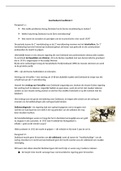
Topic 3: Autocracy
Autocracy and Marxism's Impact in Russia
Russia's turbulent 19th and early 20th centuries were greatly influenced by political
movements and ideas that aimed to overthrow the Tsarist autocracy, which had
firmly held power for generations. Marxism stood out among these ideologies as
having a significant impact, offering a theoretical framework that sparked a number
of social and political groups targeted at overthrowing the current authoritarian
regime. Marxist philosophy and Russian sociopolitical reality came together to create
revolutionary forces that ultimately led to the overthrow of the Tsarist monarchy and
the establishment of the Soviet Union.
Marxism's Ideological Foundation
Marxism, as espoused by Friedrich Engels and Karl Marx, was a radical criticism of
capitalism that postulated class conflict as the primary force behind historical
advancement. The idea that human civilizations advance through the settlement of
conflicts between various social classes is fundamental to Marxist theory. Marxism
flourished in largely rural Russia, where a small elite ruled over a sizable, poor
peasant population and a newly growing urban propertied class. This structure's
ingrained inequality and the suppression of criticism pointed to an increasing
likelihood of instability.
ASSIGNMENT 4 2024
HSY2601 SEMESTER 2 ASSIGNMENT 4 2024
, HSY2601 SEMESTER 2
Assessment 4
Topic 3: Autocracy
Autocracy and Marxism's Impact in Russia
Russia's turbulent 19th and early 20th centuries were greatly influenced by political
movements and ideas that aimed to overthrow the Tsarist autocracy, which had
firmly held power for generations. Marxism stood out among these ideologies as
having a significant impact, offering a theoretical framework that sparked a number
of social and political groups targeted at overthrowing the current authoritarian
regime. Marxist philosophy and Russian sociopolitical reality came together to create
revolutionary forces that ultimately led to the overthrow of the Tsarist monarchy and
the establishment of the Soviet Union.
Marxism's Ideological Foundation
Marxism, as espoused by Friedrich Engels and Karl Marx, was a radical criticism of
capitalism that postulated class conflict as the primary force behind historical
advancement. The idea that human civilizations advance through the settlement of
conflicts between various social classes is fundamental to Marxist theory. Marxism
flourished in largely rural Russia, where a small elite ruled over a sizable, poor
peasant population and a newly growing urban propertied class. This structure's
ingrained inequality and the suppression of criticism pointed to an increasing
likelihood of instability.