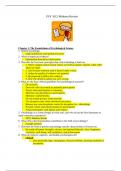
PSY 1012 Midterm Review
Chapter 1: The Foundations of Psychological Science
1. Define psychology.
- study of behavior and mental processes
2. What is empirical evidence?
- information from direct observation
3. Describe the five basic principles that critical thinking is built on.
- 1. Where religion and personal values are held as matters of faith, while other
ideas use logic.
- 2. Just because someone said it doesn't make it true.
- 3. Judge the quality of evidence not quantity.
- 4. Be prepared to follow the evidence.
- 5. Don’t be afraid to admit you were wrong.
4. What are the basic ethical guidelines for psychological research?
- Do no harm.
- Describe risks accurately to potential participants.
- Ensure that participation is voluntary.
- Minimize any discomfort to participants.
- Maintain confidentiality.
- Do not invade privacy unnecessarily.
- Use deception only when absolutely necessary.
- Remove any misconceptions caused by deception (i.e., debriefing).
- Provide results and interpretations to participants.
- Treat participants with dignity and respect.
5. Psychology as a science began in what year, and who set up the first laboratory to
study conscious experience?
- 1879, Wilhelm Wundt
6. What effect did functionalism contribute to the field of psychology?
- brought animals
7. Describe the field of positive psychology and the characteristics it focuses on.
- the study of human strengths, virtues, and optimal behavior; love, happiness,
creativity, well-being, self-confidence, and achievement
8. What do clinical, cognitive, and health psychologists do?
- clinical:
- does psychotherapy; investigates clinical problems, develops methods of
treatments.
, - cognitive:
- studies human thinking and information-processing abilities.
- health:
- studies the relationship between behavior and health; uses psychological
principles to promote health and prevent illness.
9. What is a variable in a scientific experiment?
- factor or characteristic that can change; what we are studying
10. What is meant by random assignment?
- using chance to place subjects in experimental and control groups
11. Explain the placebo effect.
- The Placebo effect is a change in symptoms due to a participant's expectation that
a drug or treatment will do something.
12. What is meant by a single-blind and a double-blind experiment?
- Single blind
- is research in which the subjects do not know which treatment they
receive.
- Double blind
- is research in which neither the observer nor the subjects know which
subjects received which treatment.
Chapter 3: Human Development
1. What is meant by nature and nurture?
- Nature is your environment while nurture is influenced by your parents. It just
means that people are still trying to figure out which influenced us more
2. What is a teratogen, and what role do teratogens play in birth defects, particularly
alcohol?
- Teratogen is a harmful substance that can cause birth defects. And heavy
drinking during a pregnancy can cause birth defects.
3. At what age do infants become able to recognize themselves in a mirror?
- 18 months old
4. Review Mary Ainsworth’s study on attachment and identify the three types of
attachment.
- Secure attachment:
- infants with this attachment have a stable and positive emotional bond.
They are upset by the mother or caregivers absence but seek to be near
her when she returns.
- Insecure-avoidant attachment:
- infants with this attachment have an anxious emotional bond. They tend to
turn away from the mother or caregivers when she returns.
- Insecure-ambivalent attachment:
- infants with this attachment also have an anxious emotional bond. In this
case, the babies have mixed feelings: They tend to seek to be near the
returning mother or caregivers and angrily resist contact with her.
5. Explain Diana Baumrind’s three parenting styles.
- Authoritarian Parents:
Chapter 1: The Foundations of Psychological Science
1. Define psychology.
- study of behavior and mental processes
2. What is empirical evidence?
- information from direct observation
3. Describe the five basic principles that critical thinking is built on.
- 1. Where religion and personal values are held as matters of faith, while other
ideas use logic.
- 2. Just because someone said it doesn't make it true.
- 3. Judge the quality of evidence not quantity.
- 4. Be prepared to follow the evidence.
- 5. Don’t be afraid to admit you were wrong.
4. What are the basic ethical guidelines for psychological research?
- Do no harm.
- Describe risks accurately to potential participants.
- Ensure that participation is voluntary.
- Minimize any discomfort to participants.
- Maintain confidentiality.
- Do not invade privacy unnecessarily.
- Use deception only when absolutely necessary.
- Remove any misconceptions caused by deception (i.e., debriefing).
- Provide results and interpretations to participants.
- Treat participants with dignity and respect.
5. Psychology as a science began in what year, and who set up the first laboratory to
study conscious experience?
- 1879, Wilhelm Wundt
6. What effect did functionalism contribute to the field of psychology?
- brought animals
7. Describe the field of positive psychology and the characteristics it focuses on.
- the study of human strengths, virtues, and optimal behavior; love, happiness,
creativity, well-being, self-confidence, and achievement
8. What do clinical, cognitive, and health psychologists do?
- clinical:
- does psychotherapy; investigates clinical problems, develops methods of
treatments.
, - cognitive:
- studies human thinking and information-processing abilities.
- health:
- studies the relationship between behavior and health; uses psychological
principles to promote health and prevent illness.
9. What is a variable in a scientific experiment?
- factor or characteristic that can change; what we are studying
10. What is meant by random assignment?
- using chance to place subjects in experimental and control groups
11. Explain the placebo effect.
- The Placebo effect is a change in symptoms due to a participant's expectation that
a drug or treatment will do something.
12. What is meant by a single-blind and a double-blind experiment?
- Single blind
- is research in which the subjects do not know which treatment they
receive.
- Double blind
- is research in which neither the observer nor the subjects know which
subjects received which treatment.
Chapter 3: Human Development
1. What is meant by nature and nurture?
- Nature is your environment while nurture is influenced by your parents. It just
means that people are still trying to figure out which influenced us more
2. What is a teratogen, and what role do teratogens play in birth defects, particularly
alcohol?
- Teratogen is a harmful substance that can cause birth defects. And heavy
drinking during a pregnancy can cause birth defects.
3. At what age do infants become able to recognize themselves in a mirror?
- 18 months old
4. Review Mary Ainsworth’s study on attachment and identify the three types of
attachment.
- Secure attachment:
- infants with this attachment have a stable and positive emotional bond.
They are upset by the mother or caregivers absence but seek to be near
her when she returns.
- Insecure-avoidant attachment:
- infants with this attachment have an anxious emotional bond. They tend to
turn away from the mother or caregivers when she returns.
- Insecure-ambivalent attachment:
- infants with this attachment also have an anxious emotional bond. In this
case, the babies have mixed feelings: They tend to seek to be near the
returning mother or caregivers and angrily resist contact with her.
5. Explain Diana Baumrind’s three parenting styles.
- Authoritarian Parents: