SCH4801 Assignment 3 (ANSWERS) 2024 - DISTINCTION GUARANTEED
Well-structured SCH4801 Assignment 3 (ANSWERS) 2024 - DISTINCTION GUARANTEED. (DETAILED ANSWERS - DISTINCTION GUARANTEED!)..... Read the following and answer the questions that followed. The following question was posted to an AI Tool on 6 July 2023: Describe and discuss eight supply chain management challenges in the South African public sector. Answer by the AI Tool: SCH4801/assignment 03/2024 Supply chain challenges in the South African public sector can significantly impact the efficient delivery of goods and services. Here are eight key challenges that are commonly faced in this context: 1. Procurement inefficiencies: The public sector often struggles with inefficient procurement processes, including lengthy bidding procedures, lack of transparency, and inadequate supplier evaluation mechanisms. These challenges can lead to delays in acquiring necessary goods and services. 2. Limited supplier base: The South African public sector sometimes faces challenges in finding a diverse and capable pool of suppliers. Limited competition among suppliers can result in higher prices, reduced quality, and limited innovation in the delivery of goods and services. 3. Corruption and fraud: Corruption and fraud remain persistent challenges in the South African public sector supply chain. Unethical practices such as bribery, kickbacks, and collusion can undermine the integrity of procurement processes, leading to financial losses and compromised service delivery. 4. Infrastructure constraints: Deficient transportation, logistics, and warehousing infrastructure can hinder the smooth flow of goods and services across the supply chain. Inadequate road networks, limited storage facilities, and poor inventory management can contribute to delays and inefficiencies. 5. Skill shortages and capacity gaps: Insufficient expertise and capacity in supply chain management within the public sector can be a major obstacle. Limited training and development opportunities for supply chain professionals can lead to suboptimal decision-making and inadequate management of supply chain activities. 6. Inaccurate demand forecasting: Accurate demand forecasting is crucial for effective supply chain management. However, the South African public sector often struggles with inadequate data collection, unreliable forecasting methods, and insufficient coordination between demand-side entities, resulting in supply-demand imbalances and wastage of resources. 7. Regulatory compliance: Compliance with public sector procurement regulations and policies is essential for maintaining transparency and fairness. However, navigating complex and evolving regulations can be challenging, and failure to comply can lead to legal complications, delays, and reputational damage. 8. Limited technology adoption: The adoption of advanced technologies, such as automation, data analytics, and digital platforms, is relatively limited in the South African public sector supply chain. This hampers the ability to achieve real-time visibility, streamline processes, and improve decision-making, ultimately impacting the efficiency and effectiveness of supply chain operations. QUESTION 1 [9 marks] Answer the following questions after considering the answers regarding the South African public sector supply chain challenges provided by the AI tool and the prescribed book: 9 1.1 According to the prescribed book, indicate any two challenges correctly identified by the AI tool regarding South African public supply chain management challenges. Find another source for each of the two correctly identified Public SCM challenges by the AI tool. (4) 1.2 Answer the flowing sub-questions: (4) (a) Identified two public SCM challenges identified by the AI tool that are not addressed in the prescribed book.{2} (b) In your discussion, provide two examples of how the following statement can be true for the public SCM challenges. The two public SCM challenges identified by the AI tool that are not addressed in the prescribed book are real public SCM challenges. [You are allowed to use articles in your discussion]. {2} List of references (1) ONTHOU, (remember) When answering your questions, make sure to reference the sources in the text and a list of references. END OF SECTION A: QUESTION 1 SECTION B: QUESTION 2 Section B (question 2) consists of short essay-type questions based on the case study - Nando's: A Triumph of Supply Chain Excellence, in addendum C. QUESTION 2 [23 MARKS] Instructions and guidelines for answering question 2. Read the case study and answer the following questions. Pay attention to the marks allocated to a particular question, as this will guide you in terms of how much time you should spend on the question and the amount of detail required. In this question, you must base your answers on the relevant theory appropriate to the questions in correlation with the case study. You will be penalised if you copy and paste theory from any source or your prescribed book. Please note that no other sources are allowed to answer question 2 – all answers should be based on the content of the prescribed book. SCH4801/assignment 03/2024 Question 2 counts 23 marks (5 marks for the technical aspects and 18 marks for the questions you should answer). You are required to write a report on Nando's case study by answering the following six (2.1 to 2.6) questions. You should please structure your report as follows: • Title of the report (case study) • Introduction (2 marks) • Answers to the six questions asked below (2.1 to 2.6) (18 marks) • Conclusion (2 marks) • Reference list (1 mark) Please use the six (6) underlined questions in your report as sub-headings. Please number your answers clearly, for example, 2.1, 2.2, until 2.6. Also, remember to link your answer to the Nando's case study Very important: When referring to Nando's, please note that you cannot just provide the sentences from the case study; Your answer should incorporate examples from the case study that reflect your insight into the subject matter. This applies to all the questions. 2.1 Provide two examples of how the following statement can be true for Nando’s: “Nando's describes the quality of standards to their suppliers using market grades". [Remember, your answer should include two (2) reasons to support your viewpoint]. (2) 2.2 From the case study, it can be concluded that Nando’s is involved with global sourcing. Describe any two uncontrollable elements of the global supply chain environment that might impact Nando’s global and regional supply chain operations and provide a solution for each uncontrollable element. (4) 2.3 Provide two suggestions on how Nando’s can be more environmentally friendly in its warehousing. (2) 2.4 From the case study, it can be deduced that information sharing is essential for Nando’s. Describe two information-sharing systems or tools that might be used by Nando’s with relevant examples from the case study. (4) 11 2.5 Provide two examples of how the following statement can be true for Nando's in your discussion. "The transportation function and methods are seen as critical in Nando's supply chain". (2) (2) 2.6 Briefly discuss two reasons with relevant examples from the case study why Nando’s uses Total Cost of Ownership (TCO) as part of their competitive weapon in their supply chain. (4) KHUMBULA (remember) No marks will be given for theory or an explanation if copied and pasted from the prescribed book or other sources (that include your peers), using any AI Tools, or for listing. All answers should be in a student's own words. This means that if you refer to something in the prescribed book, you need to rewrite it in your own words; you’re understanding with a reference. If you write it as is from the prescribed book with a reference, you will not receive any marks as we test your understanding and will not know if you can find the correct answer in the prescribed book and copy it. END OF SECTION B (QUESTION 2) SECTION C: QUESTION 3 Section C (question 3) consists of short essay-type questions. Please note that these questions are based on a YouTube video. – “Why are supply chain problems causing issues on shop shelves? – BBC News”. Therefore, you need first to watch the YouTube video before answering question 3. Click on the link below to watch the video. The duration of this video is 5 min. Instructions and guidelines for answering Question 3 Watch the YouTube video and answer the questions that follow. Pay attention to the marks allocated to a particular question, as this will guide you in terms of how much time you should spend on the question and the amount of detail required. In this question, you must base your answer on the relevant theory that is appropriate to the circumstances explained in the YouTube video. You will be penalised if you copy and paste the theory from your prescribed book or any other sources. SCH4801/assignment 03/2024 Please note that there is no need for an introduction and conclusion. Instead, write down the number and the question, followed by your answer. QUESTION 3 [6 MARKS] Very important: Remember to incorporate the main points in your discussion by referring to the YouTube video. This applies to both questions. a) Identify and briefly discuss four main points discussed in this video, which are why supply chain problems are causing issues on shop shelves. (4) b) Provide two suggestions for any of the supply chain problems causing issues on shop shelves mentioned in this video. [Remember to indicate the supply chain problem followed by the solution to overcome the supply chain problem.] (2) END OF SECTION C (QUESTION 3) SECTION D: QUESTION 4 To answer question 4, you will need to watch a YouTube video regarding infographics to supplement your understanding of the formation and structuring to compile an infographic on a specific topic. Click on the link regarding infographics (the YouTube video is about one and a half minutes): Click on the link for an example of how to create an infographic using PowerPoint(the YouTube video is about 2 minutes): QUESTION 4 [10 MARKS] Create an infographic to show the key differences between an omnichannel and a multichannel in retailing. Please include what a ‘channel’ means first, followed by the three differences between an omnichannel and a multichannel in retailing. [Marks obtain will include originality, content, and creativity.]
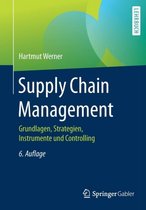
Connected book
- Unknown
- 9783658183837
- 6
Written for
- Institution
- University of South Africa (Unisa)
- Course
- Supply Chain Management (SCH4801)
Document information
- Uploaded on
- September 20, 2024
- Number of pages
- 10
- Written in
- 2024/2025
- Type
- Exam (elaborations)
- Contains
- Questions & answers
Subjects
-
sch4801