©THEBRIGHTSTARS 2024
Older Adult Nclex Exam Questions With
Correct Answers.
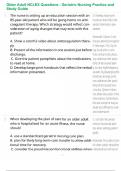
The nurse is setting up an education session with an 85-year-old patient who will be going home
on anticoagulant therapy. Which strategy would reflect consideration of aging changes that may
exist with this patient?
A. Show a colorful video about anticoagulation therapy.
B. Present all the information in one session just before discharge.
C. Give the patient pamphlets about the medications to read at home.
D. Develop large-print handouts that reflect the verbal information presented. - answer✔D.
Develop large-print handouts that reflect the verbal information presented.
Rationale: Option D addresses altered perception in two ways. First, by using visual aids to
reinforce verbal instructions, one addresses the possibility of decreased ability to hear high-
frequency sounds. By developing the handouts in large print, one addresses the possibility of
decreased visual acuity. Option A does not allow discussion of the information; furthermore, the
text and print may be small and difficult to read and understand.
When developing the plan of care for an older adult who is hospitalized for an acute illness, the
nurse should
A. use a standardized geriatric nursing care plan.
B. plan for likely long-term-care transfer to allow additional time for recovery.
C. consider the preadmission functional abilities when setting patient goals.
D. minimize activity level during hospitalization. - answer✔C. consider the preadmission
functional abilities when setting patient goals.
, ©THEBRIGHTSTARS 2024
Rationale: The plan of care for older adults should be individualized and based on the patients
current functional abilities. A standardized geriatric nursing care plan is unlikely to address
individual patient needs and strengths. A patients need for discharge to a long-term-care facility
is variable. Activity level should be designed to allow the patient to retain functional abilities
while hospitalized and also to allow any additional rest needed for recovery from the acute
process.
Which information obtained by the home health nurse when making a visit to an 88-year-old
with mild forgetfulness is of the most concern?
A. The patient's son uses a marked pillbox to set up the patient's medications weekly.
B. The patient has lost 10 pounds (4.5 kg) during the last month.
C. The patient is cared for by a daughter during the day and stays with a son at night.
D. The patient tells the nurse that a close friend recently died. - answer✔B. The patient has lost
10 pounds (4.5 kg) during the last month.
Rationale: A 10-pound weight loss may be an indication of elder neglect or depression and
requires further assessment by the nurse.
A 70-year-old client asks the nurse to explain to her about hypertension. An appropriate response
by the nurse as to why older clients often have hypertension is due to:
A. Myocardial muscle damage
B. Reduction in physical activity
C. Ingestion of foods high in sodium
D. Accumulation of plaque on arterial walls - answer✔D. Accumulation of plaque on arterial
walls
In reviewing changes in the older adult, the nurse recognizes that which of the following
statements related to cognitive functioning in the older client is true?
A. Delirium is usually easily distinguished from irreversible dementia.
B. Therapeutic drug intoxication is a common cause of senile dementia.
C. Reversible systemic disorders are often implicated as a cause of delirium.
Older Adult Nclex Exam Questions With
Correct Answers.
The nurse is setting up an education session with an 85-year-old patient who will be going home
on anticoagulant therapy. Which strategy would reflect consideration of aging changes that may
exist with this patient?
A. Show a colorful video about anticoagulation therapy.
B. Present all the information in one session just before discharge.
C. Give the patient pamphlets about the medications to read at home.
D. Develop large-print handouts that reflect the verbal information presented. - answer✔D.
Develop large-print handouts that reflect the verbal information presented.
Rationale: Option D addresses altered perception in two ways. First, by using visual aids to
reinforce verbal instructions, one addresses the possibility of decreased ability to hear high-
frequency sounds. By developing the handouts in large print, one addresses the possibility of
decreased visual acuity. Option A does not allow discussion of the information; furthermore, the
text and print may be small and difficult to read and understand.
When developing the plan of care for an older adult who is hospitalized for an acute illness, the
nurse should
A. use a standardized geriatric nursing care plan.
B. plan for likely long-term-care transfer to allow additional time for recovery.
C. consider the preadmission functional abilities when setting patient goals.
D. minimize activity level during hospitalization. - answer✔C. consider the preadmission
functional abilities when setting patient goals.
, ©THEBRIGHTSTARS 2024
Rationale: The plan of care for older adults should be individualized and based on the patients
current functional abilities. A standardized geriatric nursing care plan is unlikely to address
individual patient needs and strengths. A patients need for discharge to a long-term-care facility
is variable. Activity level should be designed to allow the patient to retain functional abilities
while hospitalized and also to allow any additional rest needed for recovery from the acute
process.
Which information obtained by the home health nurse when making a visit to an 88-year-old
with mild forgetfulness is of the most concern?
A. The patient's son uses a marked pillbox to set up the patient's medications weekly.
B. The patient has lost 10 pounds (4.5 kg) during the last month.
C. The patient is cared for by a daughter during the day and stays with a son at night.
D. The patient tells the nurse that a close friend recently died. - answer✔B. The patient has lost
10 pounds (4.5 kg) during the last month.
Rationale: A 10-pound weight loss may be an indication of elder neglect or depression and
requires further assessment by the nurse.
A 70-year-old client asks the nurse to explain to her about hypertension. An appropriate response
by the nurse as to why older clients often have hypertension is due to:
A. Myocardial muscle damage
B. Reduction in physical activity
C. Ingestion of foods high in sodium
D. Accumulation of plaque on arterial walls - answer✔D. Accumulation of plaque on arterial
walls
In reviewing changes in the older adult, the nurse recognizes that which of the following
statements related to cognitive functioning in the older client is true?
A. Delirium is usually easily distinguished from irreversible dementia.
B. Therapeutic drug intoxication is a common cause of senile dementia.
C. Reversible systemic disorders are often implicated as a cause of delirium.