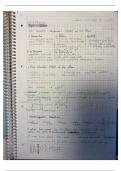
Definitions
reversible reaction constant concentrations 1 Temperature
Dynamicequilibrium temperature favoursendothermic
system is closed direction
rate offorward rate
ofbackward
constant concentrations
all othermeasurable variables are unchanging
Equilibrium Law 2 Concentration
a Atb B E e C t d D at co
4 A shifttoright to opposechange
temperature
A a x B EET moiam
an the
aspect
nceneration
constant
3 Pressure
guilibrium
Kc 0 equalconcentrations t pressure shift towardsto sidewith
fewermoles ofgas
But T pressure T rate in both
Chemical
directions but 4 rate
offorward
reaction more
EquilibriumConstantKp
a Atb B E e C t d D
Equilibria 4 Catalyst
d
P c xp D speedsuprate of forward and backward
Kp p a a xp B reaction equally no effect on the
position of equilibria
450 C
Catalystoffinely dividediron
mama
200 atm
Compromise between cost and yield
N2 342 2 NH
nm
I mixknownquantitiesofproducts and
reactants
2 Setup manyexperimentswithdifferent
amounts
3 Allow equilibrium is established
4 Keep temperature constant
5 Colorimeter measure withoutdisturbing
Calculate Kc or Kp
, Definitions Reactions
Transition elements d block elements with an oxidationstate 1 Precipitation
with partially filled d subshell
a at 204 a Hao OH 242
Remember the 4s
fills before the 3d and is emptied
beforethe 3d Coat 204 fo Hao OH 242
Properties
Feat 204 Fe Hao OH 242
I variable oxidation States Mn't 204 MnHao OH 242
eg Fest Fest Cut Cut
2 Coloured ions
Electrons can jump from a lower energy d orbital to an
unoccupied higher energy d orbital art 304 Er Hao OH 342
3 Catalytic behaviour
2 Ligand substitutions
Heterogeneous catalyst
molecules adsorb onto surface of catalyst Cachao t 204 a one Hao 242
Fixes orientation increases moleculesperunit weakens Nhs H2O NhaOH
the bonds as it withdraws e density a Hao t INI a NH 4201774h
Molecules react Cachao t HCL I Cuda 6420
ransition
Products desorb from Observedcolour
the catalyst's surface co no 4cL Coca 6h20
observedcolour
Nat342 É 2nA y y new g er Mao
Er om 401 307
38ft er om 401 34
2502 02 5 250 Creon 3h20
Homogeneous catalyst er om Hao GNH CrNhs 3420 30
catalyst in same phase as reactants
2Fe't H2O 2 Fe t 24 02 Co on 42014 GNH CoNhs t 204 442
2Fe t 2Mt H2O 2Fe t 2420
4 Complexes
central positiveion surrounded
complexion
byligands coordinately bonded to it
Co ordination number numberofligands co ordinately
bonded d
Chelating ligand can co ordinate from morethan I
atom at once
Bidentate ligand can co ordinate from two positions
H NY
I DNN H NO
d NH
cis trans
Naming 1 Tetrahedral
on
or onion
cyano gangs
snaissen
ligandsthen 8951
opticalisomerism
OH Ch
hydroxo Da a
cis trans
02 oxo 2 Square planar
H2O aqua an
ngfifinna pignus
pigun
1800
NH3 ammine Cl a N
Pt mannn Naa man na na
mycis Hst a opticalisomerism
trans
reversible reaction constant concentrations 1 Temperature
Dynamicequilibrium temperature favoursendothermic
system is closed direction
rate offorward rate
ofbackward
constant concentrations
all othermeasurable variables are unchanging
Equilibrium Law 2 Concentration
a Atb B E e C t d D at co
4 A shifttoright to opposechange
temperature
A a x B EET moiam
an the
aspect
nceneration
constant
3 Pressure
guilibrium
Kc 0 equalconcentrations t pressure shift towardsto sidewith
fewermoles ofgas
But T pressure T rate in both
Chemical
directions but 4 rate
offorward
reaction more
EquilibriumConstantKp
a Atb B E e C t d D
Equilibria 4 Catalyst
d
P c xp D speedsuprate of forward and backward
Kp p a a xp B reaction equally no effect on the
position of equilibria
450 C
Catalystoffinely dividediron
mama
200 atm
Compromise between cost and yield
N2 342 2 NH
nm
I mixknownquantitiesofproducts and
reactants
2 Setup manyexperimentswithdifferent
amounts
3 Allow equilibrium is established
4 Keep temperature constant
5 Colorimeter measure withoutdisturbing
Calculate Kc or Kp
, Definitions Reactions
Transition elements d block elements with an oxidationstate 1 Precipitation
with partially filled d subshell
a at 204 a Hao OH 242
Remember the 4s
fills before the 3d and is emptied
beforethe 3d Coat 204 fo Hao OH 242
Properties
Feat 204 Fe Hao OH 242
I variable oxidation States Mn't 204 MnHao OH 242
eg Fest Fest Cut Cut
2 Coloured ions
Electrons can jump from a lower energy d orbital to an
unoccupied higher energy d orbital art 304 Er Hao OH 342
3 Catalytic behaviour
2 Ligand substitutions
Heterogeneous catalyst
molecules adsorb onto surface of catalyst Cachao t 204 a one Hao 242
Fixes orientation increases moleculesperunit weakens Nhs H2O NhaOH
the bonds as it withdraws e density a Hao t INI a NH 4201774h
Molecules react Cachao t HCL I Cuda 6420
ransition
Products desorb from Observedcolour
the catalyst's surface co no 4cL Coca 6h20
observedcolour
Nat342 É 2nA y y new g er Mao
Er om 401 307
38ft er om 401 34
2502 02 5 250 Creon 3h20
Homogeneous catalyst er om Hao GNH CrNhs 3420 30
catalyst in same phase as reactants
2Fe't H2O 2 Fe t 24 02 Co on 42014 GNH CoNhs t 204 442
2Fe t 2Mt H2O 2Fe t 2420
4 Complexes
central positiveion surrounded
complexion
byligands coordinately bonded to it
Co ordination number numberofligands co ordinately
bonded d
Chelating ligand can co ordinate from morethan I
atom at once
Bidentate ligand can co ordinate from two positions
H NY
I DNN H NO
d NH
cis trans
Naming 1 Tetrahedral
on
or onion
cyano gangs
snaissen
ligandsthen 8951
opticalisomerism
OH Ch
hydroxo Da a
cis trans
02 oxo 2 Square planar
H2O aqua an
ngfifinna pignus
pigun
1800
NH3 ammine Cl a N
Pt mannn Naa man na na
mycis Hst a opticalisomerism
trans