Hoorcolleges Clinical psychology
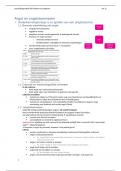
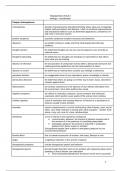
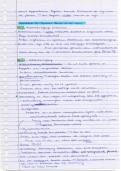
Lecture 1. introduction clinical psychology - history
What constitutes a disorder?
● Demarcation (afbakening)
● Kring et al.
○ distress
○ disability and dysfunction
○ violation social norms
● Butcher et al.
○ suffering
○ maladaptive ness
○ (statistical) deviancy
○ violation of the standards of society
○ social discomfort
○ irrationality and unpredictability
○ dangerousness
● Comer:
○ danger
○ deviance
○ disfunction
○ distress
● ‘the criterion problem’
● What if a low mood was bimodally distributed?
○ the location of the boundary is arbitrary..
■ but not random.. the clinical community and society will have to make
an informed weighted decision on what is severe enough, where to
draw the line.
● But if we want to classify a disorder, or predict an outcome for an individual, would
we use
○ clinical judgement?
○ mechanical, statistical, actuarial procedures?
,The DSM-5-TR
● classification:
○ categorize based on characteristics
○ cluster of symptoms: syndrome
● classification system:
○ diagnostic and statistical manual of mental disorders (DSM 5 - TR) or ICD-11
○ since dsm-II no etiology, exception PTSD
DSM criteria: Manic episode
● Distinct period of abnormally and persistently elevated, expansive, or irritable mood
and abnormally and persistently increased activity or energy
○ duration at least a week
○ impaired functioning
○ 3 of the following 7 symptoms
● But where is the decision on the boundary between normal and abnormal?
● The dunning-kruger effect is a cognitive bias in which people with limited competence
in a particular romain overestimate their abilities.
Epidemiology
● De epidemiologie is de wetenschappelijke studie van het voorkomen en de verspreiding
van ziekten binnen en tussen populaties.
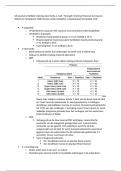
● lifetime prevalence in the netherlands
History
Take home message
● Boundary between the pathological and the healthy is arbitrary, but not random!
● Clinical / Abnormal Psychology encompasses many disciplines (scientist-practitioner)
● Our view and handling of psychopathology is always the result of many interacting
factors. Postpone judgment, become more informed and question your intuitions
critically.
Hoorcollege 2: Trauma related disorders PTSD and a bit of ASD
Learning goals:
● recognize and describe trauma-related disorders
● explain how ptsd can develop
● explain how ptsd can be treated and how effective ptsd treatments work
trauma and stressor related disorders (ICD 11 website)
● posttraumatic stress disorder
● acute stress disorder
● adjustment disorder
● reactive attachment disorder
● disinhibited social engagement disorder
● disinhibited social engagement disorder
● other/unspecified TSR Disorder
, Trauma → acute stress disorder (3 days - one month after trauma) → PTSD (can
randomly occur after the trauma event)
● 50% of the people with acute stress disorder develop PTSD
What is psychotrauma?
● ‘Een ongeluk komt nooit alleen’
○ personal consequences (symptoms, relations, work/study)
○ legal consequences
○ political consequences
○ wars..
● DSM trauma definitions Criterion A
○ DSM III
■ events outside usual human experience
○ DSM IV
■ sexual abuse for example, actual or threatened death, serious injury,
physical integrity
■ Negative response of the person: fear, helplessness or horror
○ DSM-5 Exposure to actual or threatened death, serious injury or sexual
violence
1. directly experiencing
2. witnessing in person
3. learning; close family member/friend
4. repeated/extreme exposure to aversive detail (not through
movies, pictures, unless work related)
a. why work related; an artificial tend to limit to a group of
people that's not too small not too big
There are three possible outcomes of an traumatic event
Classification trauma-related disorders and PTSD
Lecture 1. introduction clinical psychology - history
What constitutes a disorder?
● Demarcation (afbakening)
● Kring et al.
○ distress
○ disability and dysfunction
○ violation social norms
● Butcher et al.
○ suffering
○ maladaptive ness
○ (statistical) deviancy
○ violation of the standards of society
○ social discomfort
○ irrationality and unpredictability
○ dangerousness
● Comer:
○ danger
○ deviance
○ disfunction
○ distress
● ‘the criterion problem’
● What if a low mood was bimodally distributed?
○ the location of the boundary is arbitrary..
■ but not random.. the clinical community and society will have to make
an informed weighted decision on what is severe enough, where to
draw the line.
● But if we want to classify a disorder, or predict an outcome for an individual, would
we use
○ clinical judgement?
○ mechanical, statistical, actuarial procedures?
,The DSM-5-TR
● classification:
○ categorize based on characteristics
○ cluster of symptoms: syndrome
● classification system:
○ diagnostic and statistical manual of mental disorders (DSM 5 - TR) or ICD-11
○ since dsm-II no etiology, exception PTSD
DSM criteria: Manic episode
● Distinct period of abnormally and persistently elevated, expansive, or irritable mood
and abnormally and persistently increased activity or energy
○ duration at least a week
○ impaired functioning
○ 3 of the following 7 symptoms
● But where is the decision on the boundary between normal and abnormal?
● The dunning-kruger effect is a cognitive bias in which people with limited competence
in a particular romain overestimate their abilities.
Epidemiology
● De epidemiologie is de wetenschappelijke studie van het voorkomen en de verspreiding
van ziekten binnen en tussen populaties.
● lifetime prevalence in the netherlands
History
Take home message
● Boundary between the pathological and the healthy is arbitrary, but not random!
● Clinical / Abnormal Psychology encompasses many disciplines (scientist-practitioner)
● Our view and handling of psychopathology is always the result of many interacting
factors. Postpone judgment, become more informed and question your intuitions
critically.
Hoorcollege 2: Trauma related disorders PTSD and a bit of ASD
Learning goals:
● recognize and describe trauma-related disorders
● explain how ptsd can develop
● explain how ptsd can be treated and how effective ptsd treatments work
trauma and stressor related disorders (ICD 11 website)
● posttraumatic stress disorder
● acute stress disorder
● adjustment disorder
● reactive attachment disorder
● disinhibited social engagement disorder
● disinhibited social engagement disorder
● other/unspecified TSR Disorder
, Trauma → acute stress disorder (3 days - one month after trauma) → PTSD (can
randomly occur after the trauma event)
● 50% of the people with acute stress disorder develop PTSD
What is psychotrauma?
● ‘Een ongeluk komt nooit alleen’
○ personal consequences (symptoms, relations, work/study)
○ legal consequences
○ political consequences
○ wars..
● DSM trauma definitions Criterion A
○ DSM III
■ events outside usual human experience
○ DSM IV
■ sexual abuse for example, actual or threatened death, serious injury,
physical integrity
■ Negative response of the person: fear, helplessness or horror
○ DSM-5 Exposure to actual or threatened death, serious injury or sexual
violence
1. directly experiencing
2. witnessing in person
3. learning; close family member/friend
4. repeated/extreme exposure to aversive detail (not through
movies, pictures, unless work related)
a. why work related; an artificial tend to limit to a group of
people that's not too small not too big
There are three possible outcomes of an traumatic event
Classification trauma-related disorders and PTSD