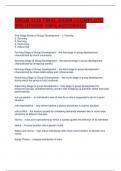
ORGB 1135 FINAL EXAM | COMPLETE
SOLUTIONS 100% ACCURATE.
Five-Stage Model of Group Development - 1. Forming
2. Storming
3. Norming
4. Performing
5. Adjourning
Forming Stage of Group Development - the first stage in group development,
characterized by much uncertainty
Storming Stage of Group Development - the second stage in group development,
characterized by intragroup conflict
Norming Stage of Group Development - the third stage in group development,
characterized by close relationships and cohesiveness
Performing Stage of Group Development - the fourth stage in group development,
during which the group is fully functional
Adjourning Stage of group development - final stage in group development for
temporary groups, characterized by concern with wrapping up activities rather than task
performances
role perception - an individual's view of how he or she is supposed to act in a given
situation
role expectations - how others believe a person should act in a given situation
role conflict - the tension caused by competing demands between two or more roles
pertaining to different statuses
Norms - rules and expectations by which a society guides the behavior of its members
status - A social position that a person holds
Status and norms - high status individuals often have more freedom to deviate from
norms
Equity Theory - unequal distribution of work
, Groupthink - the mode of thinking that occurs when the desire for harmony in a
decision-making group overrides a realistic appraisal of alternatives
Groupshift - a change in decision risk between a group's decision and an individual
decision that a member within the group would make; the shift can be toward either
conservatism or greater risk
cognitive attitude - beliefs and knowledge one has about a situation
affective attitude - emotions and feelings
behavioral attitude - refers to how one intends or expects to behave toward a situation
psychological empowerment - employees' belief that they have control over their work
Teams - a number of persons associated together in work or an activity
work team - generates positive synergy through coordinated effort
problem-solving team - a team from the same department or functional area that's
involved in efforts to improve work activities or to solve specific problems
self-managed work teams - groups of 10 to 15 people who take on responsibilities of
their former supervisors
cross-functional team - a team composed of employees from different functional areas
of the organization
virtual teams - teams that are physically dispersed and communicate electronically
more than face-to-face
Multi-team systems - systems in which different teams need to coordinate their efforts
to produce a desired outcome
Factors in Team Success - Presence of adequate measures
Effective leadership and structure
Climate of trust in a team
performance evaluation and reward
team composition and success - Abilities of members
Personality of members
Allocation of roles
Diversity of members
Size of teams
member preferences
SOLUTIONS 100% ACCURATE.
Five-Stage Model of Group Development - 1. Forming
2. Storming
3. Norming
4. Performing
5. Adjourning
Forming Stage of Group Development - the first stage in group development,
characterized by much uncertainty
Storming Stage of Group Development - the second stage in group development,
characterized by intragroup conflict
Norming Stage of Group Development - the third stage in group development,
characterized by close relationships and cohesiveness
Performing Stage of Group Development - the fourth stage in group development,
during which the group is fully functional
Adjourning Stage of group development - final stage in group development for
temporary groups, characterized by concern with wrapping up activities rather than task
performances
role perception - an individual's view of how he or she is supposed to act in a given
situation
role expectations - how others believe a person should act in a given situation
role conflict - the tension caused by competing demands between two or more roles
pertaining to different statuses
Norms - rules and expectations by which a society guides the behavior of its members
status - A social position that a person holds
Status and norms - high status individuals often have more freedom to deviate from
norms
Equity Theory - unequal distribution of work
, Groupthink - the mode of thinking that occurs when the desire for harmony in a
decision-making group overrides a realistic appraisal of alternatives
Groupshift - a change in decision risk between a group's decision and an individual
decision that a member within the group would make; the shift can be toward either
conservatism or greater risk
cognitive attitude - beliefs and knowledge one has about a situation
affective attitude - emotions and feelings
behavioral attitude - refers to how one intends or expects to behave toward a situation
psychological empowerment - employees' belief that they have control over their work
Teams - a number of persons associated together in work or an activity
work team - generates positive synergy through coordinated effort
problem-solving team - a team from the same department or functional area that's
involved in efforts to improve work activities or to solve specific problems
self-managed work teams - groups of 10 to 15 people who take on responsibilities of
their former supervisors
cross-functional team - a team composed of employees from different functional areas
of the organization
virtual teams - teams that are physically dispersed and communicate electronically
more than face-to-face
Multi-team systems - systems in which different teams need to coordinate their efforts
to produce a desired outcome
Factors in Team Success - Presence of adequate measures
Effective leadership and structure
Climate of trust in a team
performance evaluation and reward
team composition and success - Abilities of members
Personality of members
Allocation of roles
Diversity of members
Size of teams
member preferences