BIOL 211 Concepts of Zoology
Exam 4 Study Guide
Chapter 16
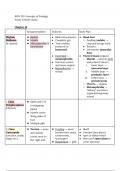
Synapomorphies Features Body Plan
Phylum ★ Radula ● Bilateral symmetry ● Head-foot
Mollusca ★ Mantle ● Complete gut ○ Feeding (radula) →
(4 classes) ★ Muscular foot → ● True coelom rasp and scrape food
locomotion (reduced to ● Sensory
hemocoel) ● Locomotor (muscular
foot)
● Excretion → ● Visceral mass (organs)
metanephridia ○ Mantle → secrete shell
● Nervous system and protect viscera
and sense organs i. Inner layer →
● Reproduction → nacreous layer
sexual ii. Middle layer →
prismatic layer
iii. Outer layer →
periostracum
○ Viscera → organs
○ Metanephridia →
“kidney,” excretory
organ (nitrogenous
waste)
1. Class ★ Shell with 7-8
Polyplacophora overlapping
(chitons) plates
★ Mantle cavity
along sides of
foot
★ Multiple gills
2. Class ★ Torsion → anus ★ Feeding → most ● Shell:
Gastropoda and mantle herbivorous; some ● Univalve (one piece)
(conches, snails, cavity twist to carnivorous, ● Apex is oldest whorl
slugs, etc.) scavengers ● Most with operculum to
the right and
★ Respiration → gills cover aperture
, end up over or skin and surface ● R = dextral
head of mantle cavity ● L = sinistral
Avoid fouling by: ★ Reproduction →
release gametes
H2O in L, out R
into water or
Openings in shell
encase in
Bilateral asymmetry gelatinous mass
● Diversity
○ Prosobranchs
○ Pulmonates
○ Opisthobranchs
3. Class Bivalvia ★ Bivalve shell ● Locomotion → ● Adductor muscles close
(clams, mussels, ★ Loss of radula muscular foot shell
oysters, etc.) ● Respiration → gills ● Mantle folds form
(ctenidia) + surface incurrent and excurrent
of mantle siphon
● Filter feed ● Dorsal → umbo
○ Stomach with
rotating
crystalline style
○ Ciliary tracts →
stores particles
4. Class ★ Arms, tentacles, ● Locomotion → jet ● “Head foot” modified, foot
Cephalopoda and siphon propulsion = merges with head
(octopus, squid, ★ Beaklike jaws funnel (siphon) ● Shell reduced; internal
cuttlefish, expel H2O from cartilage or cuttlebone
★ Closed
nautilus, etc.) mantle cavity
circulatory
● Respiration → gills
system (multiple ● Well-developed
hearts) nervous + sensory
systems
● Reproduction
(cuttlefish) →
males display 2
patterns
16.1 Name the higher order Clades that Phylum Mollusca belongs to.
, ● Clade Protostomia
○ Clade Bilateria
■ Clade Lophotrochozoa (trochophore larva)
16.2 What are three synapomorphies that define Phylum Mollusca
★ Radula
★ Mantle
★ Muscular foot
16.3 Describe the body plan and general features found in Phylum Mollusca.
Describe the features of the ‘head-foot’ and the ‘visceral mass’.
● General features
○ Bilateral symmetry
○ Complete gut
○ Ecoelomate
■ All protostomes form coelom by schizocoely
■ Coelom reduced to hemocoel
○ Open circulatory system
○ Excretion → metanephridia (type of ‘kidney’)
○ Nervous system and sense organs
○ Reproduction → sexual reproduction (some hermaphroditic)
● Body organization
○ Head-foot
■ Radula → feeding
● Rasp and scrape food; absent in bivalves
■ Sensory
■ Muscular foot → locomotion
○ Visceral mass (organs)
■ Mantle → secrete shell and protect viscera
● Encloses mantle cavity; surface for respiration
● Mantle cavity → space for H2O circulation; house gills or
lung; exit for waste and gametes
■ Viscera → organs
■ Metanephridia→ excretory organ (nitrogenous waste)
● Open on both ends; nephrostome opens to coelom, exit
to mantle cavity
Exam 4 Study Guide
Chapter 16
Synapomorphies Features Body Plan
Phylum ★ Radula ● Bilateral symmetry ● Head-foot
Mollusca ★ Mantle ● Complete gut ○ Feeding (radula) →
(4 classes) ★ Muscular foot → ● True coelom rasp and scrape food
locomotion (reduced to ● Sensory
hemocoel) ● Locomotor (muscular
foot)
● Excretion → ● Visceral mass (organs)
metanephridia ○ Mantle → secrete shell
● Nervous system and protect viscera
and sense organs i. Inner layer →
● Reproduction → nacreous layer
sexual ii. Middle layer →
prismatic layer
iii. Outer layer →
periostracum
○ Viscera → organs
○ Metanephridia →
“kidney,” excretory
organ (nitrogenous
waste)
1. Class ★ Shell with 7-8
Polyplacophora overlapping
(chitons) plates
★ Mantle cavity
along sides of
foot
★ Multiple gills
2. Class ★ Torsion → anus ★ Feeding → most ● Shell:
Gastropoda and mantle herbivorous; some ● Univalve (one piece)
(conches, snails, cavity twist to carnivorous, ● Apex is oldest whorl
slugs, etc.) scavengers ● Most with operculum to
the right and
★ Respiration → gills cover aperture
, end up over or skin and surface ● R = dextral
head of mantle cavity ● L = sinistral
Avoid fouling by: ★ Reproduction →
release gametes
H2O in L, out R
into water or
Openings in shell
encase in
Bilateral asymmetry gelatinous mass
● Diversity
○ Prosobranchs
○ Pulmonates
○ Opisthobranchs
3. Class Bivalvia ★ Bivalve shell ● Locomotion → ● Adductor muscles close
(clams, mussels, ★ Loss of radula muscular foot shell
oysters, etc.) ● Respiration → gills ● Mantle folds form
(ctenidia) + surface incurrent and excurrent
of mantle siphon
● Filter feed ● Dorsal → umbo
○ Stomach with
rotating
crystalline style
○ Ciliary tracts →
stores particles
4. Class ★ Arms, tentacles, ● Locomotion → jet ● “Head foot” modified, foot
Cephalopoda and siphon propulsion = merges with head
(octopus, squid, ★ Beaklike jaws funnel (siphon) ● Shell reduced; internal
cuttlefish, expel H2O from cartilage or cuttlebone
★ Closed
nautilus, etc.) mantle cavity
circulatory
● Respiration → gills
system (multiple ● Well-developed
hearts) nervous + sensory
systems
● Reproduction
(cuttlefish) →
males display 2
patterns
16.1 Name the higher order Clades that Phylum Mollusca belongs to.
, ● Clade Protostomia
○ Clade Bilateria
■ Clade Lophotrochozoa (trochophore larva)
16.2 What are three synapomorphies that define Phylum Mollusca
★ Radula
★ Mantle
★ Muscular foot
16.3 Describe the body plan and general features found in Phylum Mollusca.
Describe the features of the ‘head-foot’ and the ‘visceral mass’.
● General features
○ Bilateral symmetry
○ Complete gut
○ Ecoelomate
■ All protostomes form coelom by schizocoely
■ Coelom reduced to hemocoel
○ Open circulatory system
○ Excretion → metanephridia (type of ‘kidney’)
○ Nervous system and sense organs
○ Reproduction → sexual reproduction (some hermaphroditic)
● Body organization
○ Head-foot
■ Radula → feeding
● Rasp and scrape food; absent in bivalves
■ Sensory
■ Muscular foot → locomotion
○ Visceral mass (organs)
■ Mantle → secrete shell and protect viscera
● Encloses mantle cavity; surface for respiration
● Mantle cavity → space for H2O circulation; house gills or
lung; exit for waste and gametes
■ Viscera → organs
■ Metanephridia→ excretory organ (nitrogenous waste)
● Open on both ends; nephrostome opens to coelom, exit
to mantle cavity