Greg Basslian 2019
The Cold War
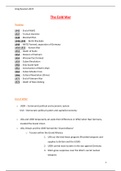
Timeline
1945 - End of WW2
1947 - Truman Doctrine
1948 - Marshall Plan
1948-1949 - Berlin Blockade
1949 - NATO Formed, separation of Germany
1950-1953 - Korean War
1953 - Death of Stalin
1954 - Division of Vietnam
1955 - Warsaw Pact formed
1959 - Cuban Revolution
1960 - Sino-Soviet Split
1961 - Construction of Berlin Wall
1962 - Cuban Missile Crisis
1966 - Cultural Revolution (China)
1975 - End of Vietnam War
1976 - Death of Mao Zedong
End of WW2
o USSR – Communist political and economic system
USA – Democratic political system and capitalist economy
o USA and USSR temporarily set aside their differences in WW2 when Nazi Germany
invaded the Soviet Union
o USA, Britain and the USSR formed the ‘Grand Alliance’
o Tension within the Grand Alliance
1. USA cut the lend-lease program (Provided weapons and
supplies to Britain and the USSR)
2. USSR carried main burden in the war against Germany
3. Stalin grew suspicious over the West’s secret nuclear
weapons
1
,Greg Basslian 2019
o After WW2 the USA and the USSR emerged as world superpowers
o 1945-1991 – The two superpowers competed for world domination (Period known as
cold war)
o Both the USA and USSR aimed to dominate the world with ideologies
o Fear of nuclear warfare prevented open war
o Rivalry between the two superpowers took other forms (Space race, scientific
development etc.)
o USA and USSR fought in proxy wars (Vietnam and Korea)
o Both superpowers provided military aid to their allies
Origins of the Cold War
o This was a struggle which developed between the USA and the USSR
o USA – Supported by the West
USSR – Supported by communist governments (communist bloc)
o Created a worldwide division clash between competing social, economic and political
systems
Development of Cold War
o The Cold War began because of mistrust which had developed when a communist
government came to power in Russia in 1917
o Over time the suspicions and tension increased
o The Grand Alliance was uneasy, enormous tension remained
Teheran Conference – (1943)
o Held in Teheran, Iran
o Decisions:
§ No Anglo-American invasion of Germany
§ The conference limited the West’s involvement in Eastern Europe
o Post war situation in Europe became a major source of mistrust
2
,Greg Basslian 2019
Yalta Conference – (1945)
o Held in Yalta – USSR
o USA -Franklin Roosevelt
USSR – Josef Stalin “The Big Three”
Britain – Winston Churchill
o There was enormous tension between the leaders, agreements were only temporary
o Conference was held to plan post-war settlement
o Decisions:
1. Germany would be divided into 4 zones of occupation (USA, USSR,
Britain and France)
2. Berlin would be divided into 4 occupation zones
3. USSR joined UN, and agreed to join war against Japan
4. ‘Declaration on liberated Europe’ – Committed USSR to follow
democracy in Eastern Europe
5. Stalin aimed to create a buffer zone around the USSR to prevent
further German invasion – Agreed that Eastern Europe would be a
Soviet sphere of influence
o Disagreements:
1. No decision on the type of governance in the 4 occupation zones
2. No agreement on the scale of German reparation
Potsdam Conference – (1945)
o Held in Potsdam, Germany
o USA – Harry Truman
USSR – Josef Stalin
Britain – Clement Atlee
o Continuation of the Yalta conference however, the war had now ended
o Conference highlighted the enormous ideological differences
o Tension between leaders:
§ Soviet army controlled Eastern Europe
§ Stalin set up a communist government in Poland – against ‘Declaration on
liberated Europe’
3
,Greg Basslian 2019
§ Truman replaced Roosevelt, he was more anti-communist and despised
Stalin
§ America secretly developed and tested the atomic bomb
o Decisions:
1. Details of occupation zones were finalized – Each power would
control one zone; Powers would collect reparations from their zone
and Germany was to work in economic co-operation
2. Poland’s border was set along the Ode and Neisse Rivers
3. Exiled Germans would return to Germany
o Disagreements:
1. Stalin proposed that Germany be crippled, however, Truman did not
want a hostile Germany
2. Stalin called for large reparations; Truman strongly disagreed
3. Truman opposed the Soviet sphere of influence which was decided at
Yalta
Spheres of influence
o USSR installed Soviet friendly governments in Eastern Europe
o This caused tension as the West feared the expansion of Soviet control
o During WW2 USSR annexed – Estonia, Latvia and Lithuania
o Soviet army ensured pro Soviet governments in satellite states – Poland, Hungary,
Bulgaria and East Germany
o USSR’s interests in Eastern Europe:
• Aimed to create a buffer zone to prevent further invasion
• Stalin saw this as vital to the economy’s success (Trade, material)
o West’s reaction:
§ West grew extremely alarmed
§ Churchill declared that an iron curtain had descended
§ Stalin was angered by Churchill and accused him of being a war monger
4
, Greg Basslian 2019
USA’s policy of containment
o Concerns about Soviet expansion led to radical change in American foreign policy
o USA believed the USSR aimed to create communist governments in the whole of Eastern
Europe
o USA adopted a policy of containment to stop the spread of communism and threat to
their ideologies
Truman Doctrine
o Greece and Turkey – Civil wars broke out between communist guerillas and the
governments
o USA believed that the USSR were supporting the communist fighters
o Truman announced a change in American foreign policy: Truman Doctrine became the
basis of American Policy
o Truman Doctrine: USA would send money, military equipment and advice to any country
that was under communist threat
o Outcome:
§ Communists in Turkey were defeated
§ Hostility between the USA and USSR increased
§ USA committed to a policy of containment
Marshall Plan
o Truman believed that communism flourished in poverty-stricken areas
o Truman sent George Marshall to Eastern Europe to assess the situation
o Marshall reported that Europe had been destroyed by the war (Poverty was rife)
o Truman introduced the Marshall plan
o Marshall Plan: The USA would provide financial aid to European Countries to rebuild war
damaged economies and infrastructure
Soviet Reaction to American Policy
o Stalin was suspicious of the Marshall plan. He viewed it as a form of Dollar imperialism
using economic pressure to benefit America
o Stalin did not allow Soviet states to accept Marshall aid
5
The Cold War
Timeline
1945 - End of WW2
1947 - Truman Doctrine
1948 - Marshall Plan
1948-1949 - Berlin Blockade
1949 - NATO Formed, separation of Germany
1950-1953 - Korean War
1953 - Death of Stalin
1954 - Division of Vietnam
1955 - Warsaw Pact formed
1959 - Cuban Revolution
1960 - Sino-Soviet Split
1961 - Construction of Berlin Wall
1962 - Cuban Missile Crisis
1966 - Cultural Revolution (China)
1975 - End of Vietnam War
1976 - Death of Mao Zedong
End of WW2
o USSR – Communist political and economic system
USA – Democratic political system and capitalist economy
o USA and USSR temporarily set aside their differences in WW2 when Nazi Germany
invaded the Soviet Union
o USA, Britain and the USSR formed the ‘Grand Alliance’
o Tension within the Grand Alliance
1. USA cut the lend-lease program (Provided weapons and
supplies to Britain and the USSR)
2. USSR carried main burden in the war against Germany
3. Stalin grew suspicious over the West’s secret nuclear
weapons
1
,Greg Basslian 2019
o After WW2 the USA and the USSR emerged as world superpowers
o 1945-1991 – The two superpowers competed for world domination (Period known as
cold war)
o Both the USA and USSR aimed to dominate the world with ideologies
o Fear of nuclear warfare prevented open war
o Rivalry between the two superpowers took other forms (Space race, scientific
development etc.)
o USA and USSR fought in proxy wars (Vietnam and Korea)
o Both superpowers provided military aid to their allies
Origins of the Cold War
o This was a struggle which developed between the USA and the USSR
o USA – Supported by the West
USSR – Supported by communist governments (communist bloc)
o Created a worldwide division clash between competing social, economic and political
systems
Development of Cold War
o The Cold War began because of mistrust which had developed when a communist
government came to power in Russia in 1917
o Over time the suspicions and tension increased
o The Grand Alliance was uneasy, enormous tension remained
Teheran Conference – (1943)
o Held in Teheran, Iran
o Decisions:
§ No Anglo-American invasion of Germany
§ The conference limited the West’s involvement in Eastern Europe
o Post war situation in Europe became a major source of mistrust
2
,Greg Basslian 2019
Yalta Conference – (1945)
o Held in Yalta – USSR
o USA -Franklin Roosevelt
USSR – Josef Stalin “The Big Three”
Britain – Winston Churchill
o There was enormous tension between the leaders, agreements were only temporary
o Conference was held to plan post-war settlement
o Decisions:
1. Germany would be divided into 4 zones of occupation (USA, USSR,
Britain and France)
2. Berlin would be divided into 4 occupation zones
3. USSR joined UN, and agreed to join war against Japan
4. ‘Declaration on liberated Europe’ – Committed USSR to follow
democracy in Eastern Europe
5. Stalin aimed to create a buffer zone around the USSR to prevent
further German invasion – Agreed that Eastern Europe would be a
Soviet sphere of influence
o Disagreements:
1. No decision on the type of governance in the 4 occupation zones
2. No agreement on the scale of German reparation
Potsdam Conference – (1945)
o Held in Potsdam, Germany
o USA – Harry Truman
USSR – Josef Stalin
Britain – Clement Atlee
o Continuation of the Yalta conference however, the war had now ended
o Conference highlighted the enormous ideological differences
o Tension between leaders:
§ Soviet army controlled Eastern Europe
§ Stalin set up a communist government in Poland – against ‘Declaration on
liberated Europe’
3
,Greg Basslian 2019
§ Truman replaced Roosevelt, he was more anti-communist and despised
Stalin
§ America secretly developed and tested the atomic bomb
o Decisions:
1. Details of occupation zones were finalized – Each power would
control one zone; Powers would collect reparations from their zone
and Germany was to work in economic co-operation
2. Poland’s border was set along the Ode and Neisse Rivers
3. Exiled Germans would return to Germany
o Disagreements:
1. Stalin proposed that Germany be crippled, however, Truman did not
want a hostile Germany
2. Stalin called for large reparations; Truman strongly disagreed
3. Truman opposed the Soviet sphere of influence which was decided at
Yalta
Spheres of influence
o USSR installed Soviet friendly governments in Eastern Europe
o This caused tension as the West feared the expansion of Soviet control
o During WW2 USSR annexed – Estonia, Latvia and Lithuania
o Soviet army ensured pro Soviet governments in satellite states – Poland, Hungary,
Bulgaria and East Germany
o USSR’s interests in Eastern Europe:
• Aimed to create a buffer zone to prevent further invasion
• Stalin saw this as vital to the economy’s success (Trade, material)
o West’s reaction:
§ West grew extremely alarmed
§ Churchill declared that an iron curtain had descended
§ Stalin was angered by Churchill and accused him of being a war monger
4
, Greg Basslian 2019
USA’s policy of containment
o Concerns about Soviet expansion led to radical change in American foreign policy
o USA believed the USSR aimed to create communist governments in the whole of Eastern
Europe
o USA adopted a policy of containment to stop the spread of communism and threat to
their ideologies
Truman Doctrine
o Greece and Turkey – Civil wars broke out between communist guerillas and the
governments
o USA believed that the USSR were supporting the communist fighters
o Truman announced a change in American foreign policy: Truman Doctrine became the
basis of American Policy
o Truman Doctrine: USA would send money, military equipment and advice to any country
that was under communist threat
o Outcome:
§ Communists in Turkey were defeated
§ Hostility between the USA and USSR increased
§ USA committed to a policy of containment
Marshall Plan
o Truman believed that communism flourished in poverty-stricken areas
o Truman sent George Marshall to Eastern Europe to assess the situation
o Marshall reported that Europe had been destroyed by the war (Poverty was rife)
o Truman introduced the Marshall plan
o Marshall Plan: The USA would provide financial aid to European Countries to rebuild war
damaged economies and infrastructure
Soviet Reaction to American Policy
o Stalin was suspicious of the Marshall plan. He viewed it as a form of Dollar imperialism
using economic pressure to benefit America
o Stalin did not allow Soviet states to accept Marshall aid
5