Chapter 42:
Animal Development
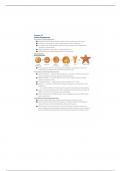
Key Steps in Embryogenesis
● Establishment of axes: dorsal-ventral, anterior-posterior, left-right.
● Production of large numbers of pluripotent cells: cleavage. •
● Arrangement of pluripotent cells into tissue layers that resemble an
organism: gastrulation.
● Organogenesis: neurulation, cardiogenesis, etc.
● Establishment of body segments: somitogenesis
Development
● The process in which a multicellular organism undergoes a series of
progressive changes that characterize its life cycle.
Processes underlying development
● determination — sets the fate of cells (i.e., what they will become), prior
to the emergence of type-specific characteristics.
● differentiation — the process by which structurally and functionally
distinct cell types arise
● morphogenesis — organization and arrangement of cells.
● growth — increase in the size of body and organs via cell division, cell
expansion.
○ (Lots of different model systems used for developmental studies.)
● Cells in the early embryo arise from repeated mitosis and soon begin to
differ in terms of which genes are expressed.
● Determination and differentiation occur largely because of differential
gene expression.
Fertilization Initiates Development
● Dorsal-ventral (DV) axis is determined by point of sperm entry
● Sperm enters the animal hemisphere—rotation of cortical cytoplasm
toward the site of entry establishes dorsal ventral axis.
● Site of sperm entry becomes the ventral region; the gray crescent (a
band of pigmented cytoplasm opposite the site of sperm entry, visible in
some amphibian species) becomes the dorsal region of embryo. How?
, ● ● Beta Catenin (yellow)
● GSK3 (blue)
● Vesicles with GSK inhibitor
(red)
→ Cleavage Types
Complete Cleavage
● In relatively small eggs, or eggs with a relatively small amount of yolk,
the entire egg is divided
Incomplete Cleavage
Animal Development
Key Steps in Embryogenesis
● Establishment of axes: dorsal-ventral, anterior-posterior, left-right.
● Production of large numbers of pluripotent cells: cleavage. •
● Arrangement of pluripotent cells into tissue layers that resemble an
organism: gastrulation.
● Organogenesis: neurulation, cardiogenesis, etc.
● Establishment of body segments: somitogenesis
Development
● The process in which a multicellular organism undergoes a series of
progressive changes that characterize its life cycle.
Processes underlying development
● determination — sets the fate of cells (i.e., what they will become), prior
to the emergence of type-specific characteristics.
● differentiation — the process by which structurally and functionally
distinct cell types arise
● morphogenesis — organization and arrangement of cells.
● growth — increase in the size of body and organs via cell division, cell
expansion.
○ (Lots of different model systems used for developmental studies.)
● Cells in the early embryo arise from repeated mitosis and soon begin to
differ in terms of which genes are expressed.
● Determination and differentiation occur largely because of differential
gene expression.
Fertilization Initiates Development
● Dorsal-ventral (DV) axis is determined by point of sperm entry
● Sperm enters the animal hemisphere—rotation of cortical cytoplasm
toward the site of entry establishes dorsal ventral axis.
● Site of sperm entry becomes the ventral region; the gray crescent (a
band of pigmented cytoplasm opposite the site of sperm entry, visible in
some amphibian species) becomes the dorsal region of embryo. How?
, ● ● Beta Catenin (yellow)
● GSK3 (blue)
● Vesicles with GSK inhibitor
(red)
→ Cleavage Types
Complete Cleavage
● In relatively small eggs, or eggs with a relatively small amount of yolk,
the entire egg is divided
Incomplete Cleavage